 Back
Chapter 20: Phylogeny – Investigating Evolutionary History
Study Guide - Smart Notes
 Tailored notes based on your materials, expanded with key definitions, examples, and context.
Phylogeny and Systematics
Introduction to Phylogeny
Phylogeny is the study of the evolutionary history and relationships among species or groups of organisms. Systematics is the broader field that classifies organisms based on these evolutionary relationships, aiming to reflect common ancestry rather than just physical similarity.
Phylogeny: The evolutionary history of a species or group.
Systematics: The scientific study of the diversity and relationships among organisms.
Key Point: Systematics uses phylogeny to classify organisms according to common ancestry.
Convergent Evolution and Appearance
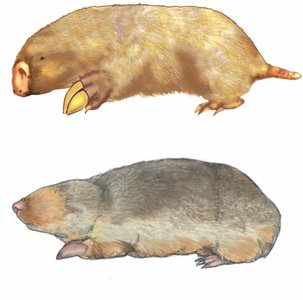
Similar-looking organisms are not always closely related. Convergent evolution occurs when unrelated species evolve similar traits independently, often due to similar environmental pressures. For example, legless lizards and snakes evolved limbless bodies separately.
Convergent Evolution: Independent evolution of similar features in species of different lineages.
Key Point: Similar appearance does not necessarily indicate close evolutionary relationships.

Taxonomy and Classification
Taxonomy and Binomial Nomenclature
Taxonomy is the science of naming, describing, and classifying organisms. Modern taxonomy aims to reflect evolutionary relationships. Each species is given a two-part scientific name (binomial nomenclature): the genus (capitalized) and the specific epithet (lowercase), both italicized (e.g., Homo sapiens).
Taxonomy: Organizes Earth's biodiversity in a standardized way.
Binomial Nomenclature: Two-part scientific naming system.
Key Point: Both genus and specific epithet are needed to uniquely identify a species.
The Taxonomic Hierarchy
Organisms are classified into a series of nested categories, each more inclusive than the last. The main ranks are: Species, Genus, Family, Order, Class, Phylum, Kingdom, and Domain. Each level is called a taxon (plural: taxa).
Hierarchy: Organizes organisms into increasingly broader groups based on shared traits and evolutionary relationships.
Key Point: Classification reflects evolutionary relationships, not just physical similarity.
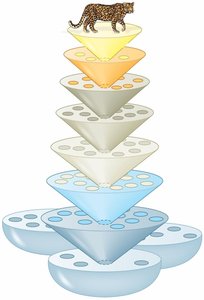
Understanding Taxonomic Categories
Classification systems are useful but have limitations. Different groups may be classified using different characteristics, and taxonomic ranks do not always represent the same level of diversity across all organisms. Modern classification increasingly reflects evolutionary relationships.
Key Point: Taxonomic rank does not necessarily indicate how similar or diverse different groups are.
Phylogenetic Trees
Visualizing Evolutionary Relationships
Phylogenetic trees are diagrams that illustrate hypotheses about evolutionary relationships. Branching patterns represent common ancestry, and the trees show how species are related through descent from common ancestors.
Branch Point (Node): Represents a common ancestor.
Branch: Represents an evolutionary lineage.
Sister Taxa: Groups that share the most recent common ancestor.
Rooted Tree: Includes the common ancestor of all organisms shown.
Basal Taxon: Diverged early from the rest of the group.
Key Point: Branching patterns reveal evolutionary relationships.
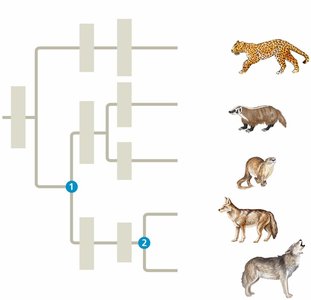
Interpreting Phylogenetic Trees
The order of organisms at the tips does not represent evolutionary progress. Branches can be rotated without changing relationships, and closely positioned organisms are not necessarily closely related. Phylogenetic trees show patterns of descent, not physical similarity.
Key Point: Focus on the branching pattern, not the position of organisms on the page.
What Phylogenetic Trees Can and Cannot Show
Can Show: Evolutionary relationships, shared ancestry, relative relatedness.
Cannot Show: One living species evolving directly from another, how much an organism has changed, or the exact age of lineages (unless specified).
Key Point: Phylogenetic trees illustrate evolutionary history, but have limitations.
Applications of Phylogenetic Trees
Predicting characteristics shared by closely related species.
Identifying unknown organisms using DNA sequences.
Supporting research in conservation, medicine, and forensic biology.
Reconstructing evolutionary history.
Key Point: Phylogenetic trees are valuable tools for both evolutionary research and practical applications.
Inferring Evolutionary Relationships
Sources of Evidence
Scientists infer phylogenies using evidence from morphology (physical characteristics), genetics (DNA sequences), and biochemistry (proteins and other molecules). Only characteristics inherited from a common ancestor accurately reflect evolutionary relationships.
Key Point: Multiple lines of evidence are used to reconstruct evolutionary history.
Homologous vs. Analogous Traits
Homology | Analogy |
|---|---|
Similarity due to common ancestry | Similarity due to convergent evolution |
Indicates evolutionary relationships | Does not indicate close evolutionary relationships |
Useful for building phylogenetic trees | Not used to infer phylogeny |
Key Point: Only homologous traits provide evidence of shared ancestry.
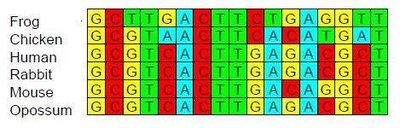
Comparing DNA Sequences
Closely related organisms generally have more similar DNA sequences. Mutations accumulate over time, and computer software aligns DNA sequences to identify homologous regions. Longer, more consistent DNA matches provide stronger evidence of common ancestry.
Key Point: DNA comparisons provide powerful evidence for evolutionary relationships.
Using Multiple Lines of Evidence
Reliable phylogenies are based on multiple independent sources of evidence, such as comparative anatomy, fossils, DNA sequences, and biochemistry. When multiple types of evidence support the same relationship, confidence in the phylogeny increases.
Key Point: Reliable phylogenies are based on multiple independent sources of evidence.
Cladistics and Evolutionary Groups
Cladistics: Grouping by Common Ancestry
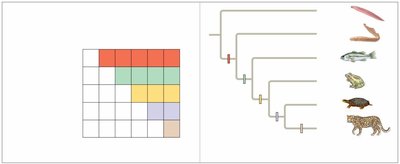
Cladistics classifies organisms based on common ancestry. A clade includes a common ancestor and all its descendants. Clades can be nested within larger clades, and modern systematics aims to classify organisms into monophyletic groups.
Clade: A group consisting of an ancestor and all its descendants.
Key Point: A clade represents a complete branch of the evolutionary tree.
Types of Evolutionary Groups
Group | Definition |
|---|---|
Monophyletic | Includes a common ancestor and all descendants |
Paraphyletic | Includes a common ancestor but not all descendants |
Polyphyletic | Includes organisms but excludes their most recent common ancestor |
Key Point: Only monophyletic groups accurately represent evolutionary relationships.
Shared Ancestral and Shared Derived Characters
Shared Ancestral Character | Shared Derived Character |
|---|---|
Present in distant ancestors | Evolutionary novelty unique to a clade |
Less useful for distinguishing close relationships | More useful for reconstructing phylogenies |
Key Point: Shared derived characters provide the strongest evidence for common ancestry.
Constructing Phylogenetic Trees
An ingroup is the group being studied, while an outgroup is a closely related group outside the ingroup. Traits shared by the outgroup are considered ancestral, and new traits found only within the ingroup are considered derived.
Key Point: Shared derived characters help determine evolutionary relationships.
Branch Lengths in Phylogenetic Trees
Some phylogenetic trees use branch lengths to represent genetic change or evolutionary time. Always check the figure legend to determine what branch lengths represent.
Key Point: Branch length has meaning only when specified.
Maximum Parsimony
Maximum parsimony is a principle that favors the simplest explanation requiring the fewest evolutionary changes. Computer programs evaluate many possible trees to identify the most parsimonious solution.
Key Point: The simplest explanation requiring the fewest evolutionary events is generally preferred.
Phylogenetic Trees as Testable Hypotheses
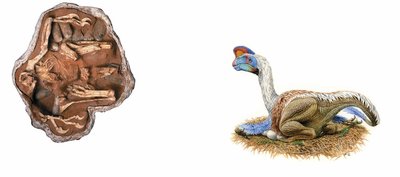
Phylogenetic trees are scientific hypotheses supported by available evidence. New fossil, anatomical, or molecular evidence can change evolutionary relationships. Phylogenetic bracketing uses living relatives to predict traits of extinct organisms, and fossil discoveries can test these predictions.
Key Point: Phylogenies continue to be refined as new evidence becomes available.
Molecular Clocks and Evolutionary Time
Estimating Evolutionary Time
A molecular clock estimates when species diverged by comparing DNA sequences. Mutations accumulate over time in some genes at a relatively consistent rate. Fossil evidence is used to calibrate molecular clocks.
Key Point: Molecular clocks help estimate evolutionary events that cannot be observed directly in the fossil record.
Limitations of Molecular Clocks
Mutation rates are not identical among all genes or organisms.
Natural selection can speed up or slow down genetic change.
Older evolutionary events are generally more difficult to estimate accurately.
Comparing multiple genes improves reliability.
Key Point: Molecular clocks provide estimates rather than exact dates.
Case Study: Tracing the Origin of HIV
Molecular clocks can reconstruct the evolutionary history of pathogens. DNA comparisons indicate that HIV originated from viruses infecting non-human primates, and analyses suggest the most common strain of HIV-1 emerged in humans during the early 1900s. These methods help scientists understand the spread and evolution of infectious diseases.
Key Point: Molecular clocks have important applications in medicine and public health.
The Tree of Life and Domains
The Three Domains of Life
All living organisms belong to one of three domains: Bacteria, Archaea, or Eukarya. Bacteria and Archaea are single-celled prokaryotes, while Eukarya includes protists, fungi, plants, and animals. DNA evidence supports this three-domain system.
Bacteria: Single-celled prokaryotes.
Archaea: Single-celled prokaryotes, distinct from bacteria.
Eukarya: Includes all eukaryotic organisms.
Key Point: DNA evidence supports the three-domain system.
Horizontal Gene Transfer
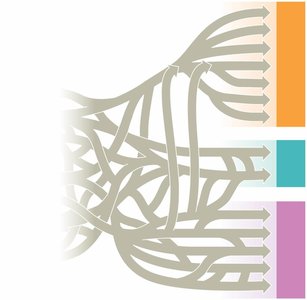
Horizontal gene transfer is the movement of genes between unrelated organisms, complicating the reconstruction of evolutionary relationships. It has played an important role in the evolution of many microorganisms and means that evolution is not always represented by a simple branching tree.
Key Point: Evolution is not always represented by a simple branching tree.
A Dynamic Tree of Life
Modern evolutionary biology combines evidence from morphology, fossils, DNA sequences, and comparative genomics. New discoveries continue to reshape our understanding of the evolutionary history of life.
Take-Home Message: Evolutionary classification is continually refined as new scientific evidence becomes available.
