 Back
Chapter 23: The Evolution of Populations – Study Notes
Study Guide - Smart Notes
 Tailored notes based on your materials, expanded with key definitions, examples, and context.
The Evolution of Populations
Introduction to Population Evolution
Evolution at the population level involves changes in allele frequencies over generations. While natural selection acts on individuals, only populations evolve. Understanding the mechanisms that drive these changes is fundamental to evolutionary biology.
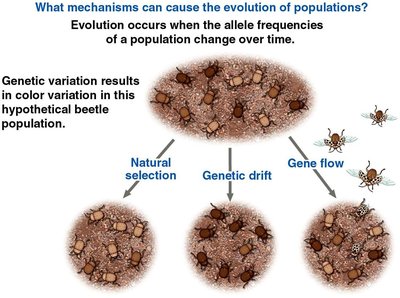
Mechanisms of Evolution
Microevolution
Microevolution refers to the change in allele frequencies in a population over generations. The three primary mechanisms that cause microevolution are:
Natural selection: Differential survival and reproduction lead to adaptation to the environment.
Genetic drift: Chance events cause random fluctuations in allele frequencies, especially in small populations.
Gene flow: The transfer of alleles between populations through migration of individuals or gametes.
Genetic Variation
Sources of Genetic Variation
Genetic variation, the prerequisite for evolution by natural selection, arises from differences in genes or DNA sequences among individuals. Phenotypic variation can result from both genetic and environmental influences, but only the genetically determined component is subject to evolutionary change.
Mutation: Changes in the nucleotide sequence of DNA, caused by replication errors or environmental factors.
Gene duplication: Duplication of entire genes increases genetic material for evolution.
Sexual reproduction: Recombines existing alleles through crossing over, independent assortment, and fertilization.
Mutation rates are generally low in animals and plants, but rapid generation times in prokaryotes and viruses allow mutations to accumulate quickly.
Sexual Reproduction and Genetic Variation
Most genetic variation in sexually reproducing organisms results from recombination of alleles. The three main mechanisms are:
Crossing over: Exchange of genetic material between homologous chromosomes during meiosis.
Independent assortment: Random distribution of chromosomes into gametes during meiosis.
Fertilization: Random combination of gametes from two parents.
Populations, Gene Pools, and Allele Frequencies
Definitions
Population: A group of individuals of the same species living in the same area and interbreeding.
Gene pool: All copies of every allele at every locus in all members of the population.
Allele frequency: The proportion of a specific allele among all alleles at a locus in the population.
Calculating Genotype and Allele Frequencies
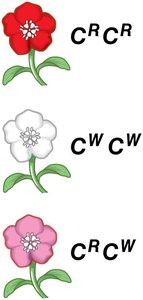
Consider a population of 500 wildflowers with three genotypes: 320 red (CRCR), 160 pink (CRCW), and 20 white (CWCW).
Genotype frequencies: - Red: 320/500 = 0.64 - Pink: 160/500 = 0.32 - White: 20/500 = 0.04
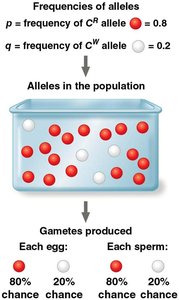
Allele frequencies: - Total alleles = 500 x 2 = 1000 - CR: (320 x 2) + 160 = 800 - CW: (20 x 2) + 160 = 200 - Frequency of CR (p): 800/1000 = 0.8 - Frequency of CW (q): 200/1000 = 0.2
The Hardy-Weinberg Principle
Hardy-Weinberg Equation
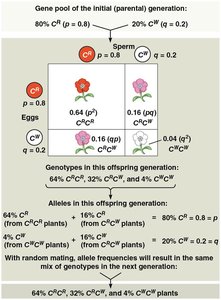
The Hardy-Weinberg equation describes the expected genetic makeup for a population that is not evolving at a particular locus. If observed frequencies differ from expectations, evolution may be occurring.
The equation is:
= frequency of homozygous dominant genotype
= frequency of heterozygous genotype
= frequency of homozygous recessive genotype
Conditions for Hardy-Weinberg Equilibrium
For a population to remain in Hardy-Weinberg equilibrium (no evolution), five conditions must be met:
Condition | Consequence if Condition Does Not Hold |
|---|---|
No mutations | Gene pool is modified if mutations occur or if genes are deleted/duplicated. |
Random mating | Nonrandom mating changes genotype frequencies. |
No natural selection | Allele frequencies change if survival/reproductive success differs among genotypes. |
Extremely large population size | Small populations experience genetic drift. |
No gene flow | Migration alters allele frequencies. |
Mechanisms That Alter Allele Frequencies
Natural Selection
Natural selection is based on differential success in survival and reproduction. Individuals with traits better suited to the environment produce more offspring, causing adaptive evolution—an increase in traits that enhance survival or reproduction.
Genetic Drift
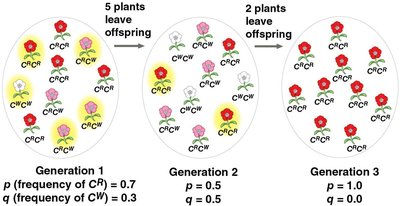
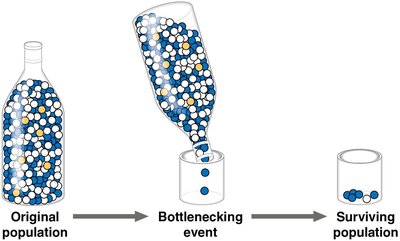
Genetic drift is the random fluctuation of allele frequencies, especially significant in small populations. It can lead to loss of genetic variation and fixation of harmful alleles.
Founder effect: When a few individuals become isolated, their allele frequencies differ from the original population.
Bottleneck effect: A drastic reduction in population size alters the gene pool, often reducing genetic diversity.
Gene Flow
Gene flow is the movement of alleles among populations via migration of individuals or gametes. It tends to reduce genetic differences between populations and can affect adaptation and fitness.
Modes of Natural Selection
Types of Selection
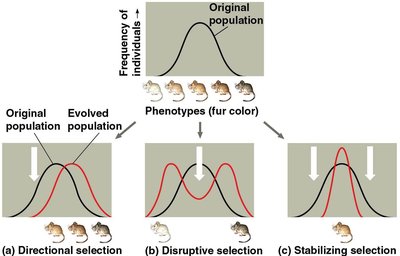
Natural selection can alter the frequency distribution of heritable traits in three ways:
Directional selection: Favors individuals at one extreme of the phenotypic range.
Disruptive selection: Favors individuals at both extremes.
Stabilizing selection: Favors intermediate variants, acting against extremes.
Sexual Selection
Sexual Dimorphism and Selection
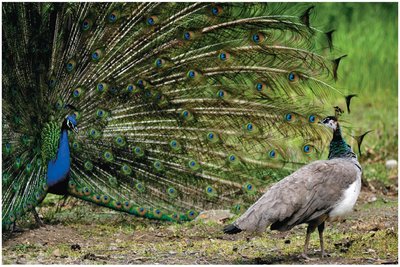
Sexual selection is a process where individuals with certain traits are more likely to obtain mates. It can result in sexual dimorphism—differences in secondary sexual characteristics between sexes (e.g., size, color, ornamentation).
Intrasexual selection: Competition among one sex (often males) for mates.
Intersexual selection (mate choice): Individuals of one sex (usually females) choose mates based on certain traits.
"Good genes" hypothesis: Females select males with traits indicating genetic quality or health.
Balancing Selection
Maintaining Genetic Variation
Balancing selection preserves variation at some loci by maintaining stable frequencies of two or more phenotypes. Mechanisms include:
Frequency-dependent selection: Fitness of a phenotype depends on its frequency in the population.
Heterozygote advantage: Heterozygotes have higher fitness than either homozygote, maintaining both alleles in the population.
The Sickle-Cell Allele: A Case Study
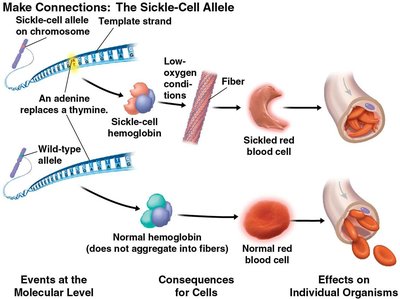
Sickle-cell disease is caused by a point mutation in the hemoglobin gene. Homozygotes for the sickle-cell allele have sickle-cell disease, while heterozygotes are more resistant to malaria, illustrating heterozygote advantage. This maintains the sickle-cell allele at relatively high frequencies in some regions.
Limits of Natural Selection
Why Natural Selection Cannot Fashion Perfect Organisms
Selection can act only on existing variations.
Evolution is limited by historical constraints.
Adaptations are often compromises between competing demands.
Chance, natural selection, and the environment interact to shape evolutionary outcomes.
