 Back
Chapter 24: The Origin of Species – Speciation and Reproductive Isolation
Study Guide - Smart Notes
 Tailored notes based on your materials, expanded with key definitions, examples, and context.
Chapter 24: The Origin of Species
Introduction to Speciation
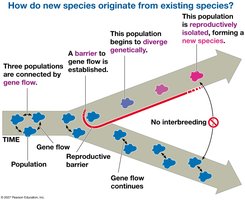
Speciation is the evolutionary process by which new biological species arise. It is central to understanding the diversity and unity of life, forming a bridge between microevolution (changes in allele frequency within populations) and macroevolution (broad evolutionary patterns above the species level).
Speciation: The process by which one species splits into two or more distinct species.
Microevolution: Changes in allele frequencies within a population over time.
Macroevolution: Large-scale evolutionary changes that occur above the species level.
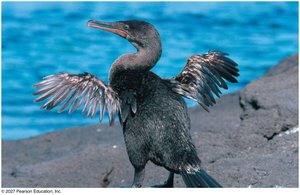
Example: The flightless cormorant of the Galápagos Islands is a unique species found nowhere else in the world.
The Biological Species Concept
Defining Species and Reproductive Isolation
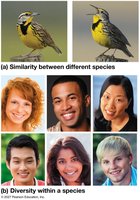
The biological species concept defines a species as a group of populations whose members can interbreed in nature and produce viable, fertile offspring. Reproductive isolation is key to maintaining species boundaries.
Species: Latin for "kind" or "appearance"; groups of organisms that are genetically distinct.
Reproductive Isolation: Biological barriers that prevent members of different species from interbreeding.
Gene Flow: The transfer of genetic material between populations, which holds a species together genetically.
Hybrid: Offspring resulting from interspecific mating.
Types of Reproductive Barriers
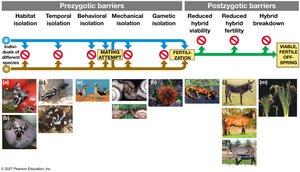
Reproductive barriers are classified as prezygotic (before fertilization) or postzygotic (after fertilization). These barriers limit hybrid formation and maintain species integrity.
Prezygotic Barriers: Prevent fertilization by impeding mating, preventing completion of mating, or hindering fertilization.
Postzygotic Barriers: Prevent hybrid zygotes from developing into viable, fertile adults.
Barrier Type | Mechanism | Example |
|---|---|---|
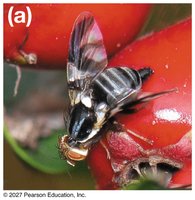
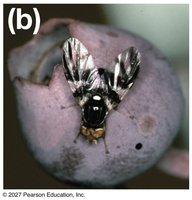
Habitat Isolation | Species occupy different habitats | Apple maggot flies vs. blueberry maggot flies |
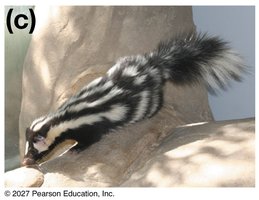
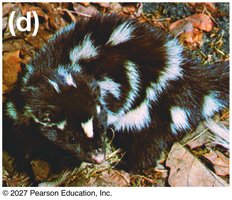
Temporal Isolation | Species breed at different times | Western vs. eastern spotted skunks |
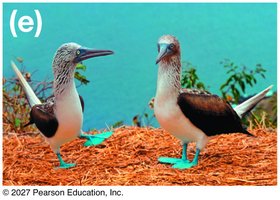
Behavioral Isolation | Unique courtship rituals | Blue-footed boobies |
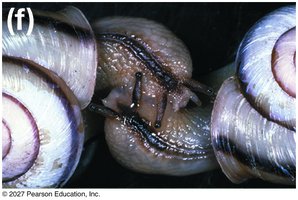
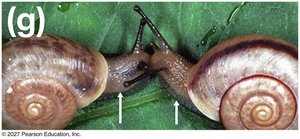
Mechanical Isolation | Morphological differences prevent mating | Snails with different shell spirals |
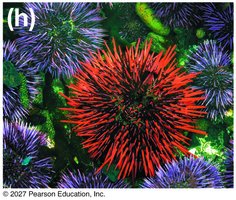
Gametic Isolation | Sperm cannot fertilize eggs | Sea urchin species |
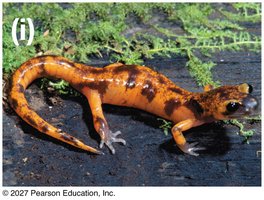
Reduced Hybrid Viability | Hybrid development impaired | Ensatina salamanders |
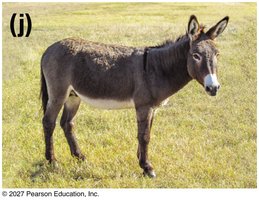
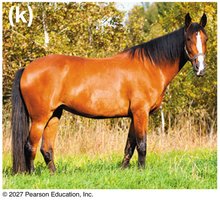
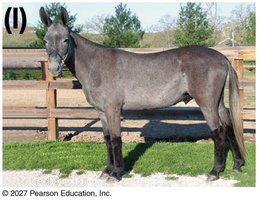
Reduced Hybrid Fertility | Hybrids are sterile | Mule (donkey × horse) |
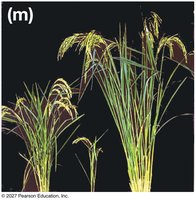
Hybrid Breakdown | Next generation hybrids are feeble or sterile | Rice hybrids |
Limitations and Alternative Species Concepts
The biological species concept is not universally applicable, especially for fossils and asexual organisms. Other concepts include morphological, ecological, and more than 20 additional definitions, each suited to different research contexts.
Morphological Species Concept: Distinguishes species by structural features; applies to both sexual and asexual species.
Ecological Species Concept: Defines species by their ecological niche.
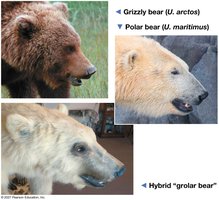
Example: Grizzly bears and polar bears can produce hybrid "grolar bears" despite being distinct species.
Modes of Speciation
Allopatric vs. Sympatric Speciation
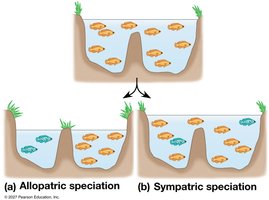
Speciation can occur with or without geographic separation. Allopatric speciation involves physical barriers, while sympatric speciation occurs within the same geographic area due to factors like polyploidy, sexual selection, or habitat differentiation.
Allopatric Speciation: Populations are geographically isolated, leading to genetic divergence.
Sympatric Speciation: Speciation occurs in populations sharing the same area, often due to genetic or ecological factors.
Evidence and Mechanisms of Allopatric Speciation
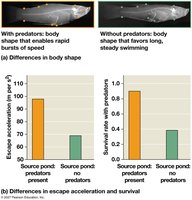
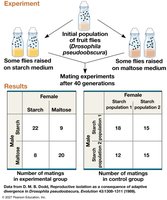
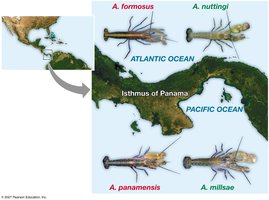
Geographic barriers and environmental differences drive divergence. Laboratory and natural studies show reproductive isolation can arise from environmental adaptation.
Example: Mosquitofish populations diverge in response to predation.
Example: Fruit flies raised on different diets prefer mates adapted to the same diet.
Example: Snapping shrimp species diverged after the formation of the Isthmus of Panama.
Mechanisms of Sympatric Speciation
Sympatric speciation is less common and often involves polyploidy, sexual selection, or habitat differentiation.
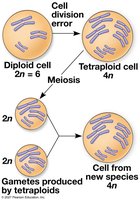
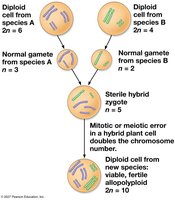
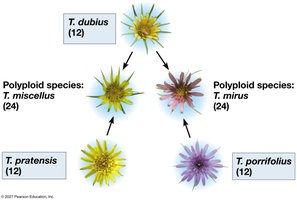
Polyploidy: Extra sets of chromosomes form new species rapidly, especially in plants.
Autopolyploid: Chromosome sets from a single species.
Allopolyploid: Chromosome sets from different species.
Example: Polyploid speciation in Tragopogon plants.
Sexual Selection: Female mate choice drives speciation, as seen in cichlids.
Habitat Differentiation: Apple maggot flies evolved after switching hosts from hawthorn to apple.
Hybrid Zones and Speciation Dynamics
Hybrid Zones
Hybrid zones are regions where different species meet and produce hybrids. These zones reveal factors influencing reproductive isolation and gene flow.
Hybrid Zone: Area where interbreeding occurs between species with incomplete reproductive barriers.
Example: Narrow hybrid zone for Bombina toads in Europe.
*Additional info: Images for hybrid zones and environmental change were not included due to lack of direct relevance in the provided set.*
Tempo and Genetics of Speciation
Speciation Rates and Genetic Changes
Speciation can occur rapidly or gradually, and may involve changes in few or many genes. The fossil record shows both punctuated equilibria and gradual patterns.
Punctuated Equilibria: Periods of stasis punctuated by rapid change.
Gradualism: Slow, continuous change over time.
Example: Hybrid sunflower species formed rapidly by hybridization.
Genetic Basis: Speciation may require changes in a single gene (e.g., shell spiral in snails) or multiple loci (e.g., flower color in monkey flowers).
*Additional info: Images for speciation rates and genetics were not included due to lack of direct relevance in the provided set.*
Summary Table: Types of Reproductive Barriers
Barrier | Type | Example |
|---|---|---|
Habitat Isolation | Prezygotic | Apple vs. blueberry maggot flies |
Temporal Isolation | Prezygotic | Western vs. eastern spotted skunks |
Behavioral Isolation | Prezygotic | Blue-footed boobies |
Mechanical Isolation | Prezygotic | Snails with different shell spirals |
Gametic Isolation | Prezygotic | Sea urchins |
Reduced Hybrid Viability | Postzygotic | Ensatina salamanders |
Reduced Hybrid Fertility | Postzygotic | Mule (donkey × horse) |
Hybrid Breakdown | Postzygotic | Rice hybrids |
Key Equations
Polyploidy Formation:
Allopolyploid Formation:
Conclusion
Speciation is a fundamental process in biology, explaining the origin and diversity of species. Understanding reproductive barriers, modes of speciation, and the genetic basis of speciation is essential for grasping evolutionary biology.
