 Back
BackChapter 27: Bacteria and Archaea – Structure, Diversity, and Roles in the Biosphere
Study Guide - Smart Notes
 Tailored notes based on your materials, expanded with key definitions, examples, and context.
Chapter 27: Bacteria and Archaea
Introduction to Prokaryotes
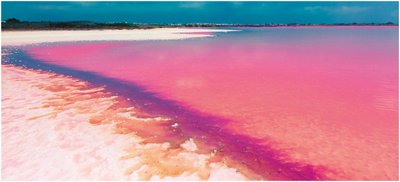
Prokaryotes, comprising the domains Bacteria and Archaea, are single-celled organisms that are the most abundant and diverse forms of life on Earth. They are adapted to a wide range of environments, including extreme habitats where few other organisms can survive.
Structural and Functional Adaptations of Prokaryotes
Cell Size, Shape, and Organization
Most prokaryotes are unicellular, though some form colonies.
Cell size typically ranges from 0.5–5 µm, much smaller than most eukaryotic cells (10–100 µm).
Common shapes include cocci (spheres), bacilli (rods), and spirilla (spirals).

Cell-Surface Structures
The cell wall maintains cell shape, protects the cell, and prevents lysis in hypotonic environments.
In hypertonic environments, prokaryotes lose water and may undergo plasmolysis.
Salt acts as a preservative by causing water loss in prokaryotes, inhibiting their growth.
Bacterial cell walls contain peptidoglycan, a polymer of sugars cross-linked by polypeptides.
Archaeal cell walls lack peptidoglycan and instead contain various polysaccharides and proteins.
Eukaryotic cell walls are made of cellulose (plants) or chitin (fungi).
Gram Staining and Cell Wall Composition
The Gram stain differentiates bacteria based on cell wall structure:
Gram-positive bacteria: Thick peptidoglycan layer, stain purple.
Gram-negative bacteria: Thin peptidoglycan layer, outer membrane with lipopolysaccharides, stain pink/red.
Gram-negative bacteria are generally more resistant to antibiotics due to their outer membrane.

Capsules, Slime Layers, and Endospores
Many prokaryotes secrete a sticky layer outside the cell wall:
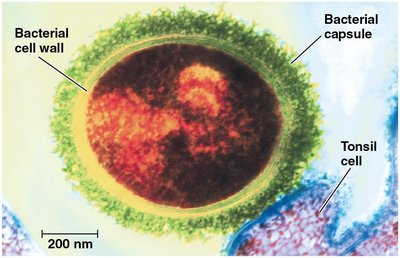
Capsule: Dense and well-defined.
Slime layer: Loosely organized.
Functions: Adherence, protection from dehydration, and evasion of host immune system.
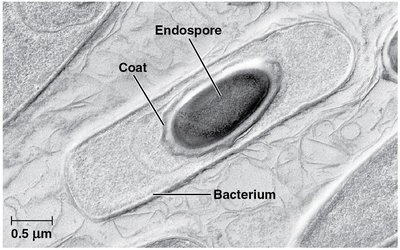
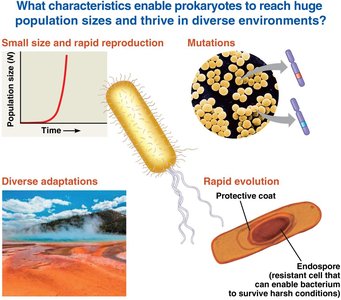
Some bacteria form endospores—dormant, resistant cells that survive extreme conditions.

Surface Appendages: Fimbriae and Pili
Fimbriae: Hairlike appendages for attachment to surfaces or other cells.
Pili (sex pili): Longer than fimbriae, used for DNA exchange during conjugation.
Motility and Taxis
About half of prokaryotes are motile, often using flagella for movement.
Taxis: Directed movement toward or away from stimuli (e.g., chemotaxis—response to chemicals).

Internal Organization and DNA
Prokaryotes lack membrane-bound organelles.
Some have infolded membranes for metabolic functions (e.g., respiration, photosynthesis).
Genetic material is a single circular chromosome located in the nucleoid region (no membrane).
May also contain plasmids: Small, independently replicating DNA rings.

Reproduction
Prokaryotes reproduce asexually by binary fission, often rapidly (every 1–3 hours under optimal conditions).
Key features: Small size, rapid reproduction, short generation times.
Genetic Diversity in Prokaryotes
Sources of Genetic Variation
Three main factors contribute to genetic diversity:
Rapid reproduction
Mutation
Genetic recombination
Mutations, though rare per division, accumulate quickly due to large populations and rapid reproduction.
Genetic Recombination Mechanisms
Transformation: Uptake of foreign DNA from the environment.
Transduction: Transfer of DNA via bacteriophages (viruses that infect bacteria).
Conjugation: Direct transfer of DNA between two cells via a pilus (mating bridge).
Horizontal gene transfer: Movement of genes between different species.

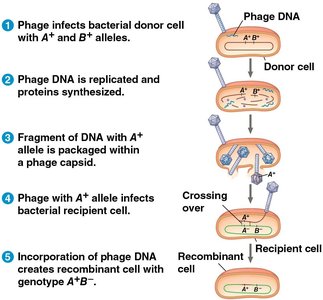
Antibiotic Resistance and R Plasmids
R plasmids carry genes for antibiotic resistance and can be transferred between bacteria, spreading resistance rapidly.
Nutritional and Metabolic Diversity
Modes of Nutrition
Prokaryotes are classified by how they obtain energy and carbon:
Mode | Energy Source | Carbon Source | Types of Organisms |
|---|---|---|---|
Photoautotroph | Light | CO2, HCO3-, or related compound | Photosynthetic prokaryotes (e.g., cyanobacteria); plants; certain protists |
Chemoautotroph | Inorganic chemicals (e.g., H2S, NH3, Fe2+) | CO2, HCO3-, or related compound | Certain prokaryotes (e.g., Sulfolobus) |
Photoheterotroph | Light | Organic compounds | Certain prokaryotes (e.g., Rhodobacter, Chloroflexus) |
Chemoheterotroph | Organic compounds | Organic compounds | Many prokaryotes (e.g., Clostridium); protists; fungi; animals; some plants |

Oxygen and Metabolism
Obligate aerobes: Require O2 for cellular respiration.
Obligate anaerobes: Poisoned by O2; use fermentation or anaerobic respiration.
Facultative anaerobes: Can use O2 if present or switch to anaerobic metabolism if not.
Biofilms
Prokaryotes often form biofilms: Surface-coating colonies with cooperative behavior.
Biofilms facilitate nutrient access, waste removal, and can cause medical and industrial problems (e.g., chronic infections, corrosion).

Prokaryotic Diversity and Evolution
Major Lineages
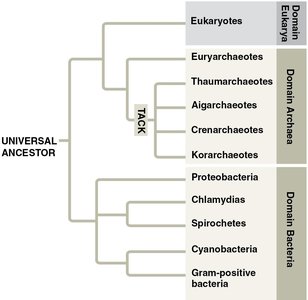
Genetic analysis divides prokaryotes into Bacteria and Archaea.
Prokaryotes inhabit every environment that supports life, with enormous genetic and metabolic diversity.

Bacterial Diversity
Proteobacteria: Gram-negative; includes photoautotrophs, chemoautotrophs, heterotrophs, and pathogens (e.g., Neisseria gonorrhoeae, Vibrio cholerae).
Chlamydias: Animal cell parasites; gram-negative walls lacking peptidoglycan (e.g., Chlamydia trachomatis).
Spirochetes: Helical, motile, gram-negative heterotrophs; some are pathogens (e.g., Treponema pallidum—syphilis).
Cyanobacteria: Gram-negative photoautotrophs; ancestors of plant chloroplasts.
Gram-positive bacteria: Diverse; includes soil decomposers (Streptomyces), pathogens (Staphylococcus aureus), and antibiotic producers.
Archaeal Diversity
Share traits with both bacteria and eukaryotes, but also have unique features.
Extremophiles: Thrive in extreme environments.
Extreme halophiles: Require or tolerate high salt concentrations.
Extreme thermophiles: Stable at high temperatures (even above 100°C).
Methanogens: Obligate anaerobes that produce methane; found in swamps, animal guts, and under ice.
Major clades: Euryarchaeota (halophiles, methanogens, some thermophiles), TACK supergroup (Thaumarchaeota, Aigarchaeota, Crenarchaeota, Korarchaeota), and Lokiarchaeotes (closely related to eukaryotes).
Prokaryotes in the Biosphere
Chemical Recycling
Prokaryotes are essential for recycling elements between living and nonliving systems.
Decomposers break down dead matter, releasing nutrients.
Autotrophic prokaryotes produce sugars and O2; nitrogen-fixing bacteria make nitrogen available to plants.
Ecological Interactions
Symbiosis: Close ecological relationship between two species (host and symbiont).
Types of symbiosis:
Mutualism: Both benefit.
Commensalism: One benefits, the other is unaffected.
Parasitism: Parasite benefits, host is harmed (pathogens cause disease).
Prokaryotes and Humans
Beneficial Prokaryotes
Many prokaryotes are mutualists in the human gut, aiding digestion and synthesizing nutrients (e.g., Bacteroides thetaiotaomicron).
Used in food production (cheese, yogurt, fermented foods) and biotechnology (bioremediation).
Pathogenic Prokaryotes
All known pathogenic prokaryotes are bacteria; cause about half of all human diseases (e.g., tuberculosis, Lyme disease).
Pathogenic mechanisms:
Exotoxins: Secreted proteins causing disease even if bacteria are absent (e.g., cholera toxin).
Endotoxins: Lipopolysaccharide components of gram-negative bacteria, released upon cell death (e.g., Salmonella).
Antibiotic resistance is a growing problem due to rapid evolution and gene transfer among bacteria.
Applications in Research and Technology
Prokaryotes are used in genetic engineering, production of antibiotics, and environmental cleanup (bioremediation).
