 Back
Chapter 28: Green Plants – Evolution, Diversity, and Adaptations
Study Guide - Smart Notes
 Tailored notes based on your materials, expanded with key definitions, examples, and context.
Introduction to Green Plants
The Viridiplantae: Green Algae and Land Plants
Green plants, collectively known as Viridiplantae, include both green algae and land plants. Green algae are important photosynthetic organisms in aquatic environments, while land plants dominate terrestrial ecosystems. The evolutionary transition from aquatic green algae to terrestrial land plants marked a significant transformation in Earth's biosphere.
Green algae are considered protists but are closely related to land plants.
Land plants were the first multicellular organisms to thrive fully exposed to air.
Both groups share key traits, such as similar chloroplast structure and starch synthesis.
Plants and Ecosystem Services
Role in Ecosystems
Green algae and land plants provide essential ecosystem services, including oxygen production, soil formation, water retention, and climate moderation.
Oxygenic photosynthesis by plants is crucial for atmospheric oxygen.
Plants build and hold soil, preventing erosion and enriching soil nutrients.
They moderate local climates by providing shade and reducing wind impact.
Plants as Primary Producers
Land plants are dominant primary producers in terrestrial ecosystems, converting sunlight into chemical energy and supporting nearly all other organisms.
Plants fix more CO2 than they release, playing a key role in the carbon cycle.
Loss of plant biomass contributes to global climate change.
Food, Fuel, Fiber, Building Materials, and Medicines
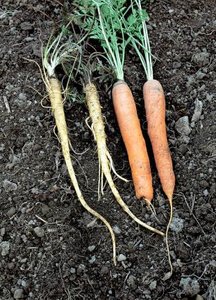
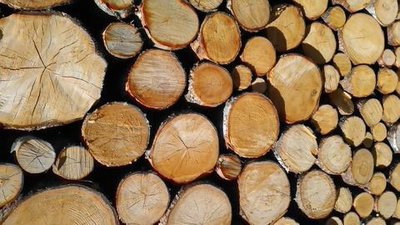
Plants are vital for human society, providing food, fuel, fibers, building materials, and medicines.
Food: Domestication and artificial selection have shaped crop plants.
Fuel: Wood and fossil fuels (coal, petroleum, natural gas) are derived from plants.
Fiber and Building Materials: Plants supply raw materials for clothing, paper, and construction.
Medicines: Many pharmaceuticals are plant-derived, often as defense compounds against herbivores.
Analyzing Morphological Traits
Diversity of Green Algae and Land Plants
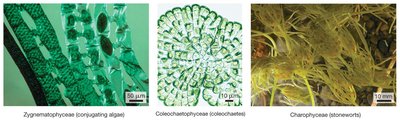
Green algae exhibit a range of forms—unicellular, colonial, or multicellular—and inhabit marine, freshwater, or moist terrestrial environments. Land plants are primarily terrestrial and evolved from multicellular freshwater algae.
Key similarities: chloroplast structure, thylakoid arrangement, cell wall composition, sperm structure, and starch storage.
Major Groups of Land Plants
Nonvascular Plants
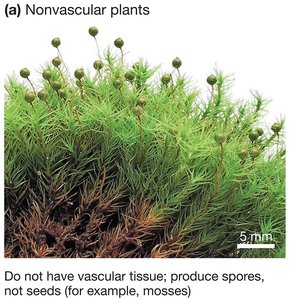
Nonvascular plants lack specialized vascular tissue and reproduce via spores. Mosses are a typical example.
No vascular tissue; rely on diffusion for water and nutrient transport.
Gametophyte is the dominant life stage.
Seedless Vascular Plants
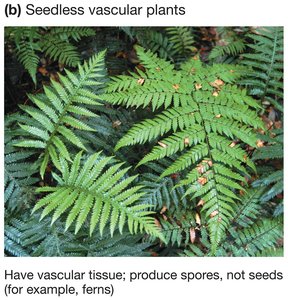
Seedless vascular plants possess vascular tissue but reproduce via spores. Ferns are a representative group.
Vascular tissue allows upright growth and efficient water transport.
Sporophyte is the dominant life stage.
Seed Plants
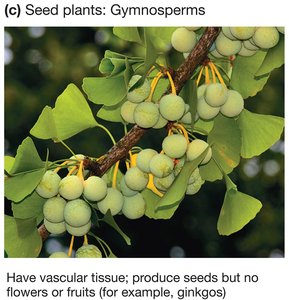
Seed plants have vascular tissue and reproduce via seeds, which consist of an embryo, nutritive tissue, and a protective coat. They include gymnosperms and angiosperms.
Seeds enable dispersal and survival in diverse environments.
Angiosperms produce flowers and fruits; gymnosperms do not.
Molecular Phylogenies and Evolutionary Relationships
Phylogenetic Tree of Green Plants
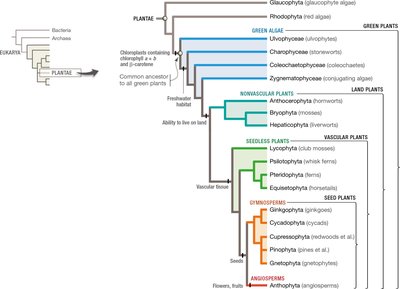
Molecular phylogenies reveal that green plants are monophyletic, with green algae being paraphyletic. Land plants evolved from multicellular freshwater green algae, specifically the Zygnematophyceae.
Nonvascular plants are the earliest-branching land plants.
Vascular tissue and seeds evolved only once.
Adaptations to Terrestrial Life
Adaptations for Dry Conditions and Intense Sunlight
Early land plants evolved adaptations to prevent water loss, protect against UV radiation, and transport water internally.
Cuticle: Waxy layer preventing water loss.
Stomata: Pores for gas exchange.
Flavonoids: UV-absorbing compounds.
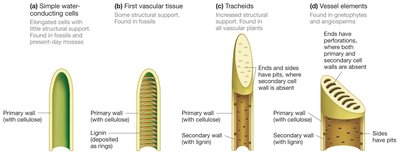
Tracheids: Specialized cells for water transport and structural support.
The Importance of Upright Growth
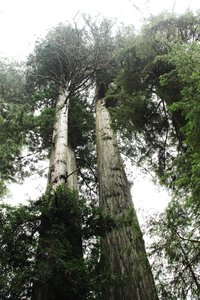
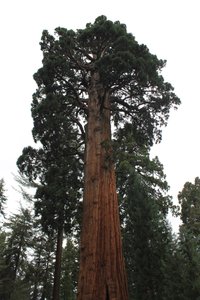
Upright growth allowed plants to access more sunlight and compete effectively. Vascular tissue provided both support and water transport.
Evolutionary Sequence in Water-Conducting Cells
Water-conducting cells evolved from simple elongated cells to complex vessel elements found in angiosperms.
Simple water-conducting cells → First vascular tissue → Tracheids → Vessel elements
Plant Reproduction in Dry Conditions
Innovations for Reproduction on Land
Three key innovations enabled plants to reproduce in dry environments:
Spores with tough coats (sporopollenin) resist desiccation.
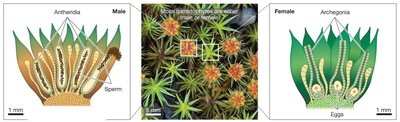
Gametangia: Complex reproductive organs protect gametes.
Embryo retention: Embryos are nourished by parent tissues.
Alternation of Generations
Life Cycle of Land Plants
All land plants undergo alternation of generations, with multicellular haploid (gametophyte) and diploid (sporophyte) phases.
Sporophyte produces haploid spores by meiosis.
Spores develop into gametophytes, which produce gametes by mitosis.
Fertilization forms a diploid zygote, which develops into a sporophyte.
Gametophyte-Dominant vs. Sporophyte-Dominant Life Cycles
Nonvascular plants are gametophyte-dominant, while vascular plants are sporophyte-dominant. Diploid sporophytes offer evolutionary advantages, such as DNA repair and masking deleterious mutations.
Homospory and Heterospory
Homospory
Homospory is the production of a single type of spore, which develops into a bisexual gametophyte.
Heterospory
Heterospory involves two types of spores: microspores (male gametophytes) and megaspores (female gametophytes). Seed plants are heterosporous.
Pollen and Seeds
Pollen
Pollen grains are male gametophytes surrounded by sporopollenin, enabling fertilization without water.
Seeds
Seeds contain an embryo and food supply, surrounded by a protective coat, allowing dispersal and survival in diverse environments.
Flowers and Fruit
Angiosperms
Angiosperms are the most diverse land plants, producing flowers and fruits that facilitate pollination and seed dispersal.
Diversity of Green Algae and Land Plants
Key Lineages of Green Algae
Lineage | Known Species | Habitat | Reproduction | Life Cycle | Relevance |
|---|---|---|---|---|---|
Ulvophyceae | 4000 | Marine/Freshwater | Sexual/asexual | Alternation of generations in multicellular species | Primary producers in aquatic environments |
Charophyceae | 6000 | Freshwater | Sexual/asexual | Zygotes only diploid stage | Close relatives to land plants |
Coleochaetophyceae | 19 | Freshwater | Sexual/asexual | Zygotes only diploid stage | Close relatives to land plants |
Zygnematophyceae | 2700 | Freshwater | Sexual/asexual | Zygotes only diploid stage | Closest living relatives to land plants |
Key Lineages of Nonvascular Plants
Lineage | Known Species | Reproduction | Life Cycle | Relevance |
|---|---|---|---|---|
Hepaticophyta (Liverworts) | 8500 | Sexual/asexual | Gametophyte dominant | Resemble first land plants; contribute to soil formation |
Bryophyta (Mosses) | 12,000 | Sexual/asexual | Gametophyte dominant | Form peat; soil additive |
Anthocerophyta (Hornworts) | 19 | Sexual/asexual | Gametophyte dominant | Symbiotic cyanobacteria fix nitrogen |
Key Lineages of Seedless Vascular Plants
Lineage | Known Species | Reproduction | Life Cycle | Relevance |
|---|---|---|---|---|
Lycophyta (Club mosses) | 1000 | Sexual/asexual | Sporophyte dominant | Ancient roots; flash powder |
Psilophyta (Whisk ferns) | 6 | Sexual/asexual | Sporophyte dominant | Landscaping; unwanted weed |
Pteridophyta (Ferns) | 12,000 | Sexual/asexual | Sporophyte dominant | Ornamental; culinary delicacy |
Equisetophyta (Horsetails) | 25 | Sexual/asexual | Sporophyte dominant | Scouring rushes; abrasive stems |
Key Lineages of Seed Plants: Gymnosperms
Lineage | Known Species | General Features | Life Cycle | Relevance |
|---|---|---|---|---|
Ginkgophyta | 1 | Deciduous; living fossil | Separate male/female plants | Ornamental; dietary supplement |
Cycadophyta | 140 | Compound leaves; ancient | Separate male/female plants | Landscaping; nitrogen fixation |
Cupressophyta | 150 | Size range; small leaf area | Separate male/female cones | Cedar wood; taxol drug |
Pinophyta | 240 | Needle-like leaves | Separate male/female cones | Building; paper industry |
Gnetophyta | 70 | Vines, trees, shrubs | Double fertilization | Ephedrine drug; Namib desert |
Key Lineages of Seed Plants: Angiosperms
Lineage | Known Species | General Features | Phylogenetic Relationships | Relevance |
|---|---|---|---|---|
Basal angiosperms | 200 | Oldest living angiosperms | Paraphyletic assemblage | Sister taxon to all flowering plants |
Monocots | 60,000 | Single seed leaf; parallel veins | Monophyletic group | Major crops: corn, wheat, rice |
Magnoliids | 9000 | Large flowers; net-veined leaves | Monophyletic group | Food, medicines, perfumes |
Eudicots | 200,000 | Two seed leaves; three-grooved pollen | Monophyletic group | Largest group; food, timber, medicines |
Summary Table: Plant Phylogeny and Innovations
Additional info: This summary expands on brief points with academic context, definitions, and examples to provide a comprehensive study guide for Chapter 28: Green Plants.
