 Back
Chapter 29: Fungi – Structure, Function, and Ecological Roles
Study Guide - Smart Notes
 Tailored notes based on your materials, expanded with key definitions, examples, and context.
Fungi: Introduction and Overview
General Characteristics of Fungi
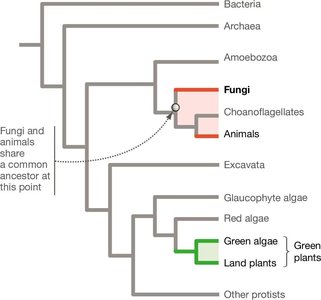
Fungi are a diverse group of eukaryotic organisms that evolved from protists and are closely related to animals. They play essential roles in ecosystems as decomposers, mutualists, and parasites. Fungi absorb nutrients from their environment, either from dead organic matter or living hosts, and are key contributors to nutrient cycling and ecosystem productivity.
Eukaryotic: Possess membrane-bound organelles and a true nucleus.
Decomposers: Many fungi break down dead plants and animals, recycling nutrients.
Mutualists: Some fungi form beneficial associations with plants and other organisms.
Parasites: A minority of fungi cause diseases in plants, animals, and humans.
Example: Fungi release nutrients from dead organisms and transfer them to living plants, profoundly influencing terrestrial productivity.
Economic and Ecological Impacts of Fungi
Fungi and Human Health
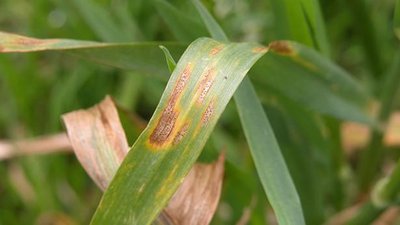
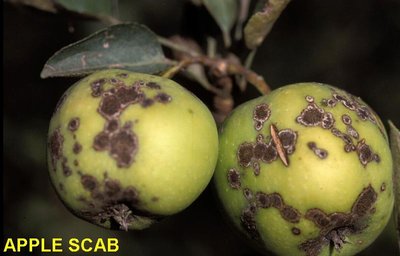
Although only about 300 species of fungi cause human illness, their impact on agriculture and food supply is significant. Fungi are responsible for plant diseases such as rusts, smuts, mildews, wilts, and blights, leading to substantial crop losses.
Plant Pathogens: Cause diseases like Septoria leaf blotch and apple scab.
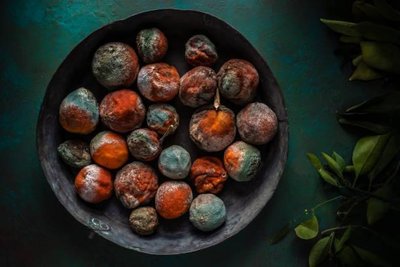
Food Spoilage: Saprophytic fungi contribute to losses by spoiling stored food.
Morphological Traits of Fungi
Growth Forms
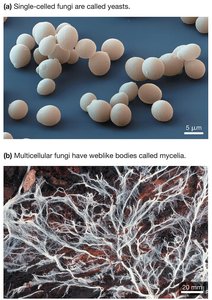
Fungi exhibit two primary growth forms: single-celled yeasts and multicellular, filamentous mycelia. Some species can alternate between these forms.
Yeasts: Single-celled fungi.
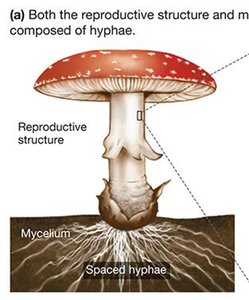
Mycelia: Multicellular, web-like bodies composed of hyphae.
Hyphae Structure
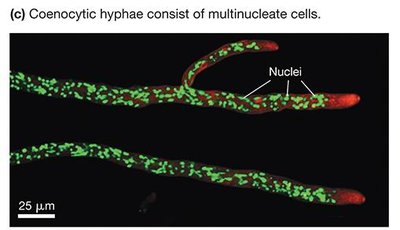
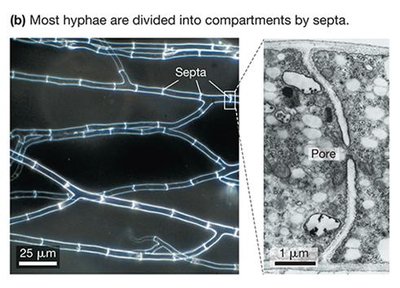
Hyphae are the fundamental structural units of mycelia. They can be divided by septa (cross-walls) or be coenocytic (lacking septa, multinucleate).
Septate Hyphae: Divided into compartments by septa with pores for material flow.
Coenocytic Hyphae: Multinucleate, lacking septa, allowing rapid nutrient movement.
Mycelia Surface Area
Mycelia have a high surface-area-to-volume ratio, making nutrient absorption highly efficient but also making them prone to drying out. Spores are resistant to desiccation and can germinate when conditions improve.
Fungi and the Carbon Cycle
Saprophytic Fungi
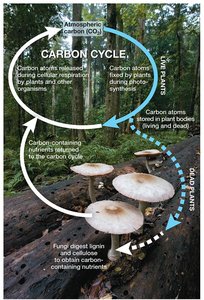
Saprophytes digest dead plant material, accelerating the carbon cycle by converting organic carbon into CO2 through cellular respiration. This process is crucial for nutrient cycling in terrestrial ecosystems.
Carbon Fixation: Land plants fix carbon during photosynthesis.
Carbon Release: Fungi release CO2 during decomposition.
Fungal Symbioses
Mycorrhizal Fungi
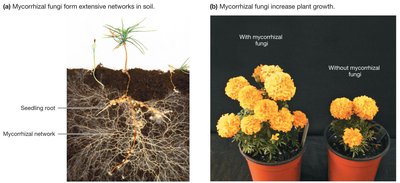
Mycorrhizal fungi form mutualistic associations with plant roots, enhancing nutrient uptake and plant growth. There are two main types: ectomycorrhizal fungi (EMF) and arbuscular mycorrhizal fungi (AMF).
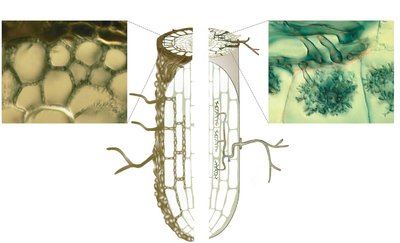
EMF: Form sheaths around roots and penetrate between root cells.
AMF: Penetrate cell walls and contact plasma membranes of root cells.
Endophytes
Endophytes are fungi living inside plant tissues, often increasing drought tolerance and deterring herbivores. They absorb sugars from their host plants.
Lichens
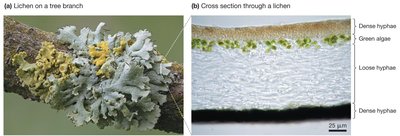
Lichens are mutualistic associations between a fungus (usually an ascomycete) and a cyanobacterium or green alga. They are important colonizers of rocks and primary producers in harsh environments.
Phylogeny and Major Lineages of Fungi
Fungal Phylogeny
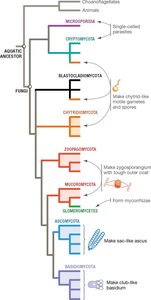
Fungi are more closely related to animals than to plants. Major fungal groups include microsporidians, chytrids, zygomycetes, glomeromycetes, basidiomycetes, and ascomycetes. Basidiomycota and Ascomycota form a monophyletic group, both producing septate hyphae and large fruiting structures.
Fungal Reproduction
Reproductive Structures
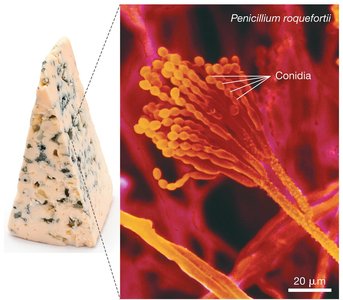
Fungi reproduce both sexually and asexually, producing spores as their primary dispersal mechanism. Four main types of reproductive structures are found in sexually reproducing fungi:
Swimming gametes and spores: Chytrids produce motile gametes and spores.
Zygosporangia: Zygomycetes form tough, spore-producing structures.
Basidia: Basidiomycetes produce club-like cells for spore formation.
Asci: Ascomycetes produce sac-like cells for spore formation.
Multiple Mating Types and Fertilization
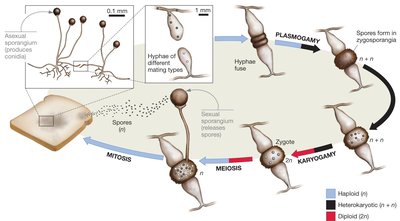
Fungi often have multiple mating types, increasing genetic diversity. Fertilization occurs in two steps: fusion of hyphae (plasmogamy) and fusion of nuclei (karyogamy). Heterokaryotic cells contain two or more genetically distinct nuclei.
Plasmogamy: Fusion of cytoplasms from different mating types.
Karyogamy: Fusion of nuclei to form a diploid zygote.
Life Cycles of Major Fungal Groups
Sexually reproducing fungi exhibit diverse life cycles, often including a heterokaryotic stage. Key life cycles include:
Chytrid Life Cycle: Alternation of generations, motile gametes and spores.
Zygomycete Life Cycle: Formation of zygosporangium, asexual and sexual spore production.
Basidiomycete Life Cycle: Dikaryotic hyphae, basidia formation, meiosis yields four haploid spores.
Ascomycete Life Cycle: Heterokaryotic cells, asci formation, meiosis and mitosis yield eight haploid spores.
Key Lineages of Fungi
Summary Table: Major Fungal Groups
Group | Key Features | Reproductive Structure |
|---|---|---|
Chytrids | Motile gametes and spores | Swimming gametes/spores |
Zygomycetes | Coenocytic hyphae, zygosporangia | Zygosporangium |
Glomeromycetes | Form mycorrhizae | None distinctive |
Basidiomycetes | Septate hyphae, fruiting bodies | Basidia |
Ascomycetes | Septate hyphae, fruiting bodies | Asci |
Additional info: Chytrids and zygomycetes are not monophyletic and should not be named as single lineages.
----------------------------------------
