 Back
Chapter 3: The Molecules of Cells – General Biology Study Notes
Study Guide - Smart Notes
 Tailored notes based on your materials, expanded with key definitions, examples, and context.
The Importance of Biological Molecules
Introduction to Biological Molecules
Biological molecules are essential for the structure and function of living organisms. The inability to digest certain foods, such as dairy products due to lack of the enzyme lactase, highlights the critical role of enzymes and other biological molecules in daily life.

Lactose intolerance is caused by the absence of lactase, an enzyme that breaks down lactose.
Enzymes are proteins that catalyze biochemical reactions.
Biological molecules include carbohydrates, lipids, proteins, and nucleic acids.
Life’s Molecular Diversity and Carbon
The Role of Carbon in Molecular Diversity
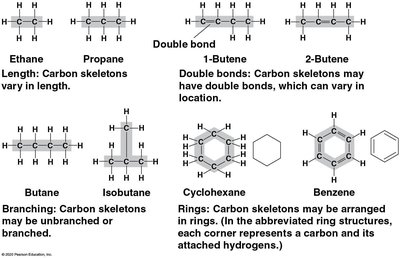
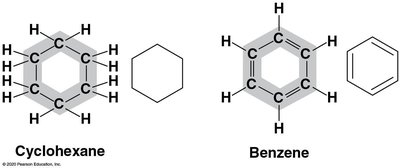
Carbon is the foundation of organic molecules due to its ability to form four covalent bonds, creating a wide variety of structures. This versatility allows for the formation of chains, rings, and branched molecules, which are the backbone of most organic compounds.
Isomers are molecules with the same formula but different structures.
Hydrocarbons consist only of carbon and hydrogen.
Carbon skeletons can vary in length, branching, and ring formation.
Functional Groups and Their Properties
Key Functional Groups in Organic Molecules
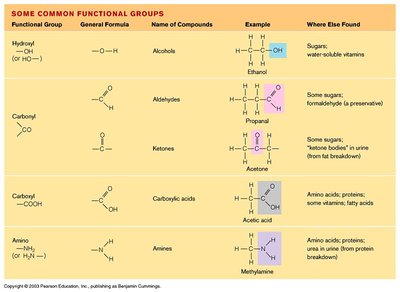
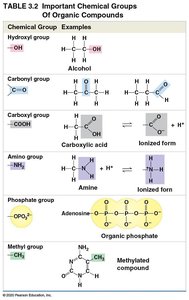
Functional groups are specific clusters of atoms within molecules that determine their chemical properties and reactivity. Hydrophilic functional groups make molecules soluble in water and are crucial for biological activity.
Hydroxyl group (–OH): Found in alcohols, increases solubility.
Carboxyl group (–COOH): Acts as an acid, found in amino acids and fatty acids.
Amino group (–NH2): Acts as a base, found in amino acids.
Phosphate group (–PO4): Important in energy transfer (ATP).
Methyl group (–CH3): Affects gene expression.
Macromolecules: Polymers and Monomers
Polymer Formation and Breakdown
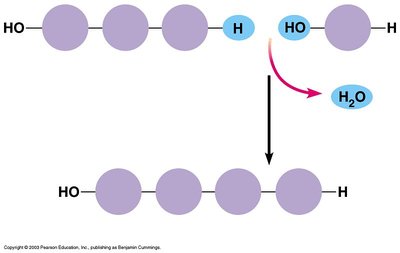
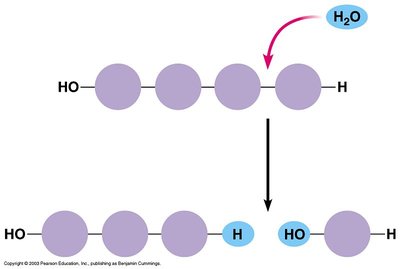
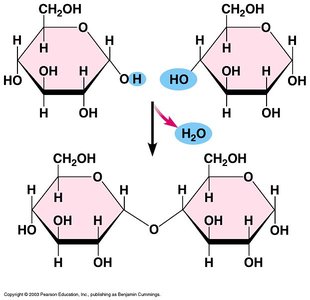
Cells build large molecules (macromolecules) from smaller units (monomers) through dehydration synthesis, and break them down by hydrolysis. Enzymes facilitate these reactions.
Dehydration synthesis: Removes water to join monomers into polymers.
Hydrolysis: Adds water to break polymers into monomers.
Four major classes: carbohydrates, lipids, proteins, nucleic acids.
Carbohydrates
Monosaccharides: The Simplest Carbohydrates
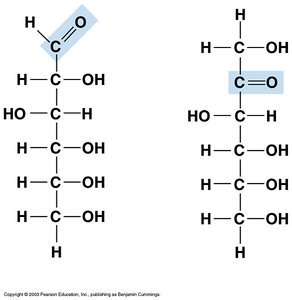
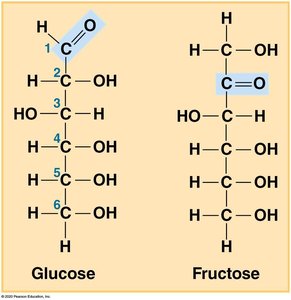
Monosaccharides are single-unit sugars and serve as the primary fuel for cellular work. Their general formula is a multiple of CH2O, and they contain hydroxyl and carbonyl groups.
Glucose and fructose are isomers with the same formula but different structures.
Monosaccharides often form ring structures in aqueous solutions.
Disaccharides: Linking Monosaccharides
Disaccharides are formed by joining two monosaccharides via a dehydration reaction. Examples include sucrose (table sugar) and maltose (brewing sugar).
Sucrose: Glucose + fructose
Maltose: Glucose + glucose
Polysaccharides: Long Chains of Sugar Units
Polysaccharides are polymers of hundreds or thousands of monosaccharides. They serve as storage (starch, glycogen) or structural (cellulose, chitin) molecules.
Starch: Storage in plants
Glycogen: Storage in animals
Cellulose: Structural in plant cell walls
Chitin: Structural in fungi and exoskeletons of insects
Lipids
Fats and Oils: Energy Storage Molecules
Lipids are hydrophobic molecules composed mainly of carbon and hydrogen. Fats (triglycerides) consist of glycerol linked to three fatty acids and are used for energy storage.
Saturated fats: No double bonds, solid at room temperature (animal fats).
Unsaturated fats: One or more double bonds, liquid at room temperature (plant oils).
Trans fats: Produced by hydrogenation, associated with health risks.
Phospholipids, Waxes, and Steroids
Phospholipids are major components of cell membranes, waxes provide waterproof coatings, and steroids (such as hormones) have diverse functions.
Phospholipids: Glycerol, two fatty acids, and a phosphate group.
Steroids: Four fused rings, include cholesterol and hormones.
Proteins
Structure and Function of Proteins
Proteins are polymers of amino acids and are the most diverse macromolecules in terms of structure and function. Their function depends on their unique three-dimensional shape.
Amino acids: 20 types, each with a unique R group.
Peptide bonds: Link amino acids via dehydration synthesis.
Denaturation: Loss of protein shape and function due to environmental changes.
Levels of Protein Structure
Primary structure: Sequence of amino acids.
Secondary structure: Coiling (alpha helix) or folding (beta sheet) stabilized by hydrogen bonds.
Tertiary structure: Overall 3D shape due to interactions among R groups.
Quaternary structure: Association of multiple polypeptide chains.
Nucleic Acids
DNA and RNA: Informational Polymers
Nucleic acids, including DNA and RNA, store and transmit hereditary information. They are polymers of nucleotides, each consisting of a sugar, phosphate, and nitrogenous base.
DNA: Double helix, bases A, T, C, G
RNA: Single-stranded, bases A, U, C, G
Complementary base pairing: A-T (2 H bonds), C-G (3 H bonds)
Genes: Stretches of DNA that code for proteins
Summary Table: Macromolecules
Macromolecule | Monomer | Example | Function |
|---|---|---|---|
Carbohydrate | Monosaccharide | Glucose, Starch | Energy storage, structure |
Lipid | Fatty acid, glycerol | Triglyceride, Phospholipid | Energy storage, membranes |
Protein | Amino acid | Enzyme, Collagen | Catalysis, structure, transport |
Nucleic Acid | Nucleotide | DNA, RNA | Information storage, transmission |
Testing for Macromolecules
Macromolecule | Indicator Used | Positive Result |
|---|---|---|
Lipids | Sudan / paper | Red/Translucent |
Starch | Iodine | Blue-Black color |
Simple Sugars | Benedicts and Heat | Orange color |
Proteins | Biuret reagent | Violet-purple color |
Additional info: These notes expand on the original slides and textbook excerpts, providing definitions, examples, and context for each major class of biological macromolecules. The included images directly illustrate key concepts such as carbon skeletons, functional groups, polymer formation, and carbohydrate structures.
