 Back
Chapter 3: Water and Life – Properties, Acids, Bases, and Buffers
Study Guide - Smart Notes
 Tailored notes based on your materials, expanded with key definitions, examples, and context.
Water and Life
Introduction
Water is essential for all known forms of life. Its unique chemical and physical properties, arising from its molecular structure and hydrogen bonding, make it indispensable for biological systems. This chapter explores the molecular basis of water’s properties, their biological significance, and the role of acids, bases, and buffers in living organisms.
Polar Covalent Bonds and Hydrogen Bonding in Water
Structure of Water Molecules
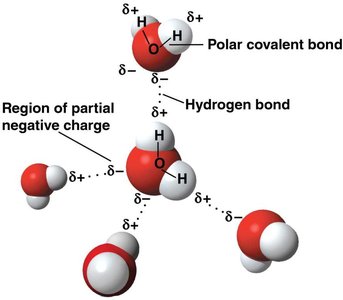
Polar covalent bonds occur when electrons are shared unequally between atoms, as in water (H2O), where oxygen is more electronegative than hydrogen.
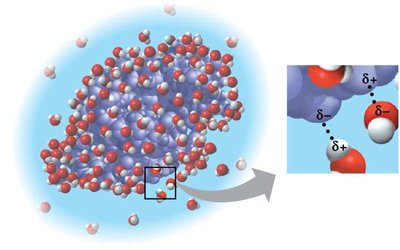
This results in a partial negative charge (δ−) near the oxygen atom and partial positive charges (δ+) near the hydrogen atoms.
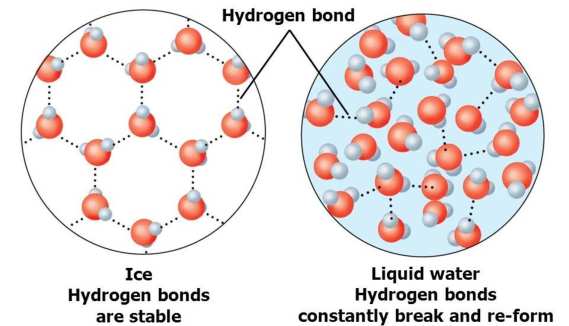
Hydrogen bonds form between the slightly positive hydrogen of one water molecule and the slightly negative oxygen of another, creating a network of interactions.
Emergent Properties of Water
Cohesion and Surface Tension
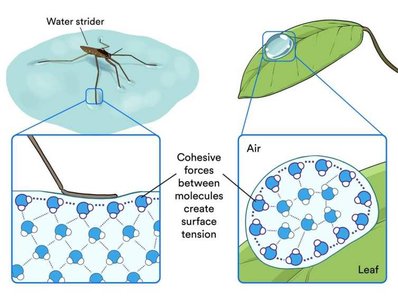
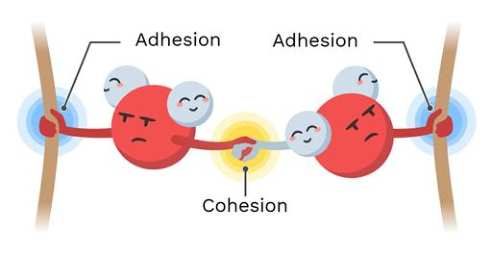
Cohesion refers to the attraction between water molecules due to hydrogen bonding, which gives rise to surface tension—the ability of water’s surface to resist external force.
Cohesion allows water to form droplets and enables the transport of water in plants.
Surface tension allows small organisms, like water striders, to walk on water.
Adhesion
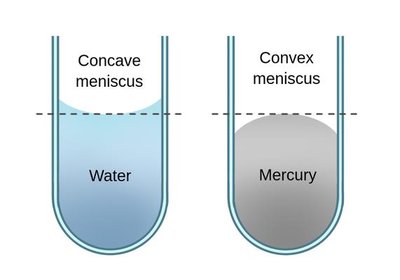
Adhesion is the tendency of water molecules to stick to other substances, which is crucial for processes like capillary action in plants.
Adhesion enables water to climb up plant vessels against gravity.
It is often observed as a concave meniscus in a graduated cylinder.
Specific Heat Capacity
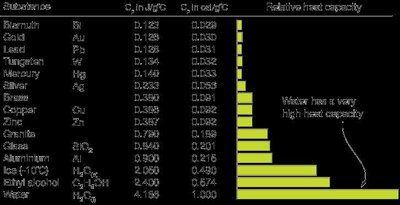
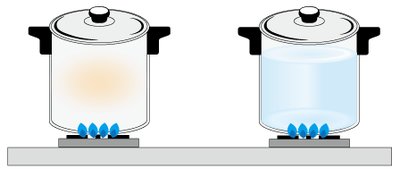
Water has a high specific heat capacity, meaning it can absorb or release large amounts of heat with only a slight change in its own temperature. This property stabilizes temperatures in organisms and environments.
Specific heat of water: 4186 J/kg·°C (or 1 kcal/kg·°C), the highest among common liquids.
Hydrogen bonds must be broken for water to heat up, requiring more energy.
This property moderates Earth’s climate and helps organisms maintain homeostasis.
Heat of Vaporization and Evaporative Cooling
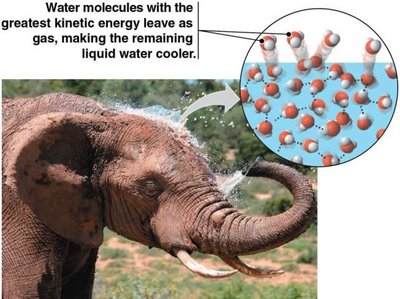
Water’s high heat of vaporization means it takes significant energy to convert liquid water to vapor. As water evaporates, it cools the surface left behind—a process called evaporative cooling.
Heat of vaporization: 580 cal/g under standard conditions.
Evaporative cooling helps regulate temperature in organisms (e.g., sweating, transpiration in plants).
Density of Water and Ice
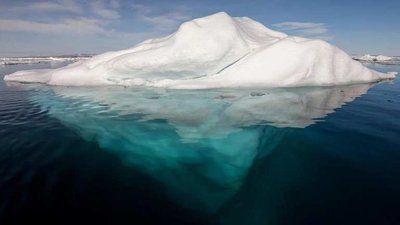
Water is one of the few substances that is less dense as a solid (ice) than as a liquid. This is due to the stable hydrogen bonds in ice, which hold water molecules further apart.
Density of liquid water: 1 g/mL
Density of ice: 0.9 g/mL
This property allows ice to float, insulating aquatic life in cold climates.
Solvation: Water as a Solvent
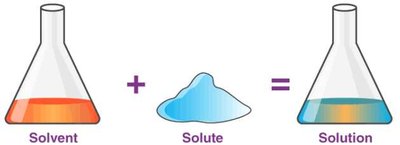
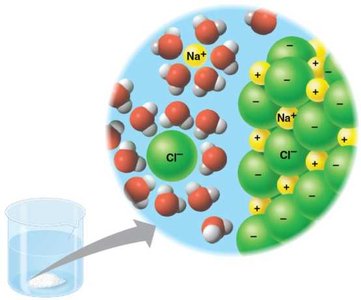
Water’s polarity makes it an excellent solvent, capable of dissolving many ionic and polar substances. This property is vital for biochemical reactions and transport of nutrients and wastes in living organisms.
Solvent: The dissolving agent of a solution (water is often called the “universal solvent”).
Solute: The substance dissolved in the solvent.
“Like dissolves like”: Polar and ionic compounds dissolve well in water; non-polar compounds do not.

Acids, Bases, and the pH Scale
Water Dissociation and Ion Formation
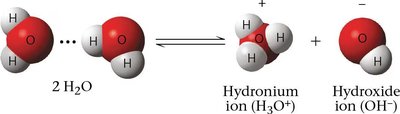
Water can act as both an acid and a base, dissociating into hydronium (H3O+) and hydroxide (OH−) ions.
Acid: Increases the concentration of H+ ions in solution.
Base: Reduces the concentration of H+ ions, often by producing OH−.
Strong and Weak Acids/Bases
Strong acids and bases dissociate completely in water (e.g., HCl, NaOH).
Weak acids and bases dissociate partially (e.g., H2CO3, NH3).
The pH Scale
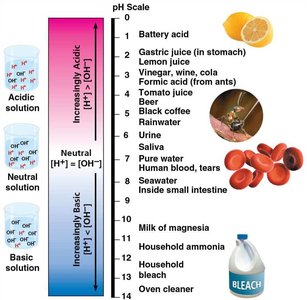
The pH scale quantifies the concentration of hydrogen ions in a solution. It is logarithmic, meaning each unit change represents a tenfold difference in [H+].
pH = -log[H+]
At 25°C, pure water has [H+] = 1 × 10⁻⁷ M, so pH = 7 (neutral).
pH + pOH = 14 at 25°C.
pH Calculations
Example: For a 0.010 M HNO3 solution, pH = 2.
Example: If pOH = 12, then pH = 2, and [H+] = 10−2 M.
Buffers and pH Stability
Role of Buffers
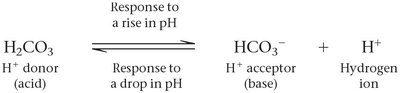
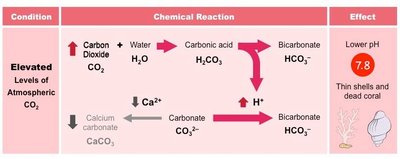
Buffers are substances that minimize changes in pH by accepting or donating H+ ions. They are crucial for maintaining stable pH in biological systems, such as blood.
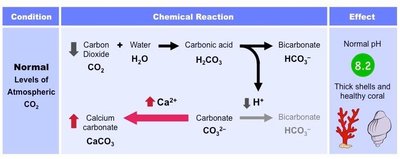
Most biological fluids contain buffers, such as the bicarbonate buffer system in blood.
Buffer systems typically consist of a weak acid and its conjugate base.
Summary of Key Points
Water’s polarity and hydrogen bonding are the basis for its unique properties.
Emergent properties include cohesion, adhesion, high specific heat, high heat of vaporization, lower density of ice, and excellent solvent abilities.
Acids and bases are defined by their effect on [H+] in solution; pH is a logarithmic measure of [H+].
Buffers help maintain pH stability in biological systems.
