 Back
Chapter 3: Water and Life – Properties, Structure, and Biological Importance
Study Guide - Smart Notes
 Tailored notes based on your materials, expanded with key definitions, examples, and context.
Chapter 3: Water and Life
Learning Objectives
Explain how hydrogen bonding results from polar covalent bonds.
Identify four properties of water that are important for life and describe how they result from hydrogen bonding.
Differentiate between acid and base; define pH and describe how it affects the processes of life.
The Molecule That Supports All of Life
Water as the Biological Medium
Water is essential for all known forms of life and is the only common substance to exist in all three physical states (solid, liquid, gas) under natural conditions on Earth. The structure of the water molecule allows it to interact with other molecules, and its unique emergent properties make Earth suitable for life.

Structure and Polarity of Water
Polar Covalent Bonds and Hydrogen Bonding
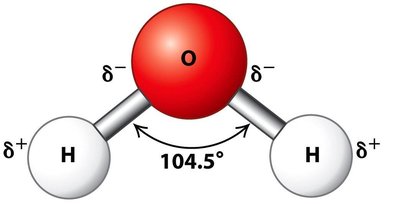
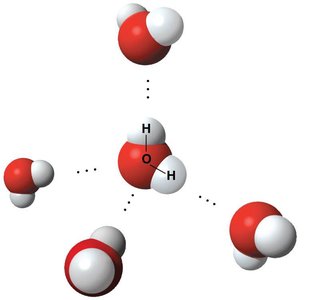
In a water molecule (H2O), the electrons of the polar covalent bonds spend more time near the oxygen atom than the hydrogen atoms, making water a polar molecule with an uneven charge distribution. This polarity allows water molecules to form hydrogen bonds with each other, which are weak individually but strong collectively.
Emergent Properties of Water
Four Properties That Facilitate Life
Cohesive behavior
Ability to moderate temperature
Expansion upon freezing
Versatility as a solvent
Cohesion and Adhesion
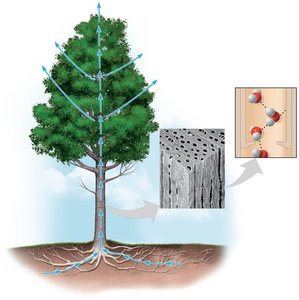
Cohesion refers to the attraction between water molecules due to hydrogen bonding, which helps transport water against gravity in plants. Adhesion is the attraction between water molecules and other substances, such as plant cell walls.
Surface Tension
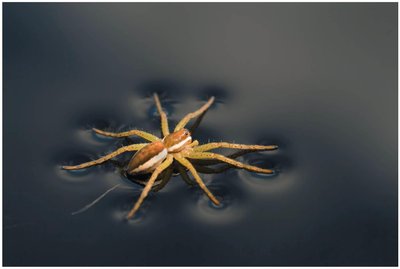
Surface tension is a measure of how hard it is to break the surface of a liquid. Water has a high surface tension due to hydrogen bonding, allowing small organisms to walk on water.
Moderation of Temperature by Water
Thermal Properties
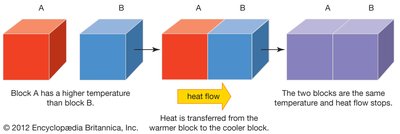
Water absorbs heat from warmer air and releases stored heat to cooler air, moderating temperature changes. It can absorb or release a large amount of heat with only a slight change in its own temperature due to its high specific heat.
Kinetic energy: Energy of motion.
Thermal energy: Kinetic energy associated with random motion of atoms or molecules.
Temperature: Measure of average kinetic energy of molecules.
Heat: Total quantity of kinetic energy due to molecular motion.
Specific Heat of Water
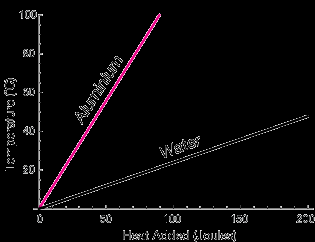
The specific heat of water is 1 cal/g/°C, meaning a large amount of heat is required to raise its temperature. This property helps stabilize ocean and organism temperatures.
Heat of Vaporization and Evaporative Cooling
Heat of vaporization is the heat a liquid must absorb for 1 g to be converted to gas. As water evaporates, its remaining surface cools, a process called evaporative cooling, which helps stabilize temperatures in organisms and bodies of water.

Expansion Upon Freezing
Ice Floats on Liquid Water
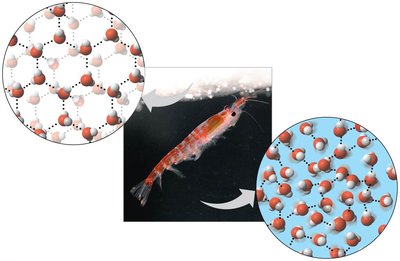
Ice is less dense than liquid water because hydrogen bonds in ice are more ordered, creating a crystalline structure. This property ensures that bodies of water freeze from the top down, insulating aquatic life below.

Water: The Solvent of Life
Solutions, Solvents, and Solutes
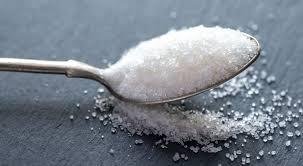
A solution is a homogeneous mixture of substances. The solvent is the dissolving agent, and the solute is the substance dissolved. Water is a versatile solvent due to its polarity, forming hydration shells around ions and dissolving many polar and ionic substances.
Hydrophilic and Hydrophobic Substances
Hydrophilic substances have an affinity for water, while hydrophobic substances do not. Oils are hydrophobic due to nonpolar bonds, and such molecules are major components of cell membranes.
Solute Concentration and Molarity
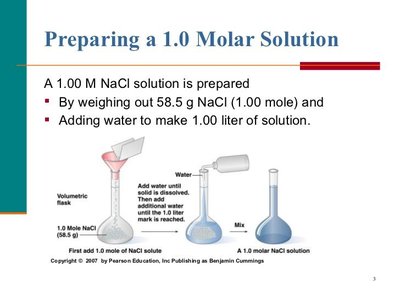
Molecular mass is the sum of all atomic masses in a molecule. The mole is a unit for counting molecules (1 mol = molecules). Molarity (M) is the number of moles of solute per liter of solution.
Substance | Molecular Formula | Molecular Mass (g/mol) |
|---|---|---|
Sucrose | C12H22O11 | 342 |
Ethyl Alcohol | C2H6O | 46 |
Acids, Bases, and pH
Dissociation of Water
Water can dissociate into hydronium (H3O+) and hydroxide (OH−) ions. The concentration of these ions affects the chemistry of cells.
Acids and Bases
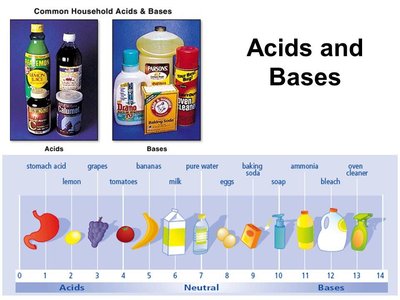
An acid increases the H+ concentration of a solution, while a base decreases it. Bases can accept H+ ions or dissociate to produce OH− ions, which combine with H+ to form water.
The pH Scale
The pH of a solution is defined as the negative logarithm of the H+ concentration: . In pure water at 25°C, [H+] = M, so pH = 7. The pH scale ranges from 0 (most acidic) to 14 (most basic).
Buffers
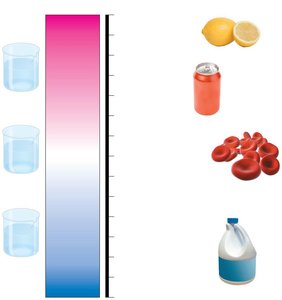
Buffers are substances that minimize changes in H+ and OH− concentrations in a solution. Most buffers consist of a weak acid and its corresponding base, which combine reversibly with H+ ions to maintain pH stability in biological systems.
Acidification and Water Quality
Ocean Acidification
Human activities, such as burning fossil fuels, increase atmospheric CO2, which dissolves in oceans to form carbonic acid. This process, called ocean acidification, reduces carbonate ion concentration, affecting marine organisms that build shells and skeletons from calcium carbonate.

Possible Evolution of Life on Other Planets
Biologists searching for extraterrestrial life focus on planets with water, as its unique properties are considered essential for life as we know it. Evidence of water vapor has been found on some exoplanets and on Mars within our solar system.
