Back
Chapter 3: Water and Life – Properties, Importance, and Biological Implications
Study Guide - Smart Notes
 Tailored notes based on your materials, expanded with key definitions, examples, and context.
Chapter 3: Water & Life
Learning Objectives
Explain how hydrogen bonding results from polar covalent bonds.
Identify four properties of water that are important for life and connect them to hydrogen bonding.
Differentiate between an acid and a base; define pH and describe how it affects life processes.
Describe how buffers work and their importance in organisms.
The Molecular Structure of Water
Polarity and Hydrogen Bonding
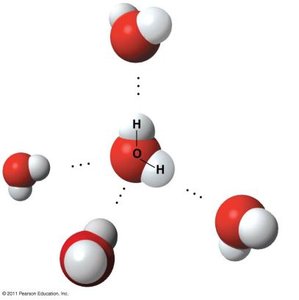
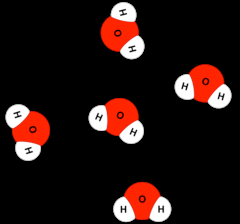
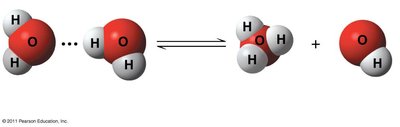
Water (H2O) is a polar molecule, meaning it has an uneven distribution of charge due to the difference in electronegativity between oxygen and hydrogen atoms. This polarity allows water molecules to form hydrogen bonds with each other, which are weak attractions between the partially positive hydrogen of one molecule and the partially negative oxygen of another.
Polar Covalent Bonds: Electrons are shared unequally between oxygen and hydrogen, resulting in partial charges (δ− on oxygen, δ+ on hydrogen).
Hydrogen Bonds: Weak interactions that occur between the hydrogen atom of one water molecule and the oxygen atom of another.
Emergent Properties of Water
1. Cohesion and Adhesion
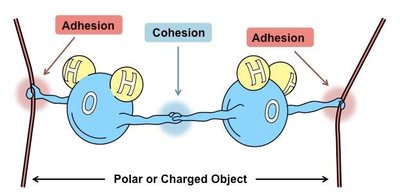
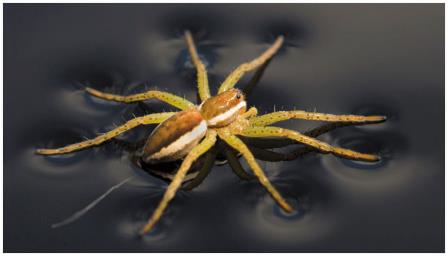
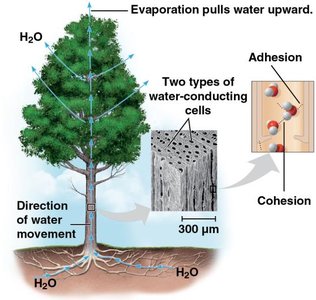
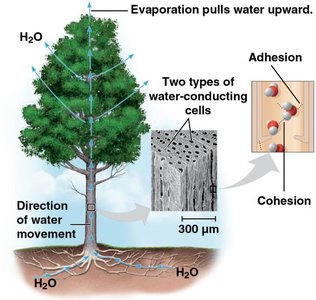
Cohesion refers to the attraction between water molecules due to hydrogen bonding, resulting in high surface tension. Adhesion is the attraction between water molecules and other substances. These properties are essential for processes such as water transport in plants.
Cohesion: Responsible for water's high surface tension, allowing small organisms to walk on water.
Adhesion: Helps water molecules stick to other surfaces, aiding in capillary action.
2. Temperature Moderation
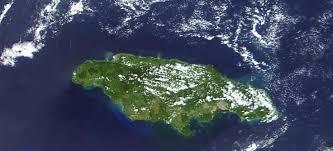
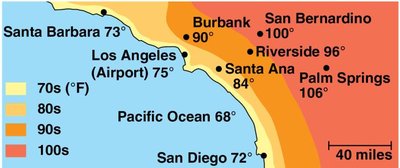
Water moderates temperature by absorbing and releasing heat with minimal temperature change, due to its high specific heat. This property is crucial for maintaining stable environments for life.
Specific Heat: The amount of heat required to change the temperature of 1 g of a substance by 1°C. For water, this value is 1 cal/(g·°C).
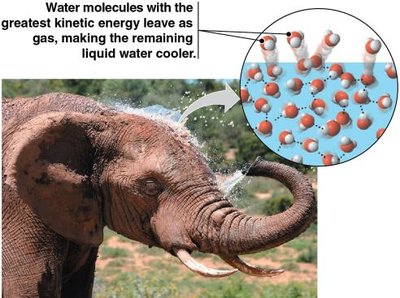
Heat of Vaporization: The amount of heat needed to convert 1 g of liquid water to gas. Water's high heat of vaporization allows for evaporative cooling, which stabilizes temperatures in organisms and environments.
3. Expansion Upon Freezing
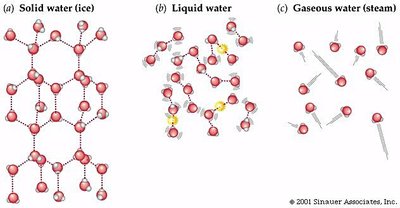
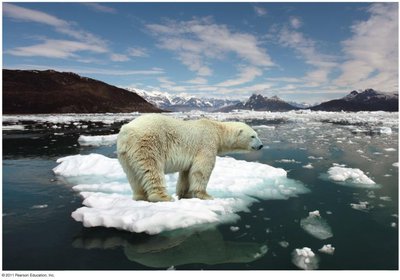
Unlike most substances, water expands when it freezes. This is because hydrogen bonds stabilize and keep water molecules further apart in ice than in liquid water, making ice less dense and allowing it to float.
Density of Ice: Ice is about 10% less dense than liquid water, which insulates aquatic environments in winter.
Biological Importance: Floating ice prevents bodies of water from freezing solid, protecting aquatic life.
4. Water: The Solvent of Life
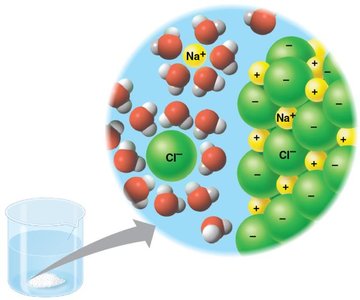
Water's polarity makes it an excellent solvent, capable of dissolving a wide variety of substances. This property is essential for biochemical reactions and transport of materials in living organisms.
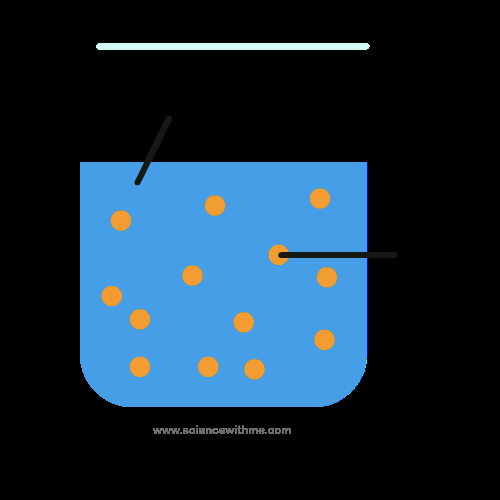
Solution: A homogeneous mixture of two or more substances.
Solvent: The dissolving agent (water in aqueous solutions).
Solute: The substance that is dissolved.
Hydration Shell: Sphere of water molecules surrounding each ion in a solution.
Hydrophilic Substances: Have an affinity for water (e.g., salts, sugars).
Hydrophobic Substances: Repel water (e.g., oils, lipids).
Acids, Bases, and pH
Acids and Bases
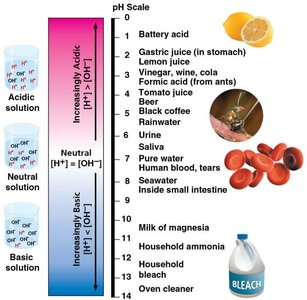
An acid is a substance that increases the hydrogen ion (H+) concentration of a solution, while a base reduces the H+ concentration. The pH scale measures the concentration of H+ ions, ranging from 0 (most acidic) to 14 (most basic), with 7 being neutral.
Acid: Increases [H+], lowers pH.
Base: Decreases [H+], raises pH.
pH: Defined as
Buffers
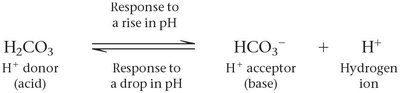
Buffers are substances that minimize changes in the concentrations of H+ and OH− in a solution. They are crucial for maintaining stable pH in biological systems. Most buffers consist of a weak acid and its corresponding base, which can reversibly bind H+ ions.
Example: The bicarbonate buffer system in blood:
Acidification: A Threat to Our Oceans
Ocean Acidification
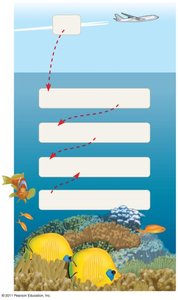
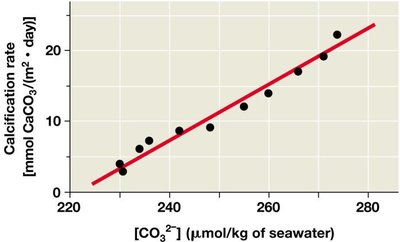
Human activities, such as burning fossil fuels, increase atmospheric CO2, which dissolves in oceans and forms carbonic acid. This process lowers ocean pH, a phenomenon known as ocean acidification. Acidification reduces the availability of carbonate ions, which are essential for the formation of calcium carbonate by marine organisms like corals.
Key Reactions:
Biological Impact: Reduced calcification threatens coral reefs and other marine life.