 Back
BackChapter 32: The Internal Environment of Animals – Organization and Regulation
Study Guide - Smart Notes
 Tailored notes based on your materials, expanded with key definitions, examples, and context.
The Internal Environment of Animals: Organization and Regulation
Overview: Diverse Forms, Common Challenges
Animals exhibit a wide variety of forms, yet face common physiological challenges. The study of anatomy and physiology reveals that form and function are closely correlated, enabling organisms to adapt and survive in diverse environments.
Anatomy: The study of the biological form of an organism.
Physiology: The study of the biological functions an organism performs.
Form and Function: Closely correlated; structural adaptations support functional needs.
Levels of Organization in Animal Bodies
Animal bodies are organized hierarchically, from cells to tissues, organs, and organ systems. Each level exhibits emergent properties that contribute to overall function.
Cells: Basic unit of life; specialized for particular functions.
Tissues: Groups of cells with similar appearance and function.
Organs: Functional units composed of multiple tissue types.
Organ Systems: Groups of organs working together to perform complex functions.
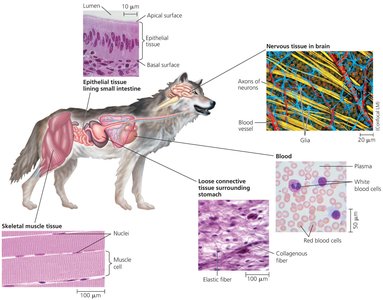
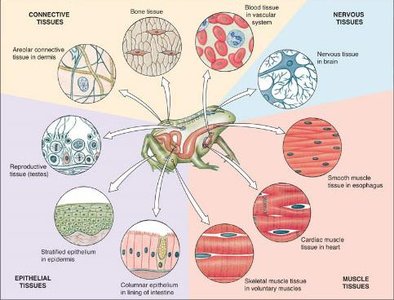
Major Types of Animal Tissues
Animal tissues are classified into four main categories, each with distinct structure and function.
Epithelial Tissue: Covers body surfaces and lines organs/cavities; functions in protection, absorption, and secretion.
Connective Tissue: Supports and binds other tissues; includes bone, cartilage, blood, and adipose tissue.
Muscle Tissue: Responsible for movement; includes skeletal, cardiac, and smooth muscle.
Nervous Tissue: Functions in communication; composed of neurons and glial cells.
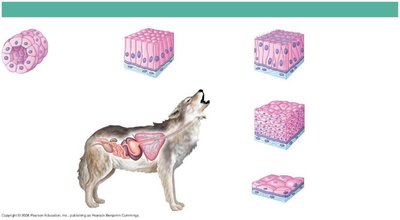
Epithelial Tissue
Epithelial tissues are sheets of tightly connected cells, specialized for different functions depending on their structure.
Cuboidal Epithelium: Cube-shaped; selective absorption and secretion (e.g., kidney).
Simple Columnar Epithelium: Tall, column-shaped; absorption (e.g., intestines).
Pseudostratified Ciliated Columnar Epithelium: Lining trachea; cilia move mucus.
Stratified Squamous Epithelium: Multiple layers; protection (e.g., skin).
Simple Squamous Epithelium: Thin; exchange of gases (e.g., alveoli, capillaries).
Muscle Tissue
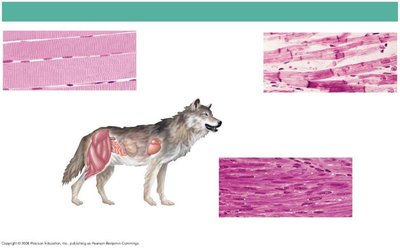
Muscle tissue enables movement and force generation. There are three types:
Skeletal Muscle: Voluntary movement; striated appearance.
Cardiac Muscle: Heart muscle; involuntary, striated, intercalated disks.
Smooth Muscle: Involuntary movement in internal organs; non-striated.
Connective Tissue
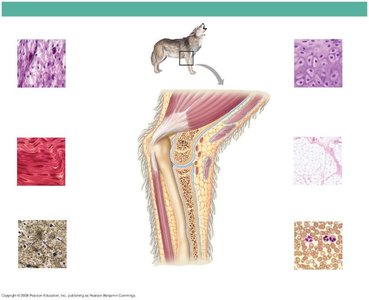
Connective tissues provide structural support and transport. The matrix contains protein fibers:
Collagen: Strong, resists stretch; supports skin, muscles, bones.
Elastin: Stretchable and recoils; found in lungs, arteries.
Cartilage: Flexible support; chondrocytes secrete matrix.
Bone: Hardened by calcium phosphate; structural support.
Adipose: Stores lipids.
Blood: Cells in plasma; transport and immune functions.
Nervous Tissue
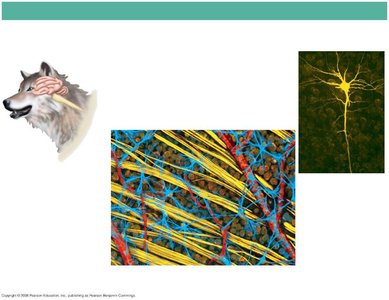
Nervous tissue is specialized for communication and information processing.
Neurons: Transmit electrical and chemical signals.
Glial Cells: Support neurons, form myelin sheath, blood-brain barrier.
Coordination and Regulation: Endocrine and Nervous Systems
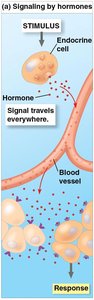
Animals use two major systems to coordinate and control responses to stimuli: the endocrine and nervous systems.
Endocrine System: Releases hormones into the bloodstream; affects distant targets.
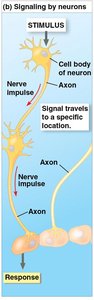
Nervous System: Transmits nerve impulses along axons; rapid, specific responses.
Endocrine Glands and Hormones
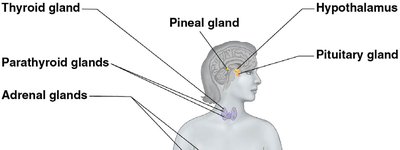
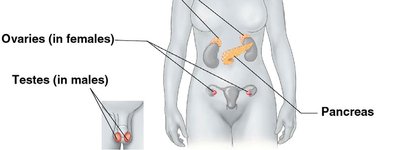
Endocrine glands secrete hormones directly into the bloodstream. Hormones regulate various physiological processes.
Hypothalamus: Controls neuroendocrine signaling.
Pituitary Gland: Master gland; releases multiple hormones.
Thyroid, Parathyroid, Adrenal, Pancreas, Gonads: Each produces specific hormones affecting metabolism, growth, reproduction, and homeostasis.
Homeostasis: Maintaining Internal Balance
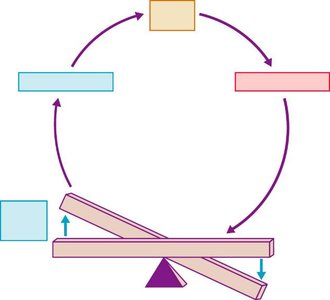
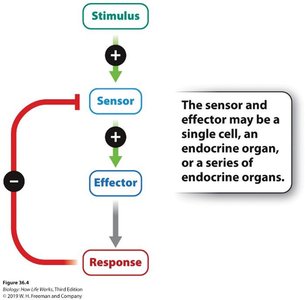
Homeostasis is the maintenance of a stable internal environment despite external fluctuations. Most physiological systems are regulated by negative feedback mechanisms.
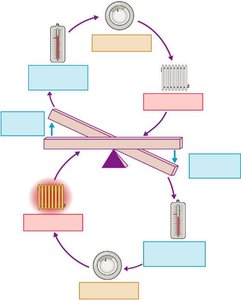
Set Point: Desired value for a physiological variable.
Sensor: Detects changes in the variable.
Effector: Responds to restore balance.
Negative Feedback
Negative feedback counteracts changes, returning the system to its set point. Example: regulation of room temperature by a thermostat.
Stimulus: Change in variable.
Response: Effector acts to restore balance.
Homeostatic Regulation in Mammals
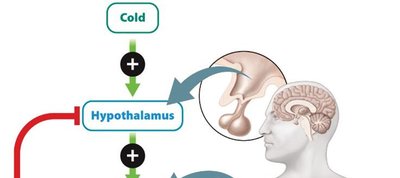
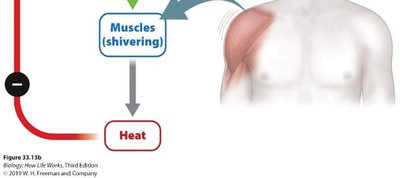
Mammals maintain steady body temperature through coordinated actions of the nervous and endocrine systems.
Drop in temperature: Hypothalamus activates shivering and constricts blood vessels.
Increase in temperature: Activates sweat glands and vasodilation.
Feedback in Endocrine Regulation
Endocrine control of internal functions relies on feedback from target organs to endocrine glands.
Negative Feedback: Response reduces stimulus.
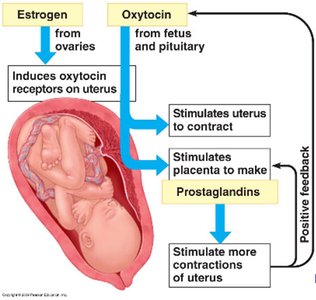
Positive Feedback: Response amplifies stimulus; e.g., labor contractions.
Regulation of Blood Glucose
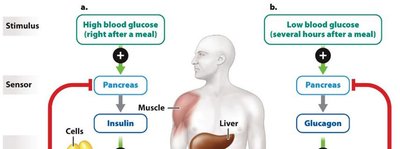
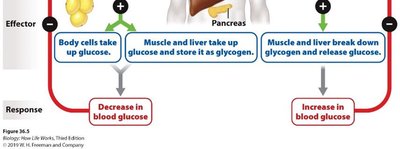
Blood glucose is regulated by insulin and glucagon, hormones produced by the pancreas.
High blood glucose: Insulin promotes uptake and storage as glycogen.
Low blood glucose: Glucagon stimulates breakdown of glycogen to glucose.
Diabetes Mellitus: Failure of insulin regulation leads to high blood glucose and associated health problems.
Positive Feedback Example: Labor
Positive feedback accelerates responses, as seen in labor where oxytocin release increases uterine contractions.
Cycle continues: Until an external signal interrupts the loop.
Regulators vs. Conformers
Animals manage their internal environment by regulating or conforming to external conditions.
Regulators: Use internal mechanisms to maintain stability.
Conformers: Allow internal conditions to change with the environment.
Thermoregulation
Thermoregulation is the process by which animals maintain internal temperature within set limits.
Endotherms: Generate heat by metabolism (e.g., birds, mammals).
Ectotherms: Gain heat from external sources (e.g., reptiles, fish).
Heat Exchange: Occurs via radiation, evaporation, convection, and conduction.
Osmoregulation and Excretion
Osmoregulation is the control of solute concentrations and water balance. Excretion removes metabolic wastes, especially nitrogenous compounds.
Osmolarity: Solute concentration determines water movement across membranes.
Osmoconformers: Isoosmotic with surroundings; do not regulate osmolarity.
Osmoregulators: Expend energy to control water uptake and loss.
Nitrogenous Wastes
Animals excrete nitrogenous wastes in different forms, affecting osmoregulation.
Ammonia: Most aquatic organisms; highly toxic, requires lots of water.
Urea: Terrestrial animals; less toxic, requires energy to produce.
Uric Acid: Insects, reptiles, birds; least toxic, conserves water, energetically expensive.
Excretory Processes
Excretory systems refine filtrate from body fluids through four key functions:
Filtration: Filtering of body fluids.
Reabsorption: Reclaiming valuable solutes.
Secretion: Adding nonessential solutes and wastes to filtrate.
Excretion: Releasing processed filtrate containing wastes.
Excretory Systems in Animals
Different animal groups have specialized excretory systems:
Flatworms: Protonephridia with flame bulbs; produce dilute urine.
Insects & Arthropods: Malpighian tubules; conserve water, produce dry waste.
Vertebrates: Kidneys; regulate osmoregulation and excretion, basic unit is nephron.
Example: Human kidneys filter 1,600 L of blood daily, producing 180 L of filtrate, with most water and nutrients reabsorbed.
