 Back
BackChapter 4: Carbon and the Molecular Diversity of Life – Study Notes
Study Guide - Smart Notes
 Tailored notes based on your materials, expanded with key definitions, examples, and context.
Carbon and the Molecular Diversity of Life
Introduction
All living organisms are composed of chemicals based primarily on the element carbon. The unique properties of carbon make it the foundation for the vast diversity of biological molecules essential for life.

Organic Chemistry and the Origin of Life
Definition and Scope
Organic chemistry is the study of compounds that contain carbon, regardless of their origin.
Organic compounds range from simple molecules (like methane) to complex macromolecules (like proteins and DNA).
Abiotic Synthesis and the Origin of Life
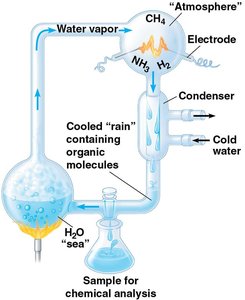
Stanley Miller's classic experiment demonstrated that organic molecules could form under conditions simulating early Earth, supporting the hypothesis that abiotic synthesis of organic compounds was a stage in the origin of life.
Properties of Carbon
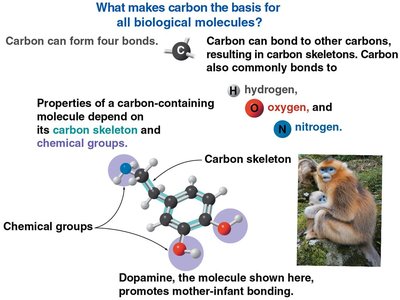
Why Carbon is the Basis for All Biological Molecules
Carbon can form four covalent bonds, allowing for a wide variety of stable molecules.
Carbon commonly bonds with hydrogen, oxygen, and nitrogen, forming the backbone of biological molecules.
The properties of a carbon-containing molecule depend on its carbon skeleton and the chemical groups attached to it.
Carbon Bonding and Molecular Shapes
Electron Configuration and Bonding
Carbon has four valence electrons, enabling it to form four covalent bonds with a variety of atoms.
Electron configuration determines the number and types of bonds an atom can form.
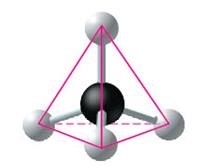
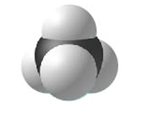
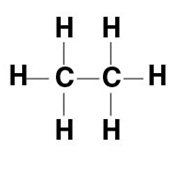
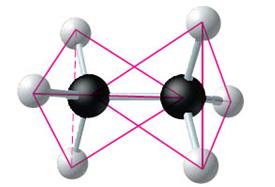
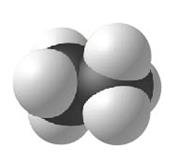
In molecules with multiple carbons, each carbon bonded to four other atoms has a tetrahedral shape.
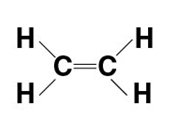
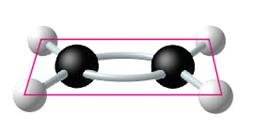
When two carbon atoms are joined by a double bond, the atoms attached are in the same plane, making the molecule flat in that region.
Examples of Simple Organic Molecules
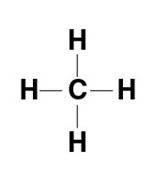
Methane (CH4): Tetrahedral geometry.
Ethane (C2H6): Two tetrahedral carbons joined together.
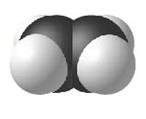
Ethene (C2H4): Planar geometry due to double bond.
Valence and Bonding Partners
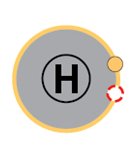
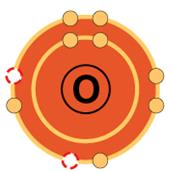
The number of unpaired electrons in the valence shell equals the number of covalent bonds (valence) an atom can form.
Major elements in organic molecules: hydrogen (valence 1), oxygen (valence 2), nitrogen (valence 3), carbon (valence 4).


Molecular Diversity from Carbon Skeletons
Variation in Carbon Skeletons
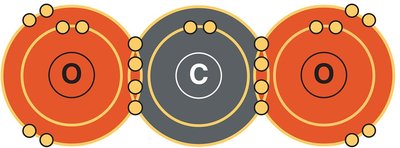
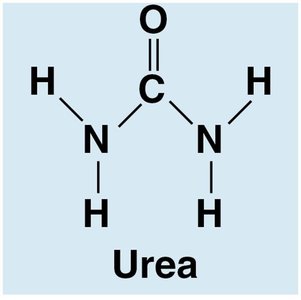
Carbon atoms can bond with other elements (e.g., oxygen in CO2, nitrogen in urea) and with other carbons, forming chains and rings.
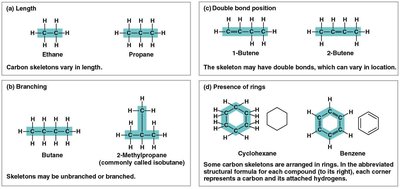
Carbon chains form the skeletons of most organic molecules and can vary in length, branching, double bond position, and ring formation.
Hydrocarbons
Definition and Biological Importance
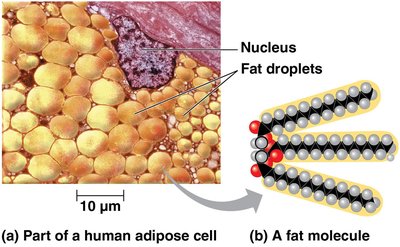
Hydrocarbons are organic molecules consisting only of carbon and hydrogen.
They are components of many biological molecules, such as fats, and can release large amounts of energy during reactions.
Isomers
Types of Isomers
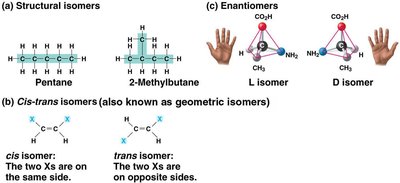
Isomers are compounds with the same molecular formula but different structures and properties.
Structural isomers: Different covalent arrangements of atoms.
Cis-trans isomers (geometric isomers): Same covalent bonds, different spatial arrangements.
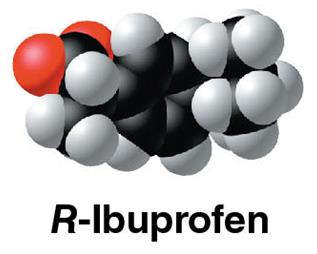
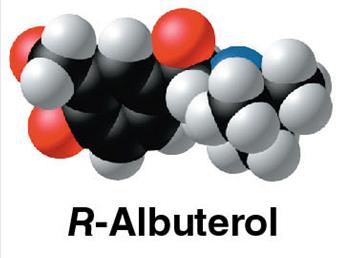
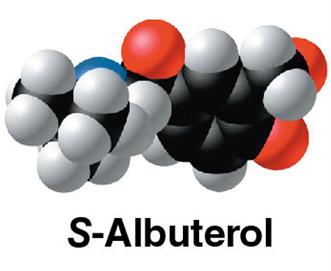
Enantiomers: Mirror images of each other, often with different biological activities.
Biological Importance of Enantiomers
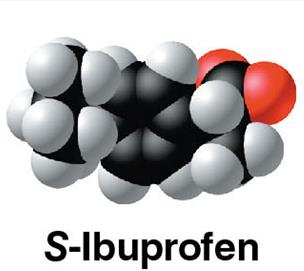
Enantiomers are crucial in pharmaceuticals; often, only one enantiomer is biologically active.
Example: S-ibuprofen is effective as a pain reliever, while R-ibuprofen is not; R-albuterol is effective for asthma, while S-albuterol is not.
Drug | Effect | Effective Enantiomer | Ineffective Enantiomer |
|---|---|---|---|
Ibuprofen | Reduces inflammation and pain | S-ibuprofen | R-ibuprofen |
Albuterol | Relaxes bronchial muscles | R-albuterol | S-albuterol |
Chemical Groups and Molecular Function
Functional Groups
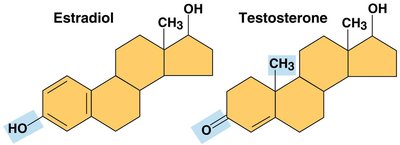
The distinctive properties of organic molecules depend on the carbon skeleton and the chemical groups attached to it.
Functional groups are the components most commonly involved in chemical reactions.
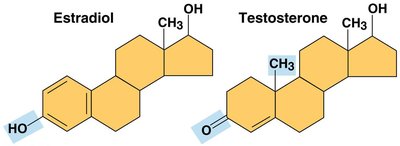
Estradiol and testosterone are steroids with a common carbon skeleton but differ in the functional groups attached, resulting in different biological activities.
Seven Key Functional Groups in Biology
Hydroxyl group (–OH)
Carbonyl group (C=O)
Carboxyl group (–COOH)
Amino group (–NH2)
Sulfhydryl group (–SH)
Phosphate group (–OPO32−)
Methyl group (–CH3)
Note: The number and arrangement of these groups give each molecule its unique properties.
ATP: The Energy Currency of the Cell
Structure and Function of ATP
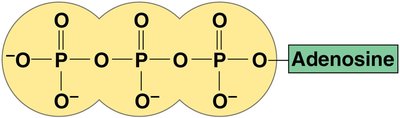
Adenosine triphosphate (ATP) is an important organic phosphate molecule.
ATP consists of adenosine attached to three phosphate groups.
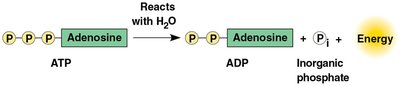
ATP stores potential energy; when it reacts with water, it releases energy used by the cell for work.
The reaction can be summarized as:
Summary: The Chemical Elements of Life
The versatility of carbon enables the diversity of organic molecules essential for life.
Molecular variation underlies the diversity of life on Earth.
