 Back
Chapter 4: Carbon and the Molecular Diversity of Life – Study Notes
Study Guide - Smart Notes
 Tailored notes based on your materials, expanded with key definitions, examples, and context.
Carbon and the Molecular Diversity of Life
Introduction to Carbon Chemistry
Carbon is a unique element that forms the backbone of biological molecules. Its atomic structure allows for a remarkable diversity of molecular forms, which is foundational to the complexity of life.
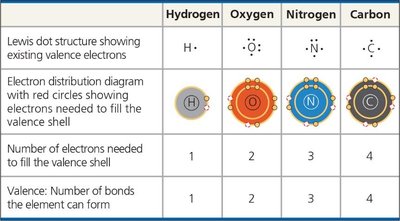
Electron Configuration: Carbon has 6 electrons (2 in the first shell, 4 in the second/valence shell).
Covalent Bonding: Carbon completes its valence shell by sharing electrons, forming four covalent bonds.
Versatility: This bonding capacity enables carbon to form a variety of stable, complex molecules.
Bonding and Structure of Carbon Compounds
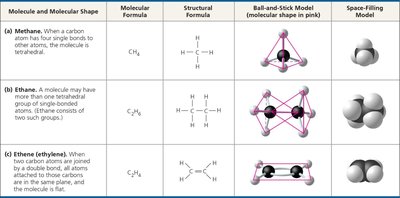
Carbon atoms can form single, double, or (rarely) triple bonds, resulting in diverse molecular geometries.
Tetrahedral Geometry: When bonded to four atoms, carbon forms a tetrahedral shape with bond angles of approximately 109.5°.
Planar Geometry: Double bonds between carbons create planar regions in molecules.
Examples of Carbon Compounds
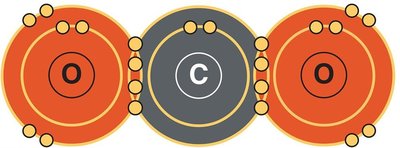
Carbon Dioxide (CO2): One carbon atom forms two double bonds with two oxygen atoms, resulting in a linear molecule.
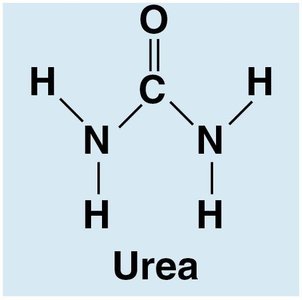
Urea (CO(NH2)2): Contains both single and double bonds, illustrating carbon's bonding versatility.
Diversity of Carbon Skeletons
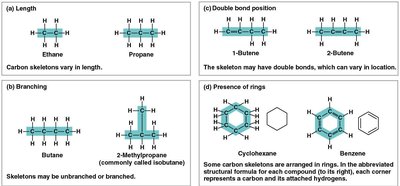
Carbon skeletons form the framework of organic molecules and can vary in several ways:
Length: Skeletons can be short or long.
Branching: Skeletons may be unbranched or branched.
Double Bond Position: Double bonds can vary in location.
Rings: Skeletons may be arranged in rings.
Hydrocarbons
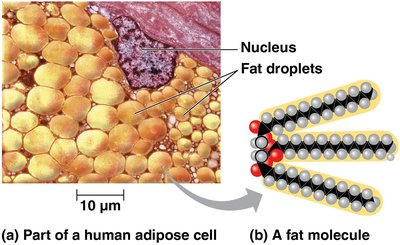
Hydrocarbons are organic molecules consisting only of carbon and hydrogen. They are important in both biological and industrial contexts.
Occurrence: Major components of fossil fuels and biological molecules like fats.
Properties: Nonpolar, hydrophobic, and store large amounts of energy.
Isomers: Structural Diversity in Organic Molecules
Definition and Types of Isomers
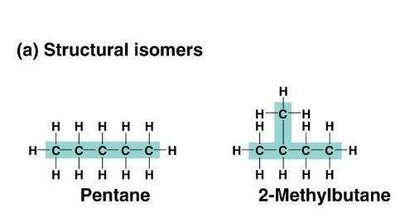
Isomers are compounds with the same molecular formula but different structures, resulting in different properties.
Structural Isomers: Differ in the covalent arrangement of atoms.
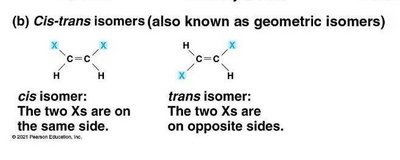
Cis-Trans (Geometric) Isomers: Differ in spatial arrangement around a double bond.
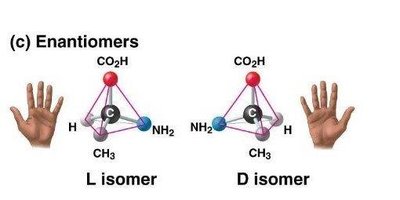
Enantiomers: Mirror-image isomers due to an asymmetric carbon atom bonded to four different groups.
Biological Importance of Isomers
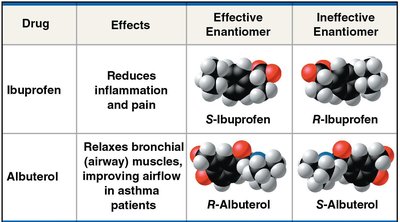
Enantiomers can have dramatically different biological activities. For example, only one enantiomer of a drug may be effective.
Key Chemical Groups in Biological Molecules
Functional Groups and Their Roles
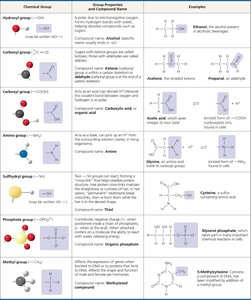
The properties of organic molecules are largely determined by the chemical groups attached to their carbon skeletons. These groups can participate in chemical reactions or influence molecular shape and function.
Hydroxyl (–OH): Alcohols; polar, increases solubility in water.
Carbonyl (C=O): Aldehydes and ketones; found in sugars.
Carboxyl (–COOH): Acts as an acid; found in amino acids and fatty acids.
Amino (–NH2): Acts as a base; found in amino acids.
Sulfhydryl (–SH): Stabilizes protein structure; found in some amino acids.
Phosphate (–OPO32–): Involved in energy transfer (e.g., ATP).
Methyl (–CH3): Non-reactive; affects gene expression.
Example: Steroid Hormones
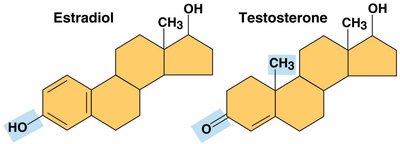
Testosterone and estradiol have the same carbon skeleton but differ in functional groups, resulting in distinct biological effects.
ATP: The Energy Currency of the Cell
Structure and Function of ATP
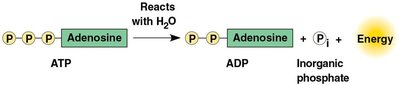
Adenosine triphosphate (ATP) is the primary energy transfer molecule in cells. It consists of adenosine attached to three phosphate groups.
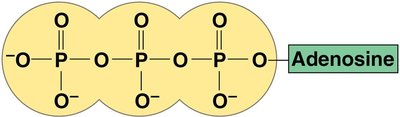
Energy Release: Hydrolysis of ATP (removal of one phosphate group) releases energy used for cellular work.
Summary Table: Functional Groups in Biological Molecules
Chemical Group | Properties | Example |
|---|---|---|
Hydroxyl (–OH) | Polar, forms hydrogen bonds, increases solubility | Ethanol |
Carbonyl (C=O) | Found in sugars, increases reactivity | Acetone, Propanal |
Carboxyl (–COOH) | Acts as acid, donates H+ | Acetic acid |
Amino (–NH2) | Acts as base, picks up H+ | Glycine |
Sulfhydryl (–SH) | Forms disulfide bonds, stabilizes proteins | Cysteine |
Phosphate (–OPO32–) | Contributes negative charge, energy transfer | ATP |
Methyl (–CH3) | Non-reactive, affects gene expression | 5-Methylcytosine |
Practice Questions
Which property of carbon allows it to form a wide variety of molecules?
What type of isomerism is illustrated by L- and D-glucose?
Which functional group is most important for cellular energy transfer?
Why are hydrocarbons hydrophobic?
