 Back
Chapter 4: Carbon and the Molecular Diversity of Life – Study Notes
Study Guide - Smart Notes
 Tailored notes based on your materials, expanded with key definitions, examples, and context.
Organic Foundations
The Chemical Basis of Life
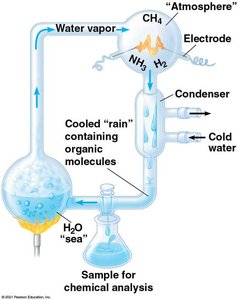
Life on Earth is fundamentally carbon-based, relying on a small set of universal chemical elements. The transformation of simple inorganic molecules into complex organic precursors was a critical step in the origin of life. The Miller-Urey experiment demonstrated that organic molecules, such as amino acids, could be synthesized abiotically from inorganic components under conditions simulating early Earth.
Key Point 1: The Miller experiment showed that organic molecules can form without living cells, supporting the hypothesis of abiotic synthesis of life's building blocks.
Key Point 2: Organic chemistry is defined as the study of carbon compounds, not just those found in living organisms.
Key Point 3: Despite the uniformity of major elements (C, H, O, N, S, P) across all life, the diversity of organic molecules is virtually infinite due to carbon's bonding versatility.
Example: Amino acids and other organic molecules formed in the Miller-Urey apparatus, simulating volcanic or marine environments.
The Elemental Composition of Life
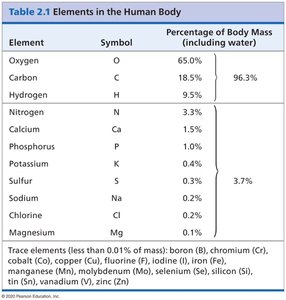
The elemental composition of living organisms is remarkably consistent, with carbon, hydrogen, oxygen, and nitrogen making up the majority of biological matter. This conserved composition underlies the chemical unity of life.
Key Point 1: The six major elements (C, H, O, N, S, P) are found in similar proportions in all living things.
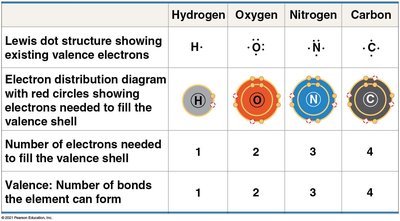
Key Point 2: Carbon's ability to form four covalent bonds allows for a vast array of molecular structures.
Example: Table 2.1 shows the percentage of body mass contributed by each major element in humans.
Element | Symbol | Percentage of Body Mass (including water) |
|---|---|---|
Oxygen | O | 65.0% |
Carbon | C | 18.5% |
Hydrogen | H | 9.5% |
Nitrogen | N | 3.3% |
Calcium | Ca | 1.5% |
Phosphorus | P | 1.0% |
Potassium | K | 0.4% |
Sulfur | S | 0.3% |
Sodium | Na | 0.2% |
Chlorine | Cl | 0.2% |
Magnesium | Mg | 0.1% |
Carbon Architectures
Bonding and Molecular Geometry
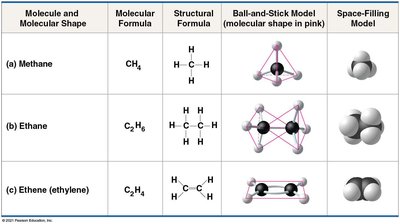
Carbon's electron configuration allows it to form four covalent bonds, resulting in a variety of stable three-dimensional structures. The geometry of these bonds determines the shape and function of organic molecules.
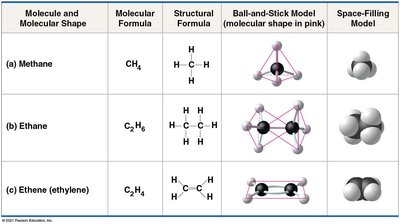
Key Point 1: Four single bonds create a tetrahedral geometry, while double bonds result in planar structures.
Key Point 2: The flexibility of carbon bonding enables the formation of chains, branches, and rings, contributing to molecular diversity.
Example: Methane (CH4) forms a tetrahedral shape, while ethylene (C2H4) is planar due to a double bond.
Structural Variation in Carbon Skeletons
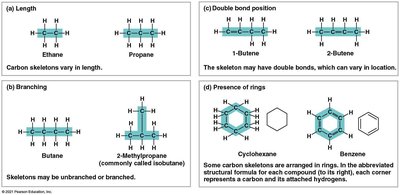
Carbon skeletons can vary in length, branching, and ring formation, providing the structural basis for the diversity of organic molecules. These variations are essential for the complexity of biological macromolecules.
Key Point 1: Carbon chains can be straight, branched, or arranged in rings.
Key Point 2: The position of double bonds and the presence of rings further increase molecular diversity.
Example: Butane and isobutane are structural isomers with different branching; cyclohexane and benzene are examples of ring structures.
Isomerism and Biological Activity
Isomers are compounds with the same molecular formula but different structures, leading to distinct chemical and biological properties. The three main types of isomers are structural isomers, cis-trans (geometric) isomers, and enantiomers (mirror-image isomers).
Key Point 1: Structural isomers differ in the covalent arrangement of atoms.
Key Point 2: Cis-trans isomers differ in spatial arrangement around double bonds.
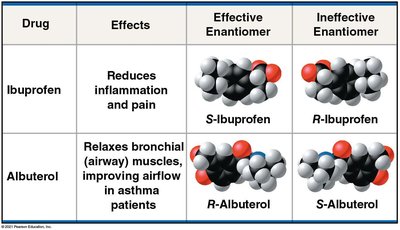
Key Point 3: Enantiomers are non-superimposable mirror images, often with drastically different biological effects.
Example: Ibuprofen and albuterol have effective and ineffective enantiomers, impacting their pharmacological activity.
Functional Variation
Functional Groups and Chemical Reactivity
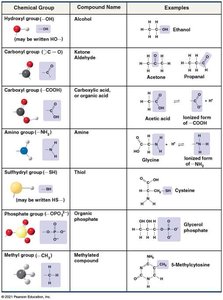
Functional groups are specific groups of atoms attached to carbon skeletons that confer distinct chemical properties and reactivity. Seven functional groups are especially important in the chemistry of life: hydroxyl, carbonyl, carboxyl, amino, sulfhydryl, phosphate, and methyl.
Key Point 1: Functional groups determine the chemical behavior of organic molecules, including solubility and reactivity.
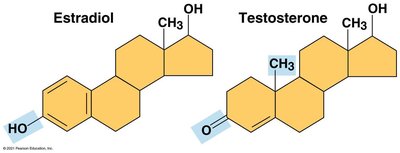
Key Point 2: Small changes in functional groups can lead to significant differences in biological activity, as seen in sex hormones and drugs.
Example: Estradiol and testosterone differ only in functional groups, yet have distinct physiological effects.
ATP: The Energy Currency of the Cell
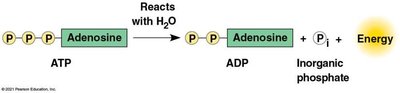
Adenosine triphosphate (ATP) is the primary energy carrier in cells. Its energy is stored in the bonds between phosphate groups and released through hydrolysis, powering cellular processes.
Key Point 1: ATP consists of adenosine attached to three phosphate groups.
Key Point 2: Hydrolysis of the terminal phosphate bond releases energy for cellular work.
Equation:
Example: ATP hydrolysis drives endergonic reactions in metabolism.
Biological Meaning of Small Structural Changes
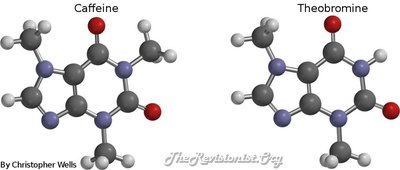
Even a single change in a functional group or the position of a methyl group can dramatically alter the biological meaning of a molecule. For example, caffeine and theobromine differ by only one methyl group but have distinct physiological effects.
Key Point 1: Isomers with minor structural differences can have major impacts on biological function and pharmacology.
Example: Caffeine (in coffee) and theobromine (in chocolate) differ by one methyl group, affecting their stimulant properties.
Summary Table: Key Processes and Components
Process | Component | Resulting Function |
|---|---|---|
Geometric Scaffolding | Tetrahedral valence | Stable 3D frameworks for life |
Structural Diversity | Carbon skeleton variations | Infinite molecular variety |
Molecular Geometry | Double bonds | Planar arrangements for target fitting |
Pharmacological Specificity | Enantiomers | Precise molecular recognition in drugs |
Energy Transfer | Phosphate cleavage (ATP) | Powering cellular work |
Chemical Identity | Functional Groups | Specific reactive properties |
Gene Regulation | Methyl group additions | Modification of DNA expression |
Practice Questions
Check 4.1.1: Why was it significant that organic molecules were produced without the presence of a living cell in the Miller Inquiry?
Check 4.1.2: Why is it scientifically more accurate to define organic chemistry as "the study of carbon" rather than "the study of life"?
Check 4.1.3: Since the major elements (C, H, O, N, S, P) are uniform across all life, why does biological diversity remain virtually infinite?
Check 4.2.1: How does the formation of tetrahedral geometry in methane provide more structural stability than a flat, two-dimensional arrangement?
Check 4.2.2: Why does a single double bond in a hydrocarbon chain change the entire molecule from a flexible string into a rigid, planar structure?
Check 4.2.3: In the pharmaceutical industry, why can one enantiomer of a drug be life-saving while its mirror image is completely ineffective?
Check 4.3.1: How does a single change in a functional group differentiate the physical traits of males and females?
Check 4.3.2: Why is the phosphate group considered the "trigger" that allows ATP to power cellular work?
Check 4.3.3: How do isomers like caffeine and theobromine illustrate that biological "meaning" is determined by the precise placement of a single methyl group?
