 Back
Chapter 4: Carbon and the Molecular Diversity of Life – Study Notes
Study Guide - Smart Notes
 Tailored notes based on your materials, expanded with key definitions, examples, and context.
Carbon: The Backbone of Life
Introduction to Carbon in Biology
Carbon is a fundamental element in biological molecules, serving as the backbone for the complex and diverse compounds essential for life. Its unique chemical properties allow it to form stable bonds with many elements, enabling the construction of large and intricate molecules.
Entry into the Biosphere: Carbon enters the biosphere primarily through photosynthesis, where plants convert atmospheric CO2 into organic molecules consumed by other organisms.
Role in Biopolymers: Carbon forms the structural basis of carbohydrates, lipids, proteins, and nucleic acids.
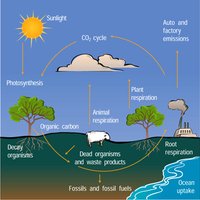
Major Classes of Biological Molecules
Carbohydrates, Lipids, Proteins, and Nucleic Acids
These four classes of macromolecules are essential for life and are all built upon carbon skeletons:
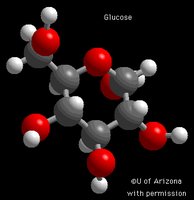
Carbohydrates: Sugars and their polymers, such as glucose, provide energy and structural support.
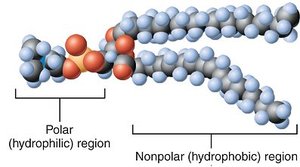
Lipids: Hydrophobic molecules like fats and oils, important for energy storage and membrane structure.
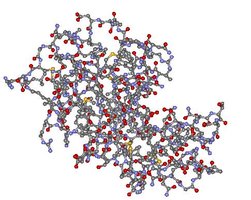
Proteins: Polymers of amino acids that perform a vast array of cellular functions.
Nucleic Acids: DNA and RNA, which store and transmit genetic information.
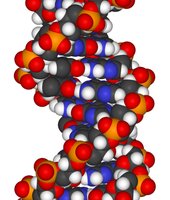
Abundance and Importance of Carbon
Elemental Composition of Living Organisms
Although carbon is relatively rare in the universe and on Earth, it is highly concentrated in living organisms. Other essential elements include hydrogen, oxygen, nitrogen, sulfur, and phosphorus.
Organic Compounds: Molecules containing carbon and hydrogen, often with other elements, are called organic compounds.
Elemental Similarity: The major elements of life are present in similar proportions across different organisms.
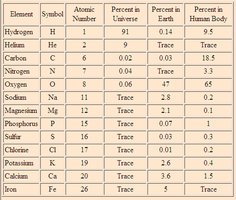
Origin of Organic Compounds
Abiotic Synthesis and the Miller-Urey Experiment
Organic molecules can be synthesized abiotically under conditions thought to resemble those of early Earth. The Miller-Urey experiment demonstrated that amino acids and other organic compounds could form from simple inorganic molecules.
Miller-Urey Experiment: Simulated early Earth conditions and produced amino acids and other organic molecules.
Significance: Showed that the building blocks of life could arise naturally.

Chemical Characteristics of Carbon
Atomic Structure and Bonding
Carbon has six electrons, with four in its outer shell, allowing it to form four covalent bonds. This tetravalence enables the formation of large, complex molecules with diverse shapes and functions.
Tetravalence: Carbon can bond with many elements, including itself, nitrogen, oxygen, phosphorus, sulfur, and hydrogen.
Versatility: Carbon's ability to form single, double, and triple bonds, as well as rings and chains, underlies the diversity of organic molecules.
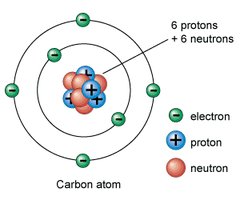
Hydrocarbons and Molecular Diversity
Hydrocarbons
Hydrocarbons are organic molecules consisting only of carbon and hydrogen. They vary in length, branching, and ring formation, contributing to molecular diversity.
Properties: Nonpolar, hydrophobic, and can release large amounts of energy during reactions.
Biological Importance: Found in fats and serve as energy sources.
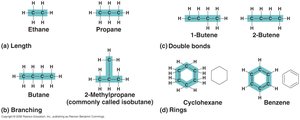
Functional Groups
Biologically Important Chemical Groups
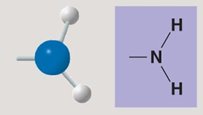
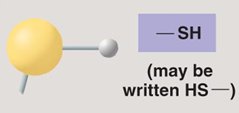
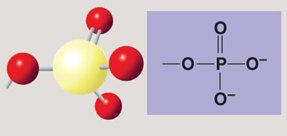
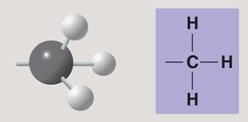
Functional groups are specific groups of atoms attached to carbon skeletons that confer distinct chemical properties to organic molecules. They are critical in determining the behavior and reactivity of biomolecules.
Examples: Hydroxyl, carbonyl, carboxyl, amino, sulfhydryl, phosphate, and methyl groups.
Role: Functional groups participate in chemical reactions and influence molecular interactions.
Isomers
Types of Isomers
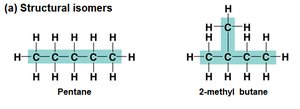
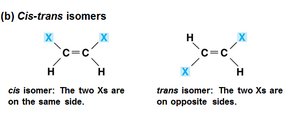
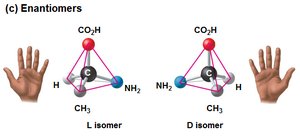
Isomers are compounds with the same molecular formula but different structures and properties. The three main types are:
Structural Isomers: Differ in the covalent arrangement of atoms.
Cis-Trans (Geometric) Isomers: Differ in spatial arrangement around double bonds.
Enantiomers: Mirror images due to an asymmetric carbon; important in pharmaceuticals.
Biological Significance of Isomers
Enantiomers in Medicine
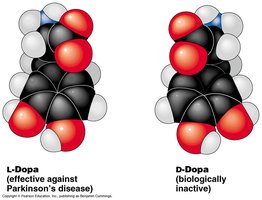
Enantiomers can have drastically different effects in biological systems. For example, one enantiomer of a drug may be therapeutically active, while the other is inactive or harmful.
Example: L-Dopa is effective against Parkinson's disease, while D-Dopa is biologically inactive.
ATP: The Energy Currency of the Cell
Adenosine Triphosphate (ATP)
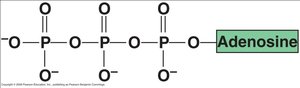
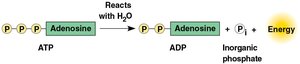
ATP is an organic molecule that stores and transfers energy within cells. It consists of adenosine attached to three phosphate groups. Hydrolysis of ATP releases energy used for cellular work.
Structure: Adenosine (adenine + ribose) and three phosphate groups.
Function: Provides energy for cellular processes by releasing a phosphate group.
Summary Table: Common Elements in Living Organisms
Element | Symbol | Atomic Number | Percent in Universe | Percent in Earth | Percent in Human Body |
|---|---|---|---|---|---|
Hydrogen | H | 1 | 91 | 0.14 | 9.5 |
Helium | He | 2 | 9 | Trace | Trace |
Carbon | C | 6 | 0.02 | 0.03 | 18.5 |
Nitrogen | N | 7 | 0.04 | Trace | 3.3 |
Oxygen | O | 8 | 0.06 | 47 | 65 |
Sodium | Na | 11 | Trace | 2.8 | 0.2 |
Magnesium | Mg | 12 | Trace | 2.1 | 0.1 |
Phosphorus | P | 15 | Trace | 0.07 | 1.0 |
Sulfur | S | 16 | Trace | 0.03 | 0.3 |
Chlorine | Cl | 17 | Trace | 0.01 | 0.2 |
Potassium | K | 19 | Trace | 2.6 | 0.4 |
Calcium | Ca | 20 | Trace | 3.6 | 1.5 |
Iron | Fe | 26 | Trace | 5.0 | 0.1 |
