 Back
BackChapter 43: The Immune System – Innate and Adaptive Immunity
Study Guide - Smart Notes
 Tailored notes based on your materials, expanded with key definitions, examples, and context.
The Immune System
Introduction to Immunity
The immune system protects organisms from pathogens such as bacteria, viruses, fungi, and parasites. It consists of innate (nonspecific) and adaptive (specific) defenses that work together to prevent and eliminate infections.
Innate Immunity
Overview of Innate Immunity
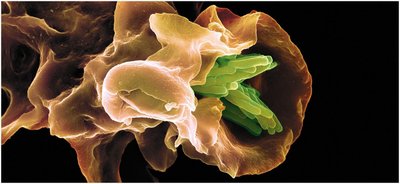
Innate immunity is the first line of defense and is present in all animals. It provides immediate, nonspecific responses to pathogens and includes physical barriers, cellular defenses, and chemical responses.
Pathogens: Agents that cause disease (e.g., bacteria, viruses, fungi).
Barrier defenses: Skin, mucous membranes, and secretions that prevent pathogen entry.
Cellular defenses: Phagocytic cells (e.g., neutrophils, macrophages) that ingest and destroy invaders.
Chemical defenses: Antimicrobial peptides and enzymes (e.g., lysozyme) that attack pathogens.
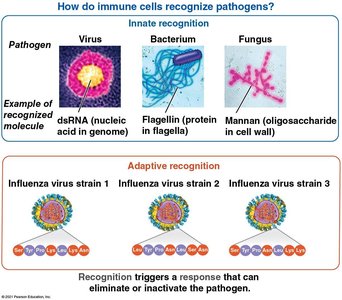
Innate Immunity in Invertebrates
Insects possess an exoskeleton (chitin) and digestive barriers (lysozyme) as primary defenses.
Hemocytes are major immune cells in insects, responsible for phagocytosis and secretion of antimicrobial peptides.
Recognition proteins bind to pathogen molecules, activating immune responses such as the Toll pathway.
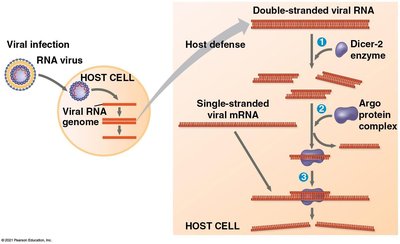
Insects also have antiviral defenses triggered by double-stranded RNA (dsRNA) produced during viral infection.
Innate Immunity in Vertebrates
Vertebrates share many innate defenses with invertebrates, including barriers, phagocytosis, and antimicrobial peptides.
Unique vertebrate defenses include natural killer cells, interferons, and the inflammatory response.
Barrier Defenses
Skin and mucous membranes block pathogen entry.
Mucus traps microbes; fluids like saliva, tears, and low pH environments inhibit microbial growth.
Cellular Innate Defenses
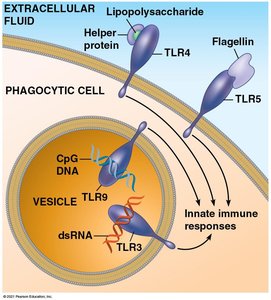
Phagocytic cells recognize pathogens using Toll-like receptors (TLRs) that bind to common pathogen molecules.
Main phagocytes: Neutrophils (circulate in blood), Macrophages (reside in tissues), Dendritic cells (stimulate adaptive immunity), Eosinophils (target parasites).
Natural Killer Cells and the Lymphatic System
Natural killer cells detect and destroy abnormal (e.g., virally infected or cancerous) cells by inducing apoptosis.
The lymphatic system transports lymph, containing immune cells, throughout the body and is involved in immune surveillance.
The Inflammatory Response
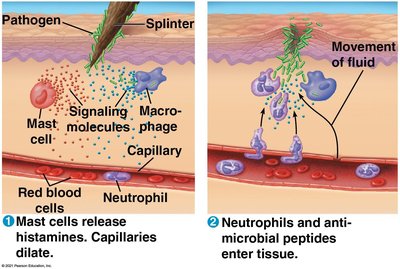
The inflammatory response is a local reaction to injury or infection, characterized by redness, heat, swelling, and pain.
Mast cells release histamine, causing blood vessels to dilate and become more permeable.
Cytokines recruit neutrophils and other immune cells to the site.
Increased blood flow delivers antimicrobial peptides and results in pus formation (dead cells and pathogens).

Systemic and Chronic Inflammation
Severe infections can cause systemic inflammation (e.g., fever, increased white blood cell count).
Chronic inflammation can lead to diseases such as Crohn’s disease and ulcerative colitis.
Antimicrobial Peptides and Proteins
Interferons: Proteins that inhibit viral replication and activate macrophages.
Complement system: A group of plasma proteins that lyse pathogens and enhance immune responses.
Evasion of Innate Immunity by Pathogens
Some pathogens avoid detection or destruction by masking their surface molecules or resisting breakdown (e.g., Streptococcus pneumoniae, Mycobacterium tuberculosis).
Adaptive Immunity
Overview of Adaptive Immunity
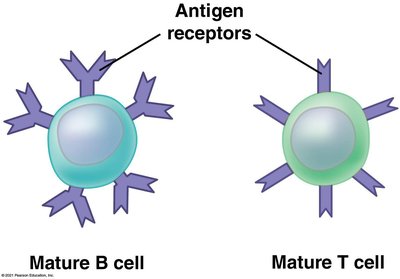
Adaptive immunity is specific and develops after exposure to antigens. It is characterized by specificity, memory, and self-tolerance. The main cells involved are lymphocytes: B cells (mature in bone marrow) and T cells (mature in thymus).
Antigens and Epitopes
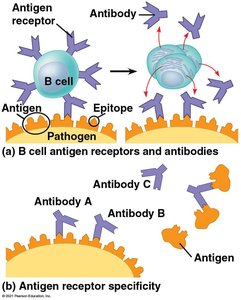
Antigen: Any substance that elicits an immune response (usually foreign proteins or polysaccharides).
Epitope: The specific part of an antigen recognized by an antigen receptor.
Antigen Recognition by B Cells and Antibodies
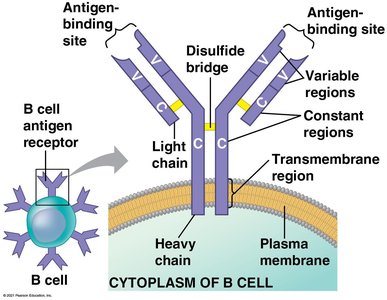
B cell antigen receptors are Y-shaped molecules with two identical heavy and two identical light chains.
Variable (V) regions confer antigen specificity; constant (C) regions are similar among B cells.
Activated B cells secrete antibodies (immunoglobulins) with the same specificity as their receptors.
Antigen Recognition by T Cells
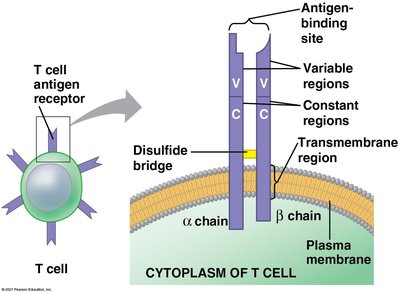
T cell receptors consist of α and β chains, each with variable and constant regions.
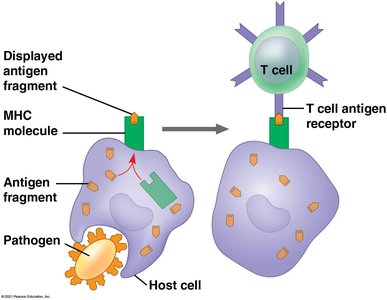
T cells recognize antigen fragments presented by major histocompatibility complex (MHC) molecules on host cells.
Antigen presentation is essential for T cell activation.
Generation of Lymphocyte Diversity
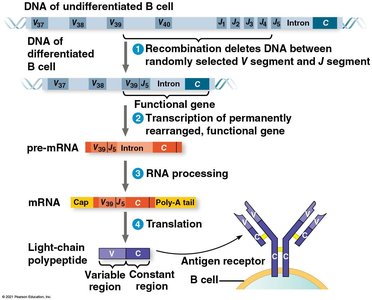
Immense diversity of antigen receptors is generated by random rearrangement of gene segments (V, J, and C regions) in B and T cells.
Recombinase enzymes mediate gene rearrangement, creating millions of unique receptors.
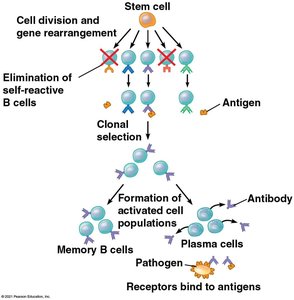
Self-reactive lymphocytes are eliminated or inactivated during development (self-tolerance).
Clonal Selection and Immunological Memory
Upon antigen binding, lymphocytes undergo clonal selection, producing effector cells (immediate response) and memory cells (long-term immunity).
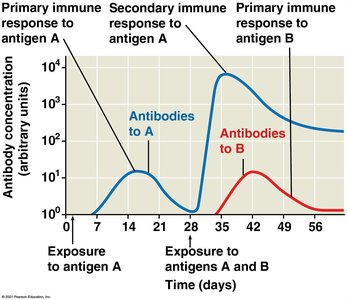
Primary immune response: First exposure to antigen; slower and less robust.
Secondary immune response: Subsequent exposures; faster and stronger due to memory cells.
Effector Mechanisms of Adaptive Immunity
Humoral and Cell-Mediated Responses
Humoral response: B cells secrete antibodies that neutralize or eliminate extracellular pathogens and toxins.
Cell-mediated response: Cytotoxic T cells destroy infected or abnormal host cells.
Helper T Cells
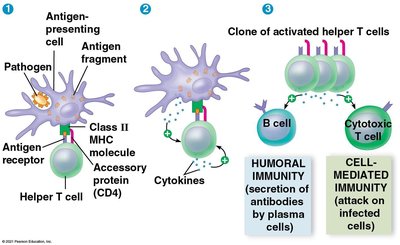
Helper T cells activate both humoral and cell-mediated responses by recognizing antigens presented by antigen-presenting cells (APCs) with class II MHC molecules.
Cytokine signaling between helper T cells and APCs stimulates immune responses.
B Cell Activation and Antibody Function
B cell activation requires antigen binding and helper T cell interaction.
Activated B cells differentiate into plasma cells that secrete antibodies.
Antibodies neutralize pathogens, promote phagocytosis, and activate the complement system.
Five classes of immunoglobulins: IgA, IgD, IgE, IgG, IgM (differ in structure and function).
Cytotoxic T Cells
Cytotoxic T cells recognize infected cells via antigens presented by class I MHC molecules.
They release proteins that induce apoptosis in target cells.
Immunization and Immune Memory
Vaccination introduces antigens to stimulate adaptive immunity and memory cell formation.
Active immunity: Acquired through infection or vaccination.
Passive immunity: Temporary protection via transfer of antibodies (e.g., maternal antibodies).
Disorders of the Immune System
Allergies
Allergies are hypersensitive responses to harmless antigens (allergens).
IgE antibodies trigger mast cells to release histamine, causing symptoms like sneezing and swelling.
Severe reactions can cause anaphylactic shock, treatable with epinephrine.
Autoimmune Diseases
Autoimmunity occurs when the immune system attacks self-molecules (e.g., lupus, type 1 diabetes, rheumatoid arthritis).
Genetic, environmental, and hormonal factors influence susceptibility.
Immunodeficiency Diseases
Inborn immunodeficiencies result from genetic defects; acquired immunodeficiencies develop later (e.g., HIV/AIDS).
HIV infects helper T cells, leading to immune system failure and susceptibility to opportunistic infections.
Pathogen Evasion of Immunity
Pathogens may evade immune responses through antigenic variation, latency, or direct attack on immune cells (e.g., HIV).
Cancer and Immunity
The immune system helps prevent cancer by eliminating virus-infected and abnormal cells.
Some viruses are linked to human cancers (e.g., HPV, hepatitis B).
Summary Table: Key Features of Innate vs. Adaptive Immunity
Feature | Innate Immunity | Adaptive Immunity |
|---|---|---|
Specificity | Nonspecific (broad) | Highly specific (antigen-dependent) |
Response Time | Immediate | Slower (days to weeks) |
Memory | None | Yes (immunological memory) |
Main Components | Barriers, phagocytes, NK cells, complement | B cells, T cells, antibodies |
Evolutionary Presence | All animals | Vertebrates only |
