Back
BIO 102 Chapter 45 Study Guide Module 1
Study Guide - Smart Notes
 Tailored notes based on your materials, expanded with key definitions, examples, and context.
Chapter 45
Introduction to Hormonal Regulation and Homeostasis
The endocrine system is a critical component of animal physiology, responsible for the regulation of long-distance signaling through hormones. Hormones are chemical messengers that coordinate complex processes such as growth, metabolism, and reproduction by maintaining homeostasis. This chapter builds on the principles of cell communication, focusing on specific examples of glands, hormone interactions, and their physiological effects.
Hormonal Influence on Animal Morphology and Behavior
Sexual Dimorphism in Elephant Seals
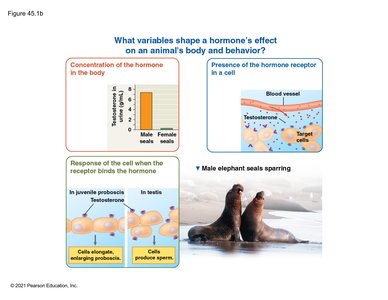
Sexual dimorphism refers to the distinct differences in appearance between males and females of a species. In elephant seals, males are significantly larger and possess a prominent proboscis, which is used during mating displays and competition. These morphological differences are primarily driven by the hormone testosterone, an endocrine signaling molecule that circulates throughout the body and influences development and behavior.

Hormone Concentration, Receptor Specificity, and Cellular Response
The effect of a hormone on an organism depends on several variables:
Hormone Concentration: Higher levels of testosterone in male elephant seals lead to the development of male-specific traits.
Receptor Presence: Only cells with the appropriate receptor can respond to a hormone, demonstrating receptor specificity.
Cellular Response: The same hormone can elicit different responses depending on the target cell type and its internal signaling machinery. For example, testosterone promotes proboscis growth in one tissue and sperm production in another.
Mechanisms of Endocrine Signaling
Long-Distance Regulation via the Circulatory System
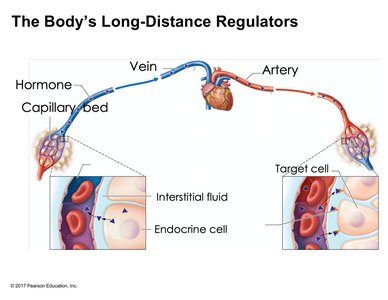
Endocrine cells release hormones into the interstitial fluid, from which they enter the bloodstream. The circulatory system transports these hormones throughout the body, allowing them to reach distant target cells. This long-distance signaling is essential for coordinating physiological responses across multiple organ systems.
Types of Cell Signaling
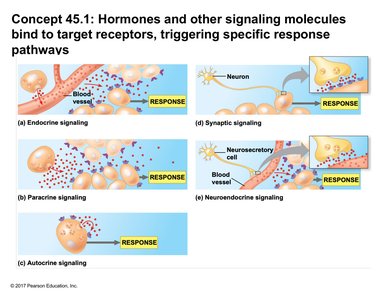
Cell communication can occur through several mechanisms:
Endocrine signaling: Hormones travel through the bloodstream to distant target cells.
Paracrine signaling: Signaling molecules affect nearby cells without entering the bloodstream.
Autocrine signaling: Cells respond to signals they themselves secrete.
Synaptic signaling: Neurons release neurotransmitters across synapses to adjacent cells.
Neuroendocrine signaling: Neurosecretory cells release signaling molecules into the blood, combining neural and endocrine mechanisms.
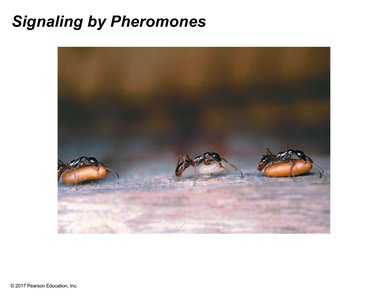
Signaling by Pheromones
Pheromones are chemicals released into the environment that trigger behavioral or physiological responses in other members of the same species. For example, ants use pheromones to mark trails to food sources, and termites can be experimentally observed following ink trails that mimic their natural pheromones.
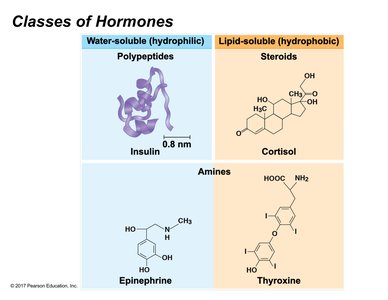
Classes of Hormones
Chemical Nature and Solubility
Hormones are classified into three main types based on their chemical structure and solubility:
Polypeptides: Water-soluble (hydrophilic) hormones composed of amino acid chains (e.g., insulin).
Steroids: Lipid-soluble (hydrophobic) hormones derived from cholesterol (e.g., cortisol).
Amines: Derived from amino acids; can be water-soluble (e.g., epinephrine) or lipid-soluble (e.g., thyroxine).
The solubility of a hormone determines its transport in the blood and its mechanism of action at the target cell.
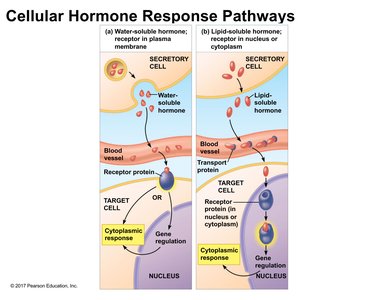
Hormone Response Pathways
Water-Soluble vs. Lipid-Soluble Hormones
The cellular response to a hormone depends on its solubility:
Water-soluble hormones bind to receptors on the plasma membrane, triggering signal transduction pathways that can result in cytoplasmic responses or gene regulation.
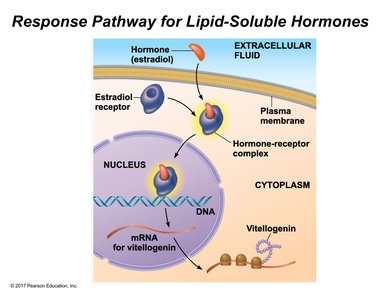
Lipid-soluble hormones pass through the plasma membrane and bind to intracellular receptors, often directly influencing gene expression in the nucleus.
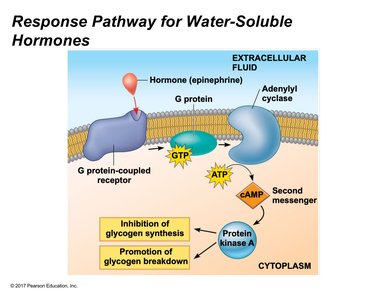
Signal Transduction Pathway for Water-Soluble Hormones
Example: Epinephrine (adrenaline) acts via a G protein-coupled receptor (GPCR) on the cell surface:
Epinephrine binds to GPCR, activating a G protein.
The G protein activates adenylyl cyclase, which converts ATP to cyclic AMP (cAMP), a second messenger.
cAMP activates protein kinase A (PKA), leading to cellular responses such as inhibition of glycogen synthesis and promotion of glycogen breakdown, increasing glucose availability for cellular respiration.
Signal Transduction Pathway for Lipid-Soluble Hormones
Example: Estradiol (a steroid hormone) diffuses through the plasma membrane and binds to a cytosolic receptor. The hormone-receptor complex enters the nucleus, where it acts as a transcription factor to regulate gene expression, such as the production of proteins necessary for egg yolk formation.
Multiple Responses to a Single Hormone
Cellular Context and Receptor Type
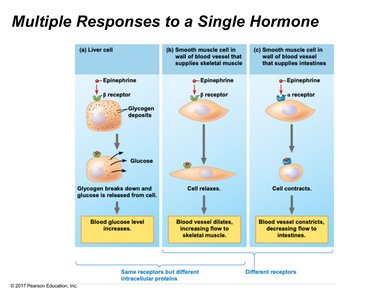
The same hormone can elicit different responses in different target cells, depending on the receptor type and intracellular signaling proteins present:
Liver cells: Epinephrine binding to beta receptors promotes glycogen breakdown and glucose release, increasing blood glucose levels.
Smooth muscle cells (skeletal muscle blood vessels): Epinephrine binding to beta receptors causes cell relaxation and blood vessel dilation, increasing blood flow to muscles.
Smooth muscle cells (intestinal blood vessels): Epinephrine binding to alpha receptors causes cell contraction and blood vessel constriction, decreasing blood flow to the intestines.
Endocrine Tissues and Organs
Overview of Major Endocrine Glands
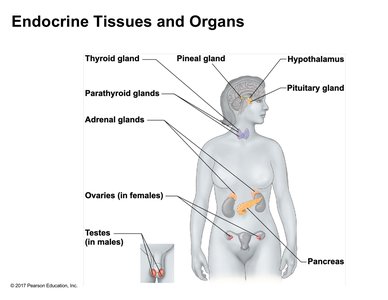
The endocrine system consists of various glands and tissues that secrete hormones into the bloodstream. Major human endocrine organs include:
Hypothalamus
Pituitary gland
Pineal gland
Thyroid gland
Parathyroid glands
Adrenal glands
Pancreas
Ovaries (in females)
Testes (in males)
These organs coordinate to regulate physiological processes and maintain homeostasis. Dysfunction in endocrine signaling can lead to significant health issues.