 Back
Chapter 48: The Immune System – Structure, Function, and Disorders
Study Guide - Smart Notes
 Tailored notes based on your materials, expanded with key definitions, examples, and context.
Immune System Overview
Introduction to Immunity
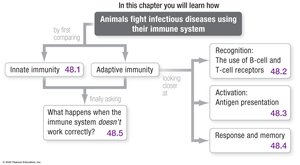
The immune system is a complex network of cells, tissues, and organs that protects animals from infectious diseases. It is divided into two main branches: innate immunity and adaptive immunity. Each branch has distinct mechanisms for recognizing and eliminating pathogens.
Innate Immunity: First Response
Barrier Defenses
Innate immunity is present from birth and provides immediate defense against pathogens. The first line of defense includes anatomical barriers and chemical defenses that prevent pathogen entry.
Skin: Composed of dead cells reinforced with keratin, creating a tough, impermeable layer.
Low pH: Skin and digestive system maintain acidic environments that inhibit microbial growth.
Insects: Protected by a cuticle.
Soft-bodied invertebrates: Covered with mucus.
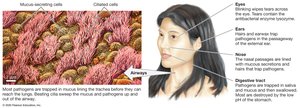
Openings (eyes, ears, nose, digestive tract) are protected by mucus, tears, and other secretions that trap and remove pathogens.
Cellular Innate Defenses
Leukocytes (white blood cells) detect and respond to antigens on pathogens, triggering a nonspecific defense mechanism. They target broad groups of pathogens such as bacteria and fungi.
Neutrophils: Blood-circulating phagocytic cells.
Macrophages: Phagocytes that migrate or reside in organs and tissues.
Dendritic cells: Stimulate adaptive immunity by presenting antigens.
Natural Killer (NK) cells: Recognize and eliminate diseased cells, inhibit viral spread, induce cell death via chemical release.
Pathogen Recognition: Toll-like Receptors (TLRs)
Phagocytic cells recognize groups of pathogens using Toll-like receptors (TLRs). TLRs detect molecular patterns characteristic of pathogens, such as lipopolysaccharides, flagellin, CpG DNA, and double-stranded RNA.
Toll Protein and Innate Immunity in Fruit Flies
The Toll protein is critical for the innate immune response in fruit flies. Flies lacking Toll protein are highly susceptible to fungal infections, demonstrating the specificity and importance of this pathway.

Inflammatory Response
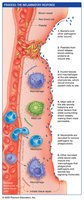
The inflammatory response is a multi-step process that occurs at the site of injury or infection. It involves the recruitment of immune cells, increased blood flow, and the release of signaling molecules to eliminate pathogens and promote healing.
Adaptive Immunity: Specific Response
Recognition of Pathogen-Specific Antigens
Adaptive immunity is characterized by its specificity, diversity, memory, and self-nonself recognition. It involves the use of antibodies and specialized immune cells to target specific antigens.
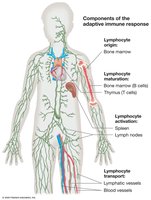
B cells: Originate in bone marrow; produce antibodies.
T cells: Originate in thymus; mediate cellular responses.
Antigen Receptors
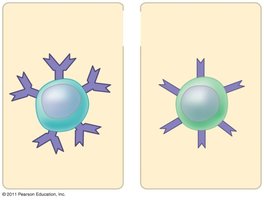
B and T cells bind to antigens via highly variable antigen receptors. Each B cell produces a unique antibody, while T cells require antigen presentation for activation.
B-Cell and T-Cell Receptor Structure
B-cell receptors (BCRs) and T-cell receptors (TCRs) have transmembrane domains, constant (C) regions, and variable (V) regions that form the antigen-binding sites.
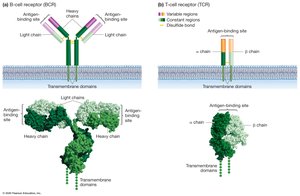
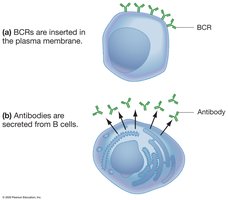
Antibodies are structurally identical to BCRs except they lack transmembrane domains.
Binding to Epitopes
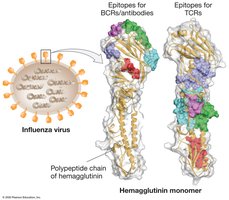
Immunoglobulins (antibodies, BCRs, and TCRs) bind to specific regions of antigens called epitopes. For example, the influenza virus contains an epitope called hemagglutinin.
Generation of Diversity
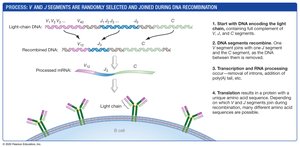
Each person can produce millions of different B and T cell receptors, despite having only about 20,000 protein-coding genes. This diversity is generated by random recombination of gene segments.
Self vs Nonself Recognition
The immune system distinguishes self from nonself by eliminating or inactivating B and T cells that react to self-molecules during their maturation in bone marrow and thymus.
Activation of B and T Cells
Clonal Selection Theory
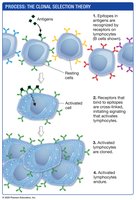
Only lymphocytes with receptors specific to the invading antigen become activated. These cells undergo clonal expansion, producing many identical cells to fight the infection.
Antigen Presentation via MHC Proteins
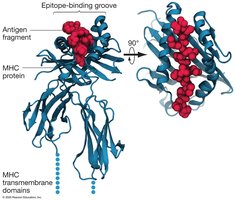
T cells are activated by binding to epitopes presented on the surface of cells by major histocompatibility complex (MHC) proteins. There are two classes of MHC proteins:
Class I MHC: Present antigens from intracellular pathogens.
Class II MHC: Present antigens from extracellular pathogens.
Naive T Cell Activation
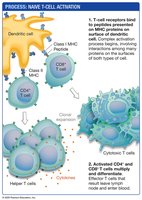
In lymph organs, dendritic cells present antigens to T cells. CD8+ T cells interact with class I MHC-bound antigens, while CD4+ T cells interact with class II MHC-bound antigens. Activated T cells undergo clonal expansion and differentiate into effector cells.
B Cell Activation and Antibody Secretion
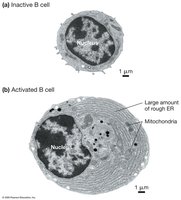
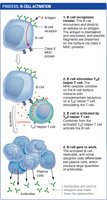
B cells are activated by binding to antigens and interacting with TH2 helper T cells. Activated B cells undergo clonal expansion and produce large amounts of rough ER and mitochondria to manufacture and secrete antibodies.
Adaptive Immune Response: Mechanisms and Memory
Humoral Response
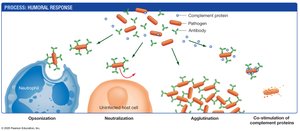
The humoral response, promoted by TH2 cells, involves the production of antibodies and other proteins secreted into blood and lymph to eliminate extracellular pathogens.
Cell-Mediated Response
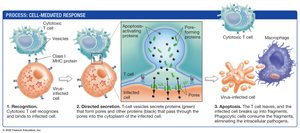
The cell-mediated response, promoted by TH1 cells, involves activation of phagocytic cells and cytotoxic T cells to eliminate intracellular pathogens through cell-to-cell contact.
Immunological Memory
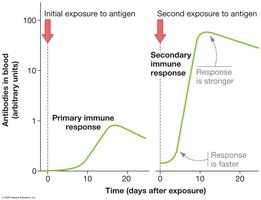
The adaptive immune system generates memory cells that facilitate a faster and stronger response upon subsequent exposure to the same antigen. The primary immune response takes 10-17 days, while the secondary response is faster (2-7 days), greater in magnitude, and more prolonged.
Immune System Disorders
Allergies
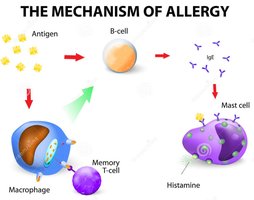
An allergy is an abnormal, overreactive response to an antigen. IgE antibody production initiates allergic hypersensitivity, leading to rapid release of histamine and cytokines, causing symptoms such as blood vessel dilation, airway constriction, and mucus secretion. Severe reactions can result in anaphylactic shock.
Autoimmune Diseases
Autoimmunity occurs when the immune system attacks self-molecules or cells. Examples include:
Multiple sclerosis: Cytotoxic T cells attack myelin.
Rheumatoid arthritis: Self-reactive antibodies alter joint lining.
Type 1 diabetes mellitus: Cytotoxic T cells kill insulin-secreting cells.
Immunodeficiency Diseases
Immunodeficiency diseases impair the adaptive immune response. Severe combined immunodeficiency disease (SCID) is a genetic disorder resulting in a lack of normal immune function. HIV infects and kills macrophages and CD4+ T cells, leading to progressive immune failure.
Summary Table: Innate vs Adaptive Immunity
Feature | Innate Immunity | Adaptive Immunity |
|---|---|---|
Specificity | Non-specific | Highly specific |
Response Time | Immediate | Delayed (days) |
Memory | None | Present |
Cell Types | Leukocytes, phagocytes | B cells, T cells |
Recognition | Pattern recognition (TLRs) | Antigen-specific receptors |
