 Back
Chapter 49: An Introduction to Ecology part 2
Study Guide - Smart Notes
 Tailored notes based on your materials, expanded with key definitions, examples, and context.
Ecology: The Study of Interactions
Overview of Ecological Study
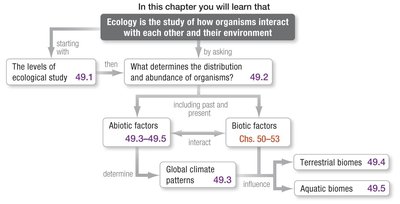
Ecology is the scientific study of how organisms interact with each other and their environment. Ecologists investigate the distribution and abundance of organisms, considering both abiotic (non-living) and biotic (living) factors. The levels of ecological study range from individuals to populations, communities, ecosystems, and the biosphere.
Terrestrial Biomes
Definition and Determinants
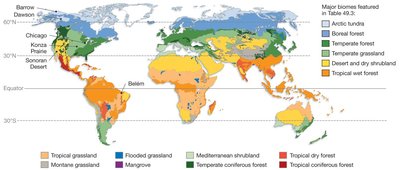
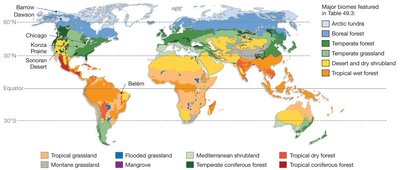
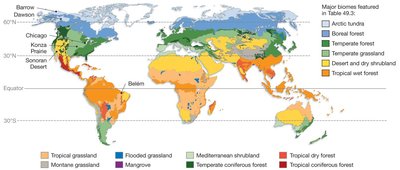
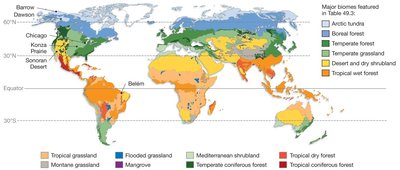
A biome is a large geographic region characterized by distinct abiotic conditions and dominant types of vegetation. The location and characteristics of terrestrial biomes are primarily determined by climate, especially average annual temperature and precipitation, as well as their seasonal variability.
Abiotic factors: Temperature, precipitation, sunlight, soil type
Biotic factors: Dominant vegetation, animal species
Net Primary Productivity (NPP)
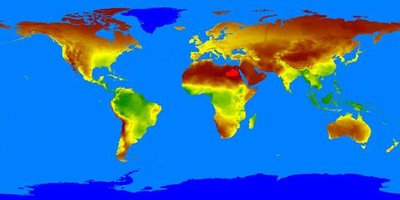
Net Primary Productivity (NPP) is a key characteristic of biomes, representing the annual amount of carbon fixed by plants minus the carbon lost through respiration. NPP is often estimated by measuring aboveground biomass and indicates the amount of organic matter available to consumers.
Formula:
Highest NPP: Tropical wet forests
Lowest NPP: Deserts and tundra
Major Terrestrial Biomes
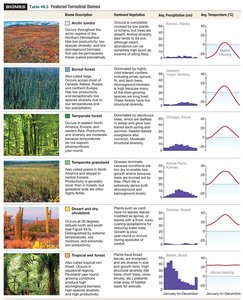
Terrestrial biomes are classified based on climate, dominant vegetation, productivity, and species diversity. The following table summarizes the main features of six major biomes:
Biome | Description | Dominant Vegetation | Avg Precipitation | Avg Temperature |
|---|---|---|---|---|
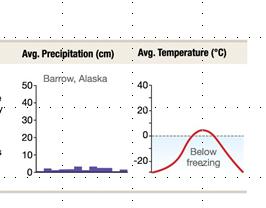
Arctic tundra | Low productivity, low diversity, permafrost | Low plants, lichens | Very low | Below freezing |
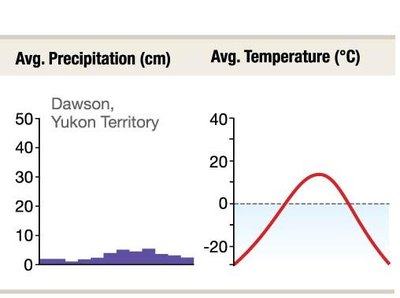
Boreal forest | Cold-tolerant conifers, low diversity | Pines, spruce, fir | Low | Cold |
Temperate forest | Moderate productivity, deciduous trees | Deciduous, needle-leaved evergreens | Moderate | Moderate |
Temperate grassland | Grasses dominate, fertile soils | Grasses | Moderate | Moderate |
Desert and dry shrubland | Low productivity, sparse vegetation | Cacti, shrubs | Very low | Hot |
Tropical wet forest | High productivity, high diversity | Broadleaf trees | High | Warm |
Arctic Tundra
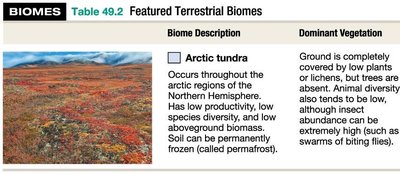
The arctic tundra occurs throughout the arctic regions of the Northern Hemisphere. It is characterized by low productivity, low species diversity, and low aboveground biomass. The soil can be permanently frozen (permafrost), and the ground is covered by low plants or lichens. Animal diversity is low, but insect abundance can be high.
Boreal Forest (Taiga)
The boreal forest is dominated by highly cold-tolerant conifers such as pines, spruce, fir, and larch trees. It occurs across most of Canada, Alaska, Russia, and northern Europe. Productivity and species diversity are low due to cold temperatures and low precipitation.
Temperate Forest
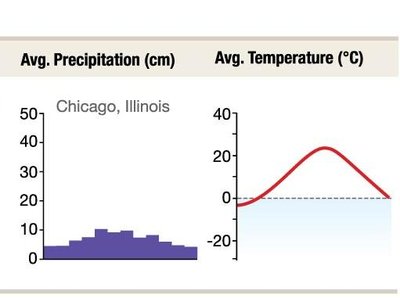
Temperate forests occur in eastern North America, Europe, and eastern Asia. They are dominated by deciduous trees, which lose their leaves in winter and grow new leaves each spring and summer. Productivity and diversity are moderate, and needle-leaved evergreens are also common.
Temperate Grassland
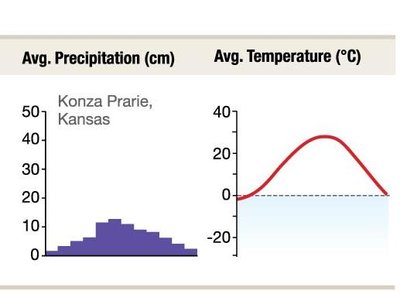
Temperate grasslands (prairies and steppes) are dominated by grasses due to dry conditions and frequent fires that prevent tree growth. Productivity is lower than forests, but soils are often highly fertile.
Desert and Dry Shrubland
Deserts and dry shrublands are characterized by very low productivity and sparse vegetation such as cacti and shrubs. These biomes experience extreme temperatures and minimal precipitation.
Example: Sonoran Desert (Arizona) vs. Gobi Desert (Mongolia)
Tropical Wet Forest
Tropical wet forests have high productivity and species diversity. They are dominated by broadleaf trees and experience high precipitation and warm temperatures year-round.
Human Impact on Terrestrial Biomes
Human activities such as logging, farming, and urban development have transformed historical terrestrial biomes. Globally, 75% of Earth's ice-free land has been directly altered, and only 11% of terrestrial NPP remains in wildlands.
Summary Table: Terrestrial Biomes
Conclusion
Understanding terrestrial biomes is essential for studying ecology, as they provide the context for organismal interactions, productivity, and biodiversity. Climate and human activity are major drivers of biome distribution and characteristics.
