 Back
Chapter 49: Nervous Systems – Structure and Function
Study Guide - Smart Notes
 Tailored notes based on your materials, expanded with key definitions, examples, and context.
Overview of Nervous Systems
Introduction to Nervous Systems
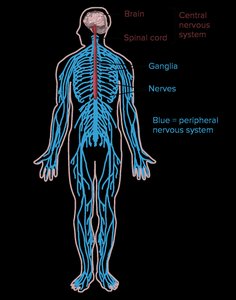
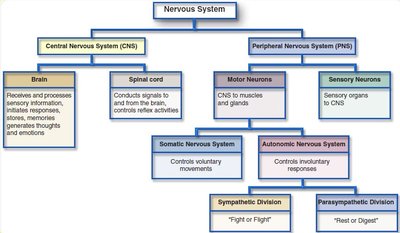
The nervous system is a complex network of specialized cells called neurons that transmit electrical and chemical signals throughout the body. It is divided into the central nervous system (CNS) and the peripheral nervous system (PNS), each with distinct structures and functions.
Central Nervous System (CNS): Consists of the brain and spinal cord; processes information and coordinates activity.
Peripheral Nervous System (PNS): Composed of nerves and ganglia outside the CNS; transmits signals between the CNS and the rest of the body.
Neurons: Structure and Function
Specialized Structure of Neurons
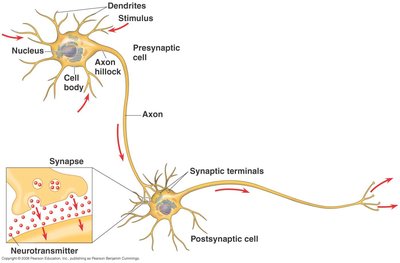
Neurons are the fundamental units of the nervous system, specialized for the reception, conduction, and transmission of electrical signals.
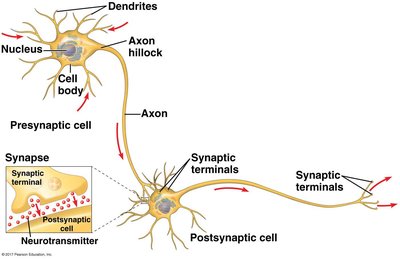
Cell Body (Soma): Contains the nucleus and most organelles.
Dendrites: Branched extensions that receive signals from other neurons.
Axon: A long projection that transmits signals to other cells; may be over 1 meter in length.
Synapse: The junction where the axon terminal of one neuron communicates with another cell via neurotransmitters.
Neuronal Signaling and Synapses
Neurons communicate through electrical impulses and chemical signals at synapses. The action potential is an all-or-nothing electrical event that travels along the axon, leading to neurotransmitter release at the synaptic terminal.
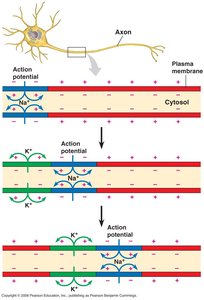
Action Potential: A rapid change in membrane potential that propagates along the axon.
Synaptic Transmission: Neurotransmitters released from the presynaptic cell bind to receptors on the postsynaptic cell, potentially triggering a new action potential.
Neurons as Switches: Neurons function in an on-off manner, determined by the movement of ions across their membranes.
Propagation of Action Potentials
Action potentials are propagated along axons by the sequential opening of voltage-gated ion channels. The refractory period ensures unidirectional propagation and limits the frequency of action potentials.
Refractory Period: The time during which a neuron cannot fire another action potential.
Factors Affecting Speed: Larger axon diameter and myelination increase conduction speed.
Evolution and Diversity of Nervous Systems
Comparative Nervous System Organization
Nervous systems vary in complexity across animal phyla, reflecting evolutionary adaptations and lifestyle requirements.
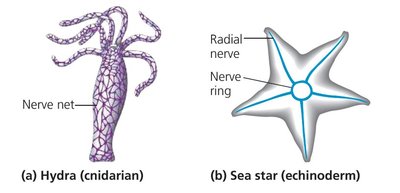
Cnidarians: Possess a diffuse nerve net.
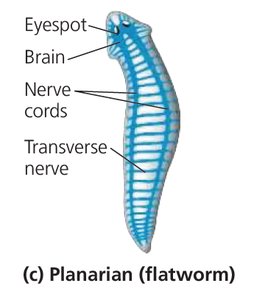
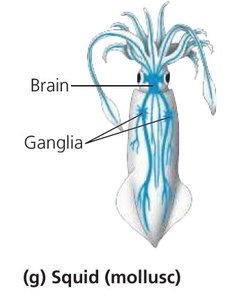
More Complex Animals: Have nerves composed of multiple neurons and centralized nervous systems.
Cephalization: Concentration of nervous tissue into a brain, common in bilaterally symmetrical animals.
Ganglia: Clusters of neuron cell bodies that may control specific structures.
Central and Peripheral Nervous Systems in Vertebrates
Structure and Function of the CNS
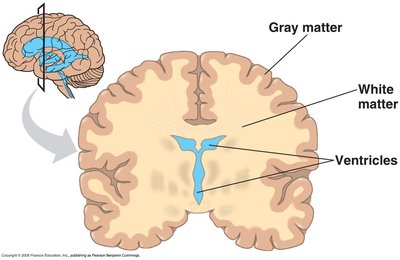
The vertebrate CNS consists of the brain and spinal cord, which process sensory information, coordinate movement, and mediate reflexes. The CNS is composed of gray matter (neuron cell bodies) and white matter (myelinated axons).
Brain: Processes stimuli and controls voluntary and involuntary behavior.
Spinal Cord: Transmits signals to and from the brain and mediates reflexes.
Cerebrospinal Fluid: Cushions the CNS and facilitates nutrient/waste exchange.
Blood-Brain Barrier: Maintained by glial cells to protect the brain from harmful substances.
Peripheral Nervous System (PNS)
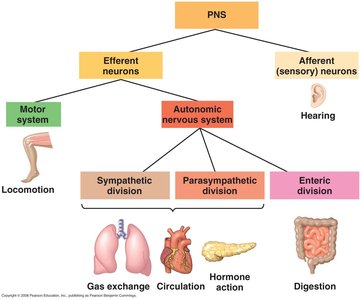
The PNS connects the CNS to the rest of the body and is divided into sensory (afferent) and motor (efferent) divisions. It includes cranial nerves, spinal nerves, and ganglia.
Afferent Neurons: Carry sensory information to the CNS.
Efferent Neurons: Transmit commands from the CNS to muscles and glands.
Motor System: Controls voluntary movements.
Autonomic Nervous System: Regulates involuntary functions (e.g., heart rate, digestion).
Divisions of Autonomic System: Sympathetic (arousal), parasympathetic (calming), and enteric (digestion).
Structure and Function of the Human Brain
Development and Major Regions of the Brain
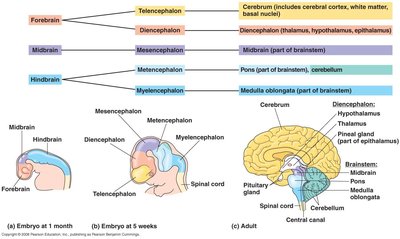
The human brain develops from three embryonic regions (forebrain, midbrain, hindbrain), each giving rise to specific adult structures. The brainstem, cerebellum, diencephalon, and cerebrum have specialized roles in homeostasis, movement, and information processing.
Brainstem: Includes midbrain, pons, and medulla; controls basic life functions and relays information.
Cerebellum: Coordinates movement and balance.
Diencephalon: Thalamus, hypothalamus, and epithalamus; involved in sensory processing and homeostasis.
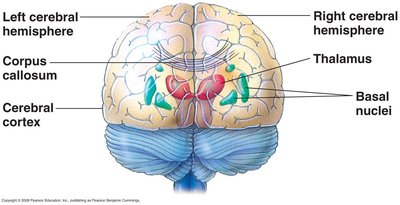
Cerebrum: Largest part of the brain; responsible for higher cognitive functions.
Cerebral Cortex and Brain Lateralization
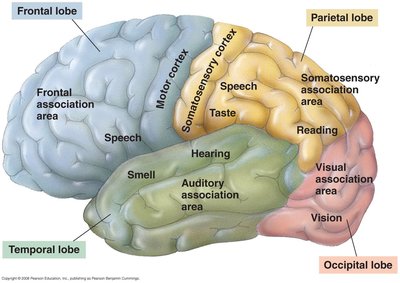
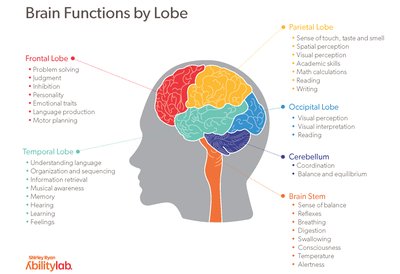
The cerebral cortex is divided into four lobes (frontal, parietal, occipital, temporal), each with specialized functions. The two hemispheres of the brain are not identical in function, a phenomenon known as lateralization.
Frontal Lobe: Decision-making, problem-solving, and voluntary movement.
Parietal Lobe: Sensory processing and spatial orientation.
Occipital Lobe: Visual processing.
Temporal Lobe: Hearing, language, and memory.
Lateralization: Left hemisphere specializes in logic and math; right hemisphere in spatial and non-verbal tasks.

Emotion, Consciousness, and Brain Plasticity
Emotions and consciousness are complex brain functions, often studied through cases of brain injury. The brain is plastic, meaning it can change its structure and function in response to experience, supporting learning and memory.
Neural Plasticity: The ability of synaptic connections to strengthen or weaken over time.
Learning and Memory: Short-term memory involves temporary storage; long-term memory involves structural changes in the cerebral cortex.
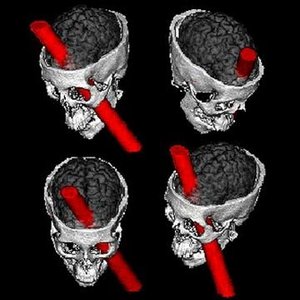
Case Study: Phineas Gage demonstrated how brain injury can alter personality and behavior.
Disorders of the Nervous System
Examples of Neurological Disorders
Studying disorders such as schizophrenia, depression, drug addiction, Alzheimer's disease, and Parkinson's disease provides insight into normal brain function and the importance of neural circuits.
Schizophrenia: Affects perception and thought processes.
Depression: Involves persistent sadness and loss of interest.
Drug Addiction: Alters reward pathways in the brain.
Alzheimer’s Disease: Characterized by memory loss and cognitive decline.
Parkinson’s Disease: Involves motor dysfunction due to loss of dopamine-producing neurons.
Additional info: Understanding the structure and function of the nervous system is foundational for exploring advanced topics in neurobiology, behavior, and medicine.
