Back
Chapter 5: The Working Cell – Energy, Enzymes, and Membrane Transport
Study Guide - Smart Notes
 Tailored notes based on your materials, expanded with key definitions, examples, and context.
Some Basic Energy Concepts
Forms and Conservation of Energy
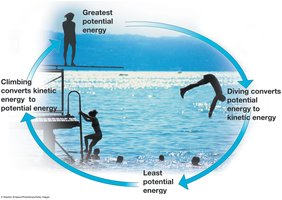
Energy is defined as the capacity to cause change and is essential for all biological processes. There are two main forms of energy:
Kinetic energy: The energy of motion.
Potential energy: Stored energy due to an object's location or structure.
According to the conservation of energy principle, energy cannot be created or destroyed, only converted from one form to another. Life depends on these energy conversions for survival and function.
Chemical Energy and Cellular Respiration
Chemical Energy in Biological Systems
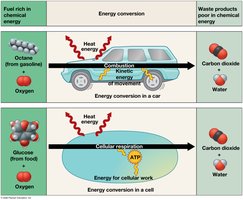
Chemical energy is a form of potential energy stored in the arrangement of atoms within molecules. This energy can be released by chemical reactions, such as the breakdown of food in living cells or gasoline in car engines. Both processes convert chemical energy into forms usable for work, with some energy lost as heat.
Calories and Energy Use
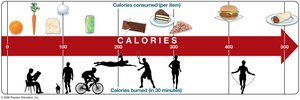
A calorie (cal) is the amount of energy needed to raise the temperature of 1 gram of water by 1°C. Food energy is measured in kilocalories (kcal), where 1 kcal = 1,000 cal. The Calories (capital C) listed on food packages are kilocalories. The energy from food fuels all cellular activities, with excess energy released as heat.
ATP and Cellular Work
Structure and Function of ATP
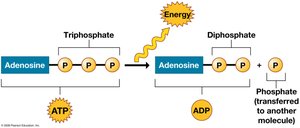
ATP (adenosine triphosphate) is the primary energy carrier in cells. It stores energy obtained from food and releases it as needed to power cellular work. ATP consists of adenosine and three phosphate groups. The removal of a phosphate group releases energy:
How ATP Drives Cellular Work
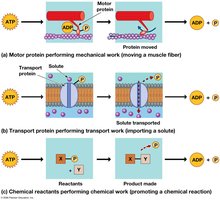
ATP powers cellular activities by transferring a phosphate group to other molecules, a process called phosphorylation. This energizes target molecules, enabling them to perform work such as:
Changing cell shape (mechanical work)
Transporting substances across membranes (transport work)
Driving chemical reactions (chemical work)
The ATP Cycle
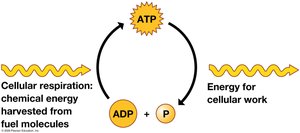
ATP is continuously regenerated from ADP and inorganic phosphate using energy from cellular respiration. This cycle ensures a constant supply of ATP for cellular processes.
Enzymes and Metabolism
Role of Enzymes
Metabolism is the sum of all chemical reactions in an organism. Most metabolic reactions require enzymes, which are proteins that speed up reactions without being consumed. Each enzyme is specific to a particular reaction and substrate.
Activation Energy
Activation energy is the initial energy needed to start a chemical reaction. Enzymes lower the activation energy, allowing reactions to proceed more rapidly and at lower temperatures.
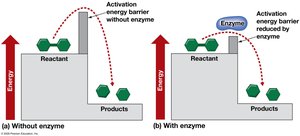
Enzyme Activity and Specificity
Enzymes are highly selective, recognizing specific substrates that fit into their active site. The induced fit model describes how the enzyme changes shape to bind the substrate more snugly, facilitating the reaction. After the reaction, the enzyme releases the products and can be reused.
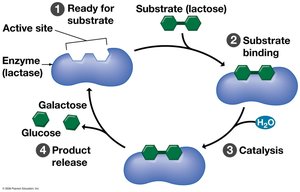
Enzyme Inhibitors
Enzyme activity can be regulated by inhibitors that bind to the enzyme and decrease its activity. Inhibitors may resemble the substrate and block the active site (competitive inhibition) or bind elsewhere, changing the enzyme's shape (noncompetitive inhibition).
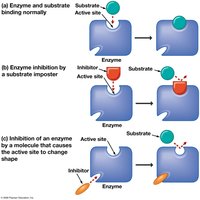
Membrane Structure and Function
Primary Functions of Membrane Proteins
Membrane proteins perform various functions, including transport, cell signaling, enzymatic activity, attachment to the cytoskeleton, intercellular joining, and cell-cell recognition. These proteins are essential for maintaining cellular homeostasis and communication.
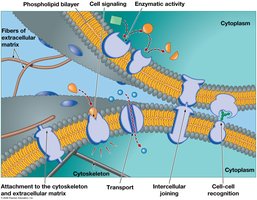
Membrane Transport Mechanisms
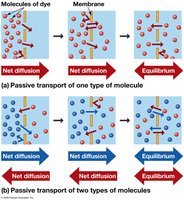
Passive Transport: Diffusion
Diffusion is the movement of molecules from an area of higher concentration to an area of lower concentration, driven by random molecular motion. Passive transport does not require energy and includes simple diffusion and facilitated diffusion (via transport proteins).
Osmosis and Water Balance
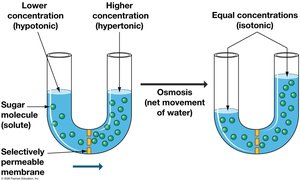
Osmosis is the diffusion of water across a selectively permeable membrane. The direction of water movement depends on the relative concentrations of solutes:
Hypertonic solution: Higher solute concentration outside the cell
Hypotonic solution: Lower solute concentration outside the cell
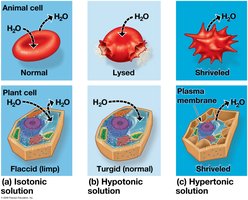
Isotonic solution: Equal solute concentration inside and outside
Osmoregulation and Water Balance in Cells
Cells must regulate water balance to survive. In animal cells, water balance is crucial to prevent lysis (bursting) or shriveling. Plant cells are healthiest in hypotonic environments, where water inflow maintains turgor pressure.
Active Transport
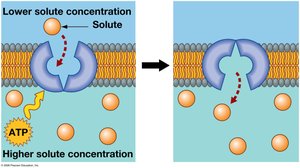
Active transport requires energy (usually from ATP) to move molecules against their concentration gradient via transport proteins. This process allows cells to maintain internal concentrations of ions and other substances different from their environment.
Bulk Transport: Exocytosis and Endocytosis
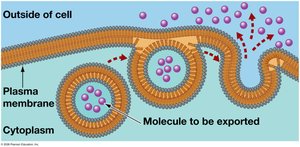
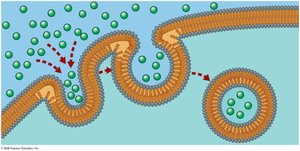
Large molecules and particles are transported across membranes via vesicles in two main processes:
Exocytosis: Movement of materials out of the cell by fusion of vesicles with the plasma membrane.
Endocytosis: Uptake of materials into the cell by vesicle formation from the plasma membrane. Phagocytosis is a type of endocytosis where the cell engulfs large particles.