 Back
BackChapter 5: The Working Cell – Membrane Structure, Function, and Cellular Energy
Study Guide - Smart Notes
 Tailored notes based on your materials, expanded with key definitions, examples, and context.
Membrane Structure and Function
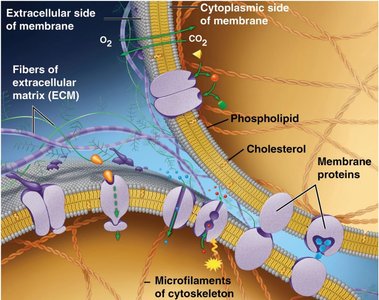
The Fluid Mosaic Model of Membranes
The plasma membrane is a dynamic structure composed of a phospholipid bilayer with embedded proteins. This arrangement allows the membrane to be both flexible and selectively permeable, supporting a variety of cellular functions.
Physical Barrier: The membrane separates the internal environment of the cell from the external environment.
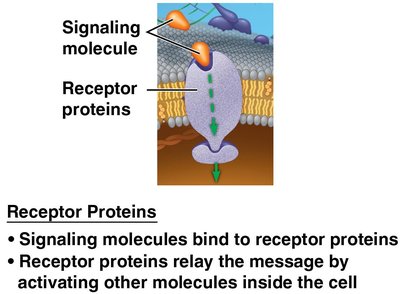
Cell Signaling: Membrane proteins receive and transmit signals from the environment to the cell's interior.
Transport: The membrane regulates the movement of substances into and out of the cell.
Selective Permeability: Only certain molecules can cross the membrane freely; others require assistance from proteins.
Endocytosis vs. Exocytosis: Endocytosis brings large molecules into the cell, while exocytosis exports them.
Fluid Mosaic Model
Biologists describe the membrane as a fluid mosaic—a flexible layer of phospholipids with a mosaic of proteins that float within or on the bilayer. This structure allows for diverse protein functions and selective permeability.
Diverse Functions of Membrane Proteins
Membrane proteins are responsible for a variety of essential cellular functions:
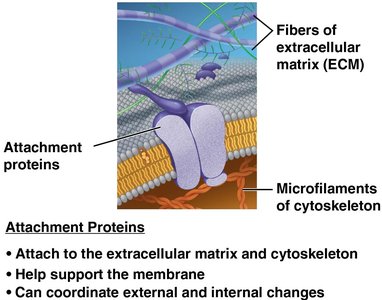
Attachment Proteins: Anchor the membrane to the cytoskeleton and extracellular matrix, providing structural support and facilitating communication.
Receptor Proteins: Bind signaling molecules and initiate cellular responses.
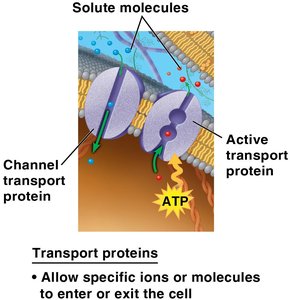
Transport Proteins: Facilitate the movement of ions and molecules across the membrane.
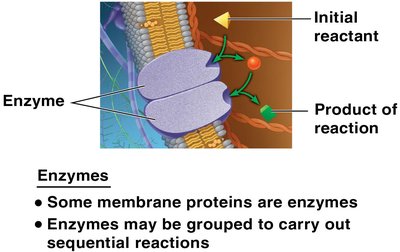
Enzymes: Catalyze chemical reactions at the membrane surface.
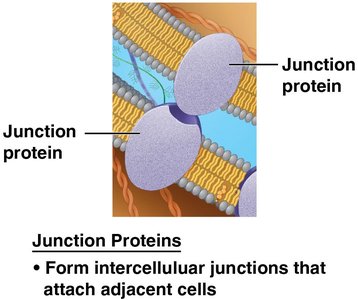
Junction Proteins: Connect adjacent cells, forming tissues.
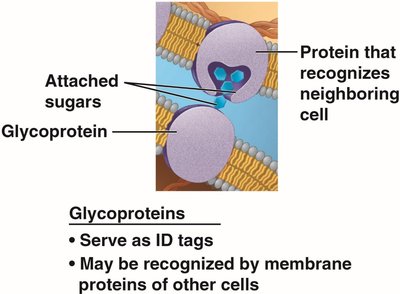
Glycoproteins: Serve as identification tags recognized by other cells.
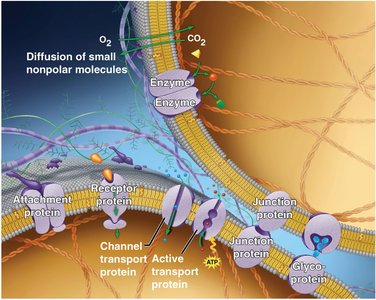
Examples of Membrane Protein Functions
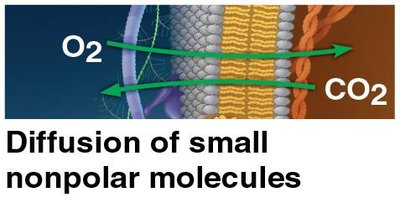
Diffusion of Small Nonpolar Molecules: Oxygen (O2) and carbon dioxide (CO2) diffuse freely across the lipid bilayer.
Transport Proteins: Channel and carrier proteins allow specific ions or molecules to enter or exit the cell.
Enzymes: Some membrane proteins catalyze sequential reactions.
Attachment Proteins: Connect the membrane to the cytoskeleton and extracellular matrix.
Receptor Proteins: Relay signals from outside to inside the cell.
Junction Proteins: Form intercellular junctions between adjacent cells.
Glycoproteins: Serve as cell ID tags for recognition by other cells.
Passive Transport: Diffusion and Osmosis
Diffusion Across the Plasma Membrane
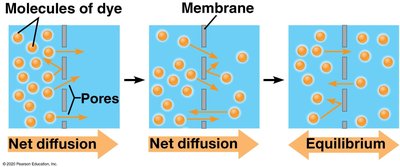
Diffusion is the movement of particles from an area of higher concentration to an area of lower concentration. This process does not require energy and is called passive transport.
Small, nonpolar molecules (e.g., O2, CO2) diffuse directly through the lipid bilayer.
Osmosis: Diffusion of Water
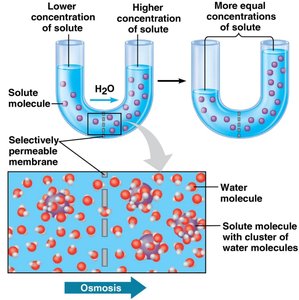
Osmosis is the diffusion of water across a selectively permeable membrane. Water moves from areas of lower solute concentration to areas of higher solute concentration until equilibrium is reached.
Osmosis is crucial for maintaining cellular water balance.
Tonicity and Water Balance
Tonicity describes the ability of a surrounding solution to cause a cell to gain or lose water:
Hypertonic Solution: Higher solute concentration outside the cell; cell loses water and shrinks.
Hypotonic Solution: Lower solute concentration outside the cell; cell gains water and swells.
Isotonic Solution: Equal solute concentration; no net water movement.
Facilitated Diffusion
Polar or charged substances cannot easily cross the lipid bilayer. Facilitated diffusion uses transport proteins to move these substances down their concentration gradients without energy input.
Aquaporins: Specialized channel proteins that facilitate rapid water movement.
Active Transport and Bulk Transport
Active Transport
In active transport, cells use energy (usually from ATP) to move solutes against their concentration gradients. This process is essential for maintaining concentration differences across membranes.
Active transport proteins (pumps) are specific for their solutes.
Exocytosis and Endocytosis
Large molecules cross the membrane via vesicles in two main processes:
Exocytosis: Exports bulky molecules (e.g., proteins, polysaccharides) out of the cell.
Endocytosis: Imports large molecules into the cell. Includes:
Phagocytosis: Engulfment of particles by the cell membrane, forming a vacuole.
Receptor-mediated Endocytosis: Specific uptake of molecules via receptor proteins.
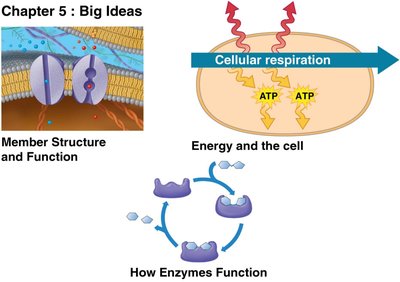
Energy and the Cell
Forms of Energy
Energy is the capacity to cause change. It exists in two main forms:
Kinetic Energy: Energy of motion.
Potential Energy: Stored energy due to position or structure, including chemical energy.
Laws of Thermodynamics
First Law: Energy cannot be created or destroyed, only transformed.
Second Law: Energy transformations increase disorder (entropy); some energy is lost as heat.
Chemical Reactions and Metabolism
Exergonic Reactions: Release energy (e.g., cellular respiration).
Endergonic Reactions: Require energy input (e.g., photosynthesis).
Metabolism: The sum of all chemical reactions in a cell.
ATP: The Cell's Energy Shuttle
ATP (adenosine triphosphate) powers nearly all forms of cellular work by transferring a phosphate group to other molecules (phosphorylation). This process couples exergonic and endergonic reactions.
ATP Cycle: ATP is regenerated from ADP and phosphate using energy from exergonic reactions.
How Enzymes Function
Enzyme Structure and Function
Enzymes are biological catalysts that speed up chemical reactions by lowering the activation energy required. They are not consumed in the reaction.
Substrate: The reactant an enzyme acts on.
Active Site: The region of the enzyme where the substrate binds.
Cofactors: Nonprotein helpers required for enzyme activity; organic cofactors are called coenzymes.
Enzyme Inhibition and Regulation
Competitive Inhibitors: Block the active site, preventing substrate binding.
Noncompetitive Inhibitors: Bind elsewhere on the enzyme, altering its shape and function.
Feedback Inhibition: The end product of a metabolic pathway inhibits an upstream enzyme, regulating the pathway.
Denaturation: Extreme heat or pH changes can alter enzyme shape, rendering it inactive.
Enzyme Inhibitors in Medicine and Industry
Many drugs, pesticides, and poisons act as enzyme inhibitors, either beneficially (as medicines) or harmfully (as toxins).
Tables: Enzyme Activity
Table A: Reaction Rate and Enzyme Concentration
Lactose concentration | Enzyme concentration | Reaction rate |
|---|---|---|
10% | 0% | 0 |
10% | 1% | 25 |
10% | 2% | 50 |
10% | 4% | 100 |
10% | 8% | 200 |
Main Purpose: Demonstrates that increasing enzyme concentration increases reaction rate when substrate is abundant.
Table B: Reaction Rate and Substrate Concentration
Lactose concentration | Enzyme concentration | Reaction rate |
|---|---|---|
0% | 2% | 0 |
5% | 2% | 25 |
10% | 2% | 50 |
20% | 2% | 65 |
30% | 2% | 65 |
Main Purpose: Shows that reaction rate increases with substrate concentration up to a point, after which it plateaus (enzyme saturation).
Key Equations
ATP Hydrolysis:
General Enzyme Reaction:
Summary
Cell membranes are fluid mosaics of lipids and proteins, crucial for selective transport, signaling, and maintaining homeostasis.
Passive transport (diffusion, osmosis) moves substances down concentration gradients without energy input.
Active transport and bulk transport (endocytosis, exocytosis) require energy to move substances against gradients or in bulk.
Cells transform energy through metabolic reactions, using ATP as the main energy currency.
Enzymes catalyze cellular reactions, and their activity is regulated by inhibitors and feedback mechanisms.
