Back
Chapter 5: The Working Cell – Membrane Structure, Transport, Energy, and Enzymes
Study Guide - Smart Notes
 Tailored notes based on your materials, expanded with key definitions, examples, and context.
The Membrane
Fluid Mosaic Model of Cell Membranes
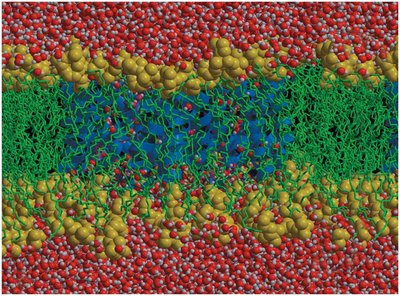
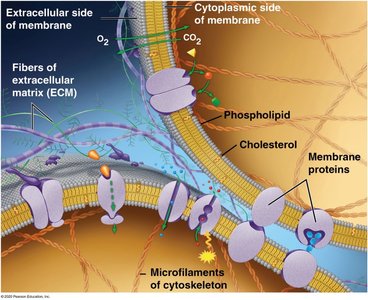
The plasma membrane is a dynamic structure essential for cell survival and function. It is described by the fluid mosaic model, which depicts a bilayer of phospholipids with embedded proteins that move laterally within the layer. This arrangement allows selective permeability and diverse cellular functions.
Phospholipid bilayer: Composed of hydrophilic heads facing outward and hydrophobic tails inward, forming a semi-permeable barrier.
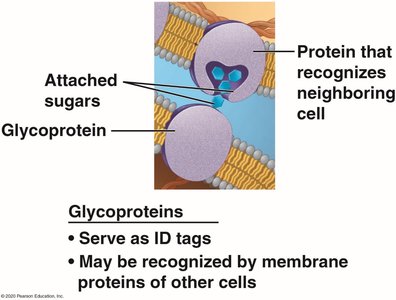
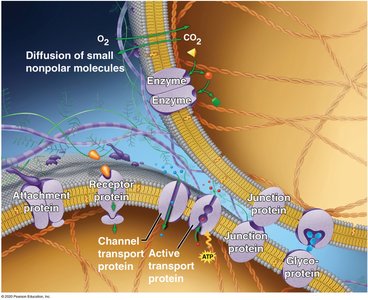
Membrane proteins: Include transport, receptor, attachment, junction, and glycoproteins, each with specific roles.
Selective permeability: The membrane controls the movement of substances in and out of the cell.
Diverse Functions of Membrane Proteins
Membrane proteins are crucial for cellular communication, transport, and structural support. Each type of protein has a distinct function:
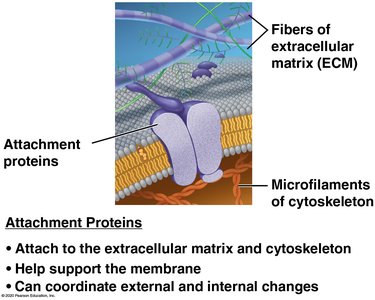
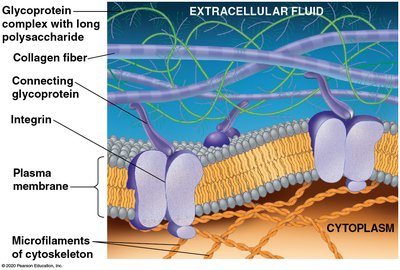
Attachment proteins: Anchor the membrane to the cytoskeleton and extracellular matrix, providing structural support and facilitating communication between internal and external environments.
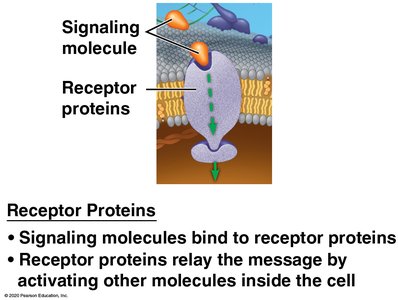
Receptor proteins: Bind signaling molecules and relay messages inside the cell, initiating cellular responses.
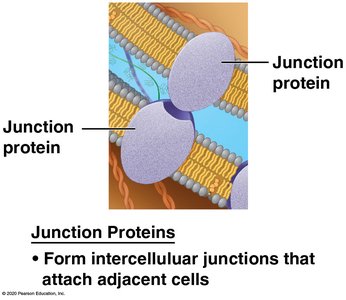
Junction proteins: Form intercellular junctions, connecting adjacent cells for tissue integrity.
Glycoproteins: Serve as identification tags, enabling cell recognition and interaction.
Transport proteins: Facilitate the movement of ions and molecules across the membrane.
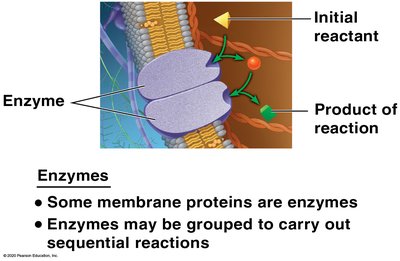
Enzymes: Catalyze reactions at the membrane surface.
Structure of Phospholipid Molecules
Phospholipids are amphipathic molecules, meaning they have both hydrophilic and hydrophobic regions. This property is fundamental to membrane formation and function.
Hydrophilic head: Attracts water, facing outward toward the aqueous environment.
Hydrophobic tail: Repels water, facing inward, away from the aqueous environment.
Self-assembly: Phospholipids spontaneously form bilayers, creating a stable barrier for cells.
Membrane Transport
Diffusion and Passive Transport
Diffusion is the movement of particles from an area of higher concentration to lower concentration. When diffusion occurs across a membrane without energy input, it is called passive transport.
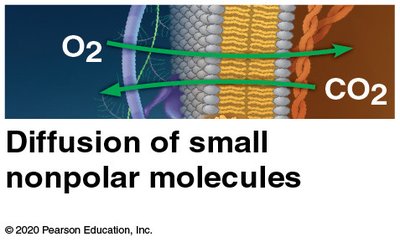
Small nonpolar molecules: Such as O2 and CO2, diffuse freely across the membrane.
Concentration gradient: Drives the direction of diffusion.
Osmosis: Diffusion of Water
Osmosis is the diffusion of water across a selectively permeable membrane. Water moves from areas of lower solute concentration to higher solute concentration until equilibrium is reached.
Hypertonic solution: Higher solute concentration outside the cell; cell loses water and shrinks.
Hypotonic solution: Lower solute concentration outside the cell; cell gains water and swells.
Isotonic solution: Equal solute concentration; cell remains stable.
Facilitated Diffusion and Transport Proteins
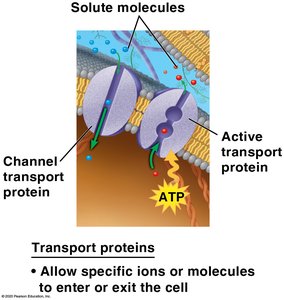
Polar or charged substances require transport proteins to cross the membrane. Facilitated diffusion uses channel or carrier proteins to move substances down their concentration gradient without energy input.
Channel proteins: Provide passageways for specific ions or molecules.
Aquaporins: Specialized channels for rapid water transport.
Active Transport
Active transport moves solutes against their concentration gradient, requiring energy, usually from ATP.
Active transport proteins: Use ATP to move ions or molecules into or out of the cell.
Example: Sodium-potassium pump maintains ion gradients essential for cell function.
Bulk Transport: Exocytosis and Endocytosis
Cells use exocytosis and endocytosis to move large molecules across membranes.
Exocytosis: Exports bulky molecules by vesicle fusion with the membrane.
Endocytosis: Imports large molecules; includes phagocytosis (engulfment) and receptor-mediated endocytosis (specific uptake).
Energy and Metabolism
Types of Energy
Cells require energy to perform work. Energy exists in several forms:
Kinetic energy: Energy of motion.
Potential energy: Stored energy due to position or structure.
Chemical energy: Potential energy stored in chemical bonds.
Heat: Energy transferred due to temperature difference.
Laws of Thermodynamics
The two laws of thermodynamics govern energy transformations in biological systems:
First law: Energy cannot be created or destroyed, only transformed.
Second law: Energy transformations increase disorder (entropy); some energy is lost as heat.
Exergonic and Endergonic Reactions
Chemical reactions in cells either release or store energy:
Exergonic reactions: Release energy (e.g., cellular respiration).
Endergonic reactions: Require energy input (e.g., photosynthesis).
Metabolism: The sum of all chemical reactions in a cell.
ATP: The Cell's Energy Shuttle
ATP (adenosine triphosphate) is the primary energy carrier in cells. It couples exergonic and endergonic reactions by transferring a phosphate group.
ATP hydrolysis: Releases energy for cellular work.
ATP regeneration: Occurs through cellular respiration.
How Enzymes Function
Enzymes as Catalysts
Enzymes are biological catalysts that speed up chemical reactions by lowering the activation energy required. They are not consumed in the reaction.
Activation energy: The energy barrier that must be overcome for a reaction to proceed.
Enzyme specificity: Each enzyme acts on a specific substrate.
Enzyme Mechanism and Regulation
Enzyme activity can be regulated by inhibitors:
Competitive inhibitors: Block the active site, preventing substrate binding.
Noncompetitive inhibitors: Bind elsewhere, altering enzyme shape and function.
Feedback inhibition: End product inhibits an earlier step, regulating metabolism.
Enzyme Inhibitors: Drugs, Pesticides, and Poisons
Many drugs, pesticides, and poisons act as enzyme inhibitors, affecting cellular processes. The reversibility of inhibition depends on the nature of the inhibitor and its binding to the enzyme.
Reaction Rate and Enzyme/Substrate Concentration
Enzyme activity is influenced by the concentration of enzyme and substrate. The following tables summarize these relationships:
Lactose concentration | Enzyme concentration | Reaction rate |
|---|---|---|
10% | 0% | 0 |
10% | 1% | 25 |
10% | 2% | 50 |
10% | 4% | 100 |
10% | 8% | 200 |
Table A: Reaction rate increases with enzyme concentration when substrate is constant.
Lactose concentration | Enzyme concentration | Reaction rate |
|---|---|---|
0% | 2% | 0 |
5% | 2% | 25 |
10% | 2% | 50 |
20% | 2% | 65 |
30% | 2% | 65 |
Table B: Reaction rate increases with substrate concentration up to a point, then plateaus as enzyme becomes saturated.
Key Equations
ATP hydrolysis:
Enzyme-catalyzed reaction:
Where E = enzyme, S = substrate, ES = enzyme-substrate complex, P = product.
Summary Table: Membrane Protein Functions
Protein Type | Function |
|---|---|
Transport protein | Facilitates movement of substances |
Enzyme | Catalyzes reactions |
Attachment protein | Anchors membrane to cytoskeleton/ECM |
Receptor protein | Receives and transmits signals |
Junction protein | Connects adjacent cells |
Glycoprotein | Cell identification |