 Back
Chapter 6: An Introduction to Metabolism – General Biology Study Notes
Study Guide - Smart Notes
 Tailored notes based on your materials, expanded with key definitions, examples, and context.
Metabolism and Metabolic Pathways
Concept: Metabolism Transforms Matter and Energy
Metabolism refers to all the chemical reactions that occur within living organisms to sustain life. These reactions transform matter and energy, enabling cells to grow, reproduce, and maintain their structures.
Metabolic Pathways: A metabolic pathway is a series of chemical reactions, each catalyzed by a specific enzyme, that begins with a starting molecule and ends with a product.
Enzymes: Proteins (and some RNA) that act as biological catalysts, speeding up reactions by lowering activation energy.
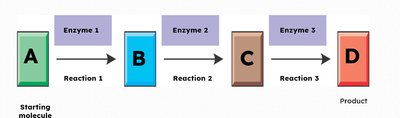
Types of Metabolic Pathways
Catabolic Pathways: Break down complex molecules into simpler ones, releasing energy (e.g., cellular respiration).
Anabolic Pathways: Build complex molecules from simpler ones, requiring energy input (e.g., protein synthesis).
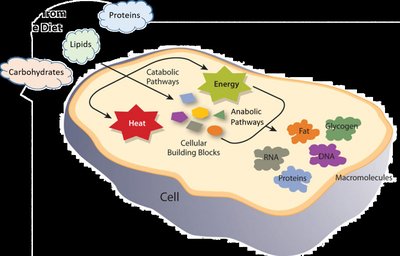
Energy in Biological Systems
Energy Needs of Life
Organisms require energy for synthesis of biomolecules, reproduction, active transport, movement, and temperature regulation. Energy exists in several forms:
Potential Energy: Stored energy due to position or structure.
Kinetic Energy: Energy of motion.
Chemical Energy: Energy stored in chemical bonds.
Heat/Thermal Energy: Energy due to random molecular motion.
Open and Closed Systems
Open System: Organisms exchange energy and matter with their surroundings.
Closed System: No exchange with surroundings (rare in biology).
Chemical Reactions and Energy
Exergonic vs. Endergonic Reactions
Chemical reactions can either release energy (exergonic) or require energy input (endergonic).
Exergonic Reactions: Release energy; spontaneous (e.g., hydrolysis).
Endergonic Reactions: Require energy input; non-spontaneous (e.g., dehydration synthesis).
ΔG (Gibbs Free Energy): Change in free energy; determines if a reaction can do work.
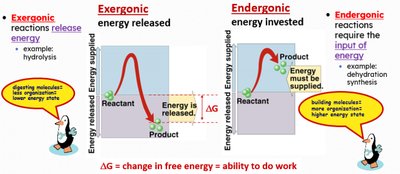
Energy Coupling
Cells couple exergonic and endergonic reactions to efficiently manage energy. Energy released from exergonic reactions is used to drive endergonic reactions.
ATP: The Energy Currency of the Cell
Structure and Function of ATP
ATP (adenosine triphosphate) is the primary energy carrier in cells. It consists of adenine, ribose, and three phosphate groups.
ATP Hydrolysis: Releases energy by breaking the bond between the second and third phosphate groups.
ATP Regeneration: ATP is continually regenerated from ADP and inorganic phosphate (Pi).
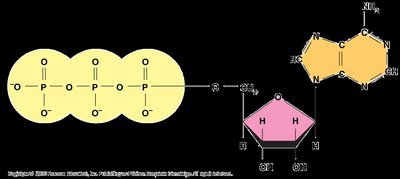

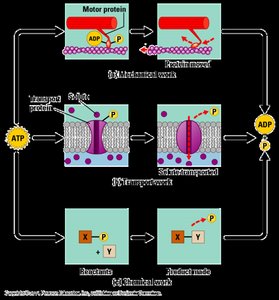
ATP Powers Cellular Work
ATP drives cellular work by transferring a phosphate group to other molecules (phosphorylation), making them more reactive.
Mechanical Work: Movement of motor proteins.
Transport Work: Pumping substances across membranes.
Chemical Work: Building macromolecules.
Enzymes and Metabolic Reactions
Enzyme Characteristics
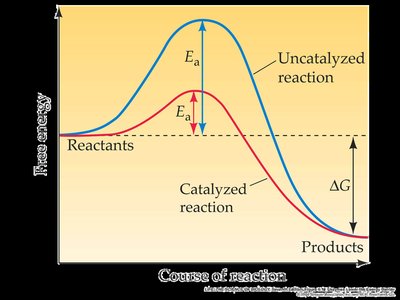
Enzymes are biological catalysts that speed up metabolic reactions by lowering activation energy barriers.
Specificity: Each enzyme catalyzes a specific reaction.
Reusability: Enzymes are not consumed in the reaction.
"-ase" Suffix: Many enzyme names end in "-ase" (e.g., amylase, sucrase).
Activation Energy
Activation energy (Ea) is the energy required to destabilize bonds in reactants, allowing the reaction to proceed.


Enzyme Mechanism of Action
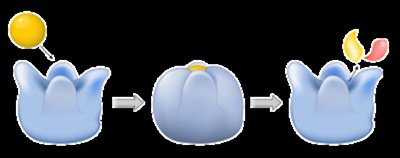
Induced Fit: Enzyme changes shape to fit the substrate.
Enzyme-Substrate Complex: Temporary association between enzyme and substrate, held by weak interactions.
Factors Affecting Enzyme Activity
Enzyme and Substrate Concentration
Increasing enzyme concentration increases reaction rate (up to a point).
Increasing substrate concentration increases reaction rate until enzymes are saturated.
Environmental Conditions
Temperature: High temperatures can denature enzymes; each enzyme has an optimum temperature.
pH: Most enzymes function best at neutral pH (6–8); extremes can denature enzymes.
Cofactors and Coenzymes
Cofactors: Non-protein, inorganic molecules (e.g., Mg2+, Zn2+) required for enzyme activity.
Coenzymes: Non-protein, organic molecules (e.g., NAD, FAD, vitamins) that assist enzymes.
Enzyme Regulation
Enzyme Inhibition
Competitive Inhibition: Inhibitor binds to the active site, blocking substrate.
Noncompetitive Inhibition: Inhibitor binds elsewhere, changing enzyme shape.
Allosteric Regulation: Regulation by binding to a site other than the active site.
Feedback Inhibition: End product inhibits an earlier step in the pathway, preventing overproduction.
Localization of Enzymes
Enzymes may be grouped into complexes, incorporated into membranes, or contained inside organelles for efficient metabolic control.
Summary Table: Types of Enzyme Regulation
Type | Mechanism | Example |
|---|---|---|
Competitive Inhibition | Inhibitor binds active site | NSAIDs inhibiting COX-2 |
Noncompetitive Inhibition | Inhibitor binds elsewhere | Heavy metals inhibiting enzymes |
Allosteric Regulation | Regulator binds allosteric site | AMP activating PFK |
Feedback Inhibition | End product inhibits pathway | Threonine pathway inhibition |
Practice and Application
Enzymes are essential for all organisms, catalyzing reactions necessary for life.
Environmental changes (temperature, pH) can affect enzyme function and organism survival.
Metabolic pathways are regulated to ensure efficient use of resources and prevent waste.
Key Equations
ATP Hydrolysis:
ΔG (Gibbs Free Energy):
