 Back
BackChapter 7: Cellular Respiration – Mechanisms and Pathways
Study Guide - Smart Notes
 Tailored notes based on your materials, expanded with key definitions, examples, and context.
Chapter 7: Respiration
Introduction to Cellular Respiration
Cellular respiration is a fundamental metabolic process by which cells extract energy from organic molecules to produce ATP, the main energy currency of the cell. This process is essential for powering cellular work, including chemical, transport, and mechanical activities.

Energy Flow and Cellular Work
Cells operate as open systems, requiring a constant input of energy (E) to perform work. Energy flows into ecosystems as sunlight, is transformed by autotrophs into chemical energy, and is eventually used by cells to generate ATP. Some energy is lost as heat during these processes.
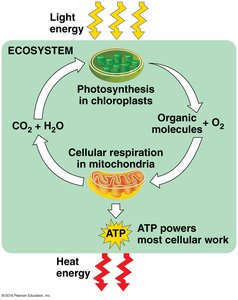
Chemical work: Synthesis of macromolecules
Transport work: Pumping substances across membranes
Mechanical work: Movement, such as muscle contraction
Redox Reactions (Oxidation-Reduction)
Redox reactions are central to cellular respiration. In these reactions, electrons are transferred from one molecule (the electron donor) to another (the electron acceptor). Oxidation is the loss of electrons, while reduction is the gain of electrons.
Oxidation: Loss of electrons
Reduction: Gain of electrons
Mnemonic: OiL RiG (Oxidation is Loss, Reduction is Gain)
Energy Harvest and Electron Carriers
During cellular respiration, energy is harvested in a controlled manner. Electrons from organic molecules are transferred to electron carriers such as NAD+, which shuttles them to the electron transport chain (ETC).
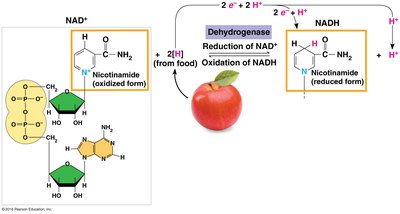
NAD+: Electron acceptor, reduced to NADH
NADH: Electron carrier, donates electrons to the ETC
Electron Transport Chain (ETC)
The ETC is a series of protein complexes embedded in the inner mitochondrial membrane. It enables the stepwise transfer of electrons from NADH and FADH2 to oxygen, the final electron acceptor, producing water and releasing energy used to generate ATP.
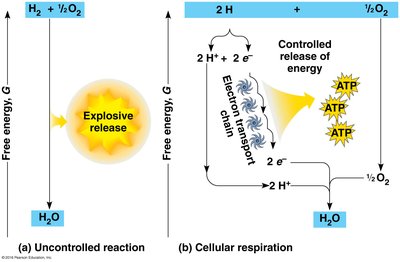
Prevents explosive release of energy
Allows controlled synthesis of ATP
Stages of Cellular Respiration
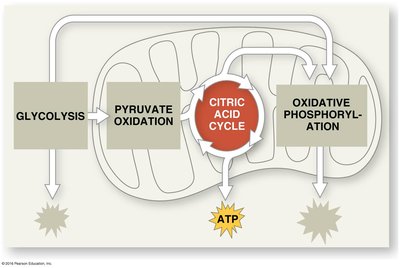
Cellular respiration consists of three main stages: glycolysis, pyruvate oxidation and the citric acid cycle, and oxidative phosphorylation.

Stage 1: Glycolysis
Glycolysis is the first step in cellular respiration, occurring in the cytosol. It breaks down one molecule of glucose (6C) into two molecules of pyruvate (3C), producing 2 ATP and 2 NADH.

Location: Cytosol
Oxygen requirement: None (anaerobic)
Net products per glucose: 2 ATP, 2 NADH, 2 pyruvate, 2 H2O
Substrate-Level Phosphorylation
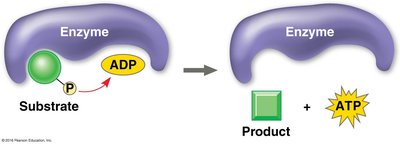
ATP is generated directly in glycolysis by substrate-level phosphorylation, where an enzyme transfers a phosphate group from a substrate to ADP.

Glycolysis: Energy Investment and Payoff Phases
Glycolysis consists of two phases:
Energy Investment Phase: 2 ATP are used to phosphorylate glucose and its intermediates.
Energy Payoff Phase: 4 ATP and 2 NADH are produced as glucose is split into pyruvate.
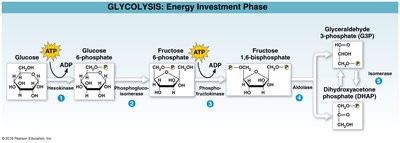
Glycolysis (Summary)
Overall, glycolysis yields a net gain of 2 ATP and 2 NADH per glucose molecule.
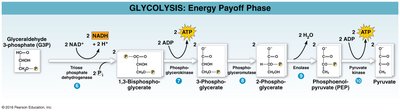

Stage 2: Pyruvate Oxidation and Citric Acid Cycle (Krebs Cycle)
Pyruvate produced in glycolysis is transported into the mitochondrion, where it is oxidized to acetyl CoA. Acetyl CoA enters the citric acid cycle, which completes the breakdown of glucose and generates electron carriers NADH and FADH2.

Mitochondrion Structure
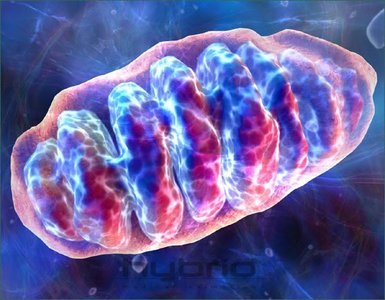
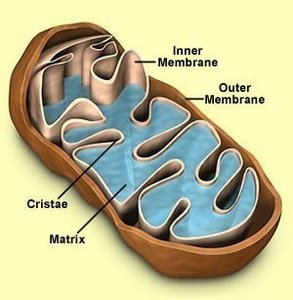
The mitochondrion has a double membrane structure with an outer membrane, an inner membrane (folded into cristae), and a matrix where the citric acid cycle occurs.
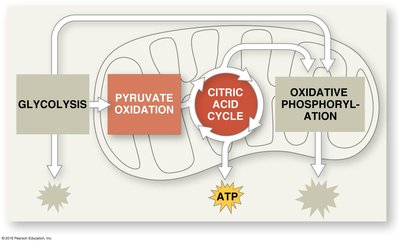
Pyruvate Oxidation
Each pyruvate is converted to acetyl CoA, producing NADH and releasing CO2.
Inputs: 2 pyruvate
Outputs: 2 acetyl CoA, 2 NADH, 2 CO2
Citric Acid Cycle (Krebs Cycle)
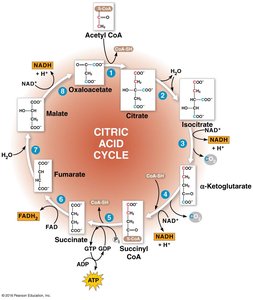
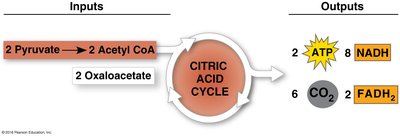
The citric acid cycle is a series of enzyme-catalyzed reactions in the mitochondrial matrix that completes the oxidation of acetyl CoA. It generates ATP, NADH, FADH2, and CO2 as waste.

Per glucose (2 cycles): 2 ATP, 6 NADH, 2 FADH2, 4 CO2
Stage 3: Oxidative Phosphorylation
Oxidative phosphorylation includes the electron transport chain and chemiosmosis. It occurs in the inner mitochondrial membrane and produces the majority of ATP during cellular respiration.
Electron Transport Chain (ETC)
The ETC consists of protein complexes that transfer electrons from NADH and FADH2 to oxygen. The energy released is used to pump protons (H+) across the inner mitochondrial membrane, creating a proton gradient.
Final electron acceptor: O2, forming H2O
Proton gradient: Drives ATP synthesis
Chemiosmosis and ATP Synthase
Protons flow back into the mitochondrial matrix through ATP synthase, which uses the energy of the proton gradient to phosphorylate ADP, forming ATP. This process is called chemiosmosis.
ATP yield: 26–28 ATP per glucose
Summary Table: Cellular Respiration Pathways
Stage | Main Inputs | Main Outputs | Location | ATP Produced |
|---|---|---|---|---|
Glycolysis | Glucose, 2 NAD+, 2 ADP | 2 Pyruvate, 2 NADH, 2 ATP, 2 H2O | Cytosol | 2 |
Pyruvate Oxidation | 2 Pyruvate, 2 NAD+, 2 CoA | 2 Acetyl CoA, 2 NADH, 2 CO2 | Mitochondrial Matrix | 0 |
Citric Acid Cycle | 2 Acetyl CoA, 6 NAD+, 2 FAD, 2 ADP | 4 CO2, 6 NADH, 2 FADH2, 2 ATP | Mitochondrial Matrix | 2 |
Oxidative Phosphorylation | 10 NADH, 2 FADH2, O2 | H2O, ~26–28 ATP | Inner Mitochondrial Membrane | 26–28 |
