 Back
Chapter 8: An Introduction to Metabolism and Bioenergetics
Study Guide - Smart Notes
 Tailored notes based on your materials, expanded with key definitions, examples, and context.
Overview: The Energy of Life
Introduction to Cellular Metabolism
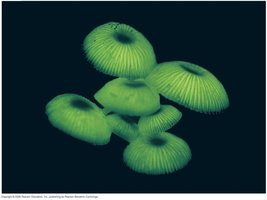
Cells function as biological factories, carrying out countless chemical reactions to sustain life. These reactions require energy, which cells extract from their environment and use to perform work, such as moving or rearranging matter. Some organisms can even convert chemical energy into light, as seen in bioluminescent species.
Metabolism: Transforming Matter and Energy
Definition and Examples
Metabolism is the sum of all chemical reactions in an organism.
Examples include dehydration reactions (building polymers from monomers), hydrolysis (breaking polymers into monomers), and ATP transferring phosphate groups to proteins.
Metabolism is an emergent property resulting from specific molecular interactions within cells.
Metabolic Pathways
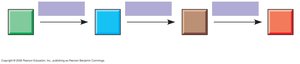
A metabolic pathway starts with a specific molecule and ends with a product, with each step catalyzed by a specific enzyme.
Example: Tyrosine to Epinephrine Pathway
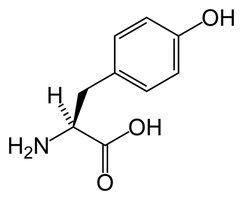
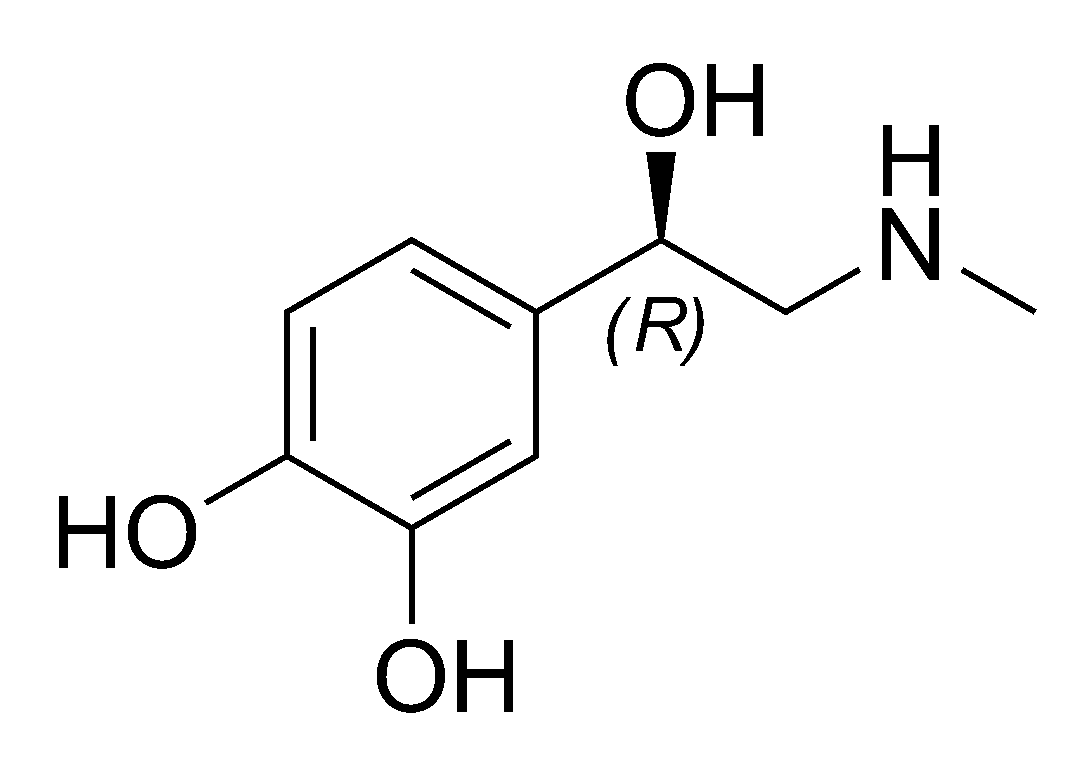
Each step in a metabolic pathway modifies the substrate, producing a new product for the next step. For example, the amino acid tyrosine is converted into the hormone epinephrine through a series of enzyme-catalyzed reactions.

Catabolic and Anabolic Pathways
Catabolic Pathways
Catabolic pathways release energy by breaking down complex molecules into simpler compounds. This process is essential for extracting energy stored in chemical bonds.
Example: Cellular respiration, where glucose is broken down with oxygen to produce carbon dioxide and water.
Equation:
Anabolic Pathways
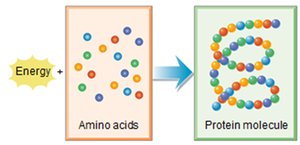
Anabolic pathways consume energy to build complex molecules from simpler ones, such as synthesizing proteins from amino acids.
Bioenergetics and Forms of Energy
Bioenergetics
Bioenergetics is the study of how organisms manage their energy resources.
Forms of Energy
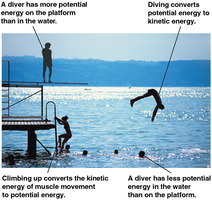
Energy is the capacity to cause change, often by altering the position or structure of matter.
Kinetic energy: Energy of motion (e.g., heat/thermal energy).
Potential energy: Energy due to location or structure (e.g., chemical energy stored in bonds).
Energy can be converted from one form to another.
Thermodynamics in Biology
Thermodynamics
Thermodynamics is the study of energy transformations. Systems can be:
Closed systems: Isolated from their surroundings (e.g., liquid in a thermos).
Open systems: Exchange energy and matter with their surroundings (e.g., living organisms).

First Law of Thermodynamics
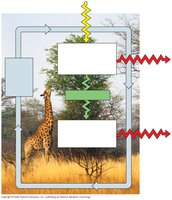
Energy can be transferred and transformed, but cannot be created or destroyed (Law of Conservation of Energy).
When energy appears to be "used up," it is actually transformed into a less usable form.
Second Law of Thermodynamics
Every energy transfer increases the entropy (disorder) of the universe.
Some energy is always lost as heat during transformations.
Free Energy and Spontaneous Processes
Free-Energy Change (ΔG)
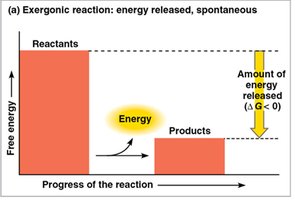
Free energy (G): Energy available to do work.
The change in free energy () determines if a process is spontaneous (negative $\Delta G$) or requires energy input (positive $\Delta G$).
Spontaneous processes increase the entropy of the universe and can perform work.
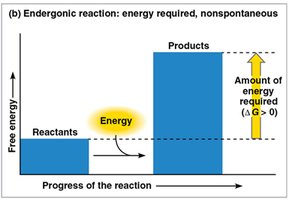
Exergonic and Endergonic Reactions
Exergonic reactions: Release free energy, are spontaneous ().
Endergonic reactions: Absorb free energy, are nonspontaneous ().
Equilibrium and Metabolism
Equilibrium in Chemical Reactions
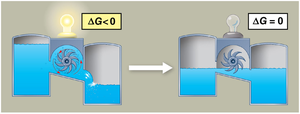
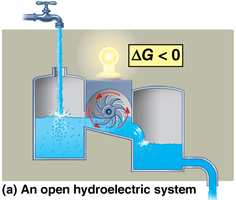
Reactions in a closed system eventually reach equilibrium and stop doing work.
Cells are open systems, constantly exchanging materials and never reaching equilibrium—a key feature of life.
ATP: The Energy Currency of the Cell
Structure and Function of ATP
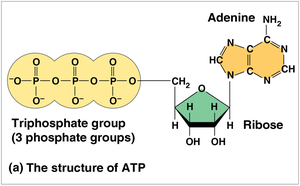
ATP (adenosine triphosphate) consists of ribose (sugar), adenine (nitrogenous base), and three phosphate groups.
ATP stores and transfers energy for cellular work.
ATP Hydrolysis and Energy Coupling
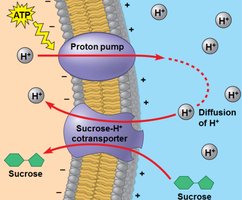
Hydrolysis of ATP releases energy by breaking the terminal phosphate bond, forming ADP and inorganic phosphate.
This exergonic reaction powers endergonic cellular processes by transferring a phosphate group (phosphorylation).
Enzymes and Metabolic Regulation
Enzymes as Catalysts
Enzymes are catalytic proteins that speed up reactions without being consumed.
They lower the activation energy (EA) required for reactions to proceed.
Enzyme-Substrate Interaction
The substrate is the reactant an enzyme acts on.
The active site is the region where the substrate binds, and the enzyme changes shape to facilitate the reaction (induced fit).
Enzyme Regulation
Enzyme activity can be regulated by temperature, pH, cofactors (inorganic or organic), and inhibitors.
Competitive inhibitors bind to the active site, while noncompetitive inhibitors bind elsewhere, altering enzyme shape.
Allosteric regulation involves regulatory molecules binding to sites other than the active site, affecting enzyme activity.
Feedback inhibition occurs when the end product of a pathway inhibits an earlier step, preventing overproduction.
Summary Table: Catabolic vs. Anabolic Pathways
Catabolic Pathways | Anabolic Pathways |
|---|---|
Break down complex molecules into simpler ones | Build complex molecules from simpler ones |
Release energy (exergonic) | Consume energy (endergonic) |
Increase entropy | Decrease entropy (locally) |
Example: Cellular respiration | Example: Protein synthesis |
Key Concepts Review
Distinguish between catabolic and anabolic pathways, kinetic and potential energy, open and closed systems, exergonic and endergonic reactions.
Explain the second law of thermodynamics and why it is not violated by living organisms.
Describe how cells obtain and use energy to perform work, primarily through ATP hydrolysis and energy coupling.
Understand how enzymes lower activation energy and how their activity is regulated.
Apply the principles of negative feedback to feedback inhibition in metabolic pathways.
