 Back
BackChapter 8: An Introduction to Metabolism – Study Notes
Study Guide - Smart Notes
 Tailored notes based on your materials, expanded with key definitions, examples, and context.
Metabolism: Transforming Matter and Energy in Cells
Overview of Metabolism
Metabolism encompasses all chemical reactions occurring within a cell, allowing organisms to grow, reproduce, maintain their structures, and respond to environmental changes. These reactions are organized into metabolic pathways, where the product of one reaction serves as the substrate for the next.
Metabolic Pathway: A series of enzyme-catalyzed reactions transforming a specific molecule through a series of intermediates to a final product.
Reactants and Products: In a pathway, reactants are converted stepwise into products, each step catalyzed by a specific enzyme.
Enzymes: Biological catalysts (mostly proteins) that speed up reactions without being consumed.
Anabolic and Catabolic Pathways
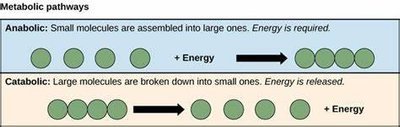
Metabolic pathways are classified as either anabolic or catabolic based on their function and energy requirements.
Anabolic Pathways: Build complex molecules from simpler ones; require energy input (e.g., synthesis of proteins from amino acids).
Catabolic Pathways: Break down complex molecules into simpler ones; release energy (e.g., cellular respiration).
Forms of Energy in Biological Systems
Kinetic and Potential Energy
Energy is the capacity to do work. In biological systems, energy exists in various forms:
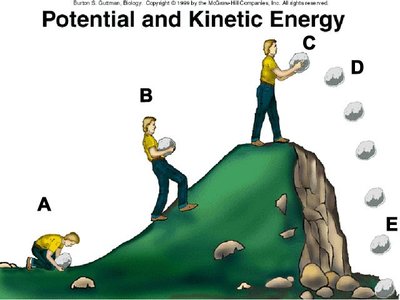
Kinetic Energy: Energy of motion (e.g., movement of molecules).
Thermal Energy: A form of kinetic energy associated with the random movement of atoms or molecules; transferred as heat.
Potential Energy: Stored energy due to position or structure (e.g., chemical bonds).
Thermodynamics in Biology
First Law of Thermodynamics
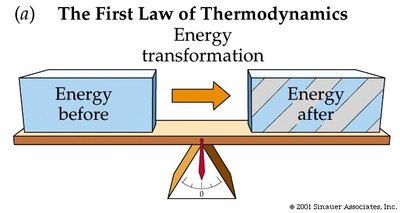
The first law, also known as the law of energy conservation, states that energy cannot be created or destroyed, only transformed from one form to another.
Implication: The total energy of a system and its surroundings remains constant during any process.
Example: Chemical energy in food is converted to kinetic and thermal energy in the body.
Second Law of Thermodynamics
The second law states that every energy transfer increases the entropy (disorder) of the universe. Some energy is always lost as heat, making energy conversions inefficient.
Entropy: A measure of disorder or randomness; systems tend to move toward greater entropy.
Biological Relevance: Living systems maintain order by increasing the entropy of their surroundings.
Free Energy and Spontaneity of Reactions
Gibbs Free Energy (ΔG)
Free energy is the portion of a system's energy that can perform work under constant temperature and pressure. The change in free energy (ΔG) determines whether a reaction is spontaneous.
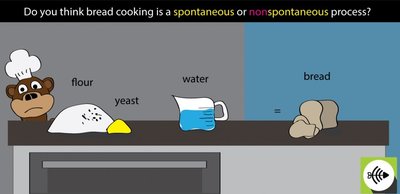
Spontaneous Reaction: Occurs without input of energy; ΔG is negative.
Nonspontaneous Reaction: Requires energy input; ΔG is positive.
Exergonic and Endergonic Reactions
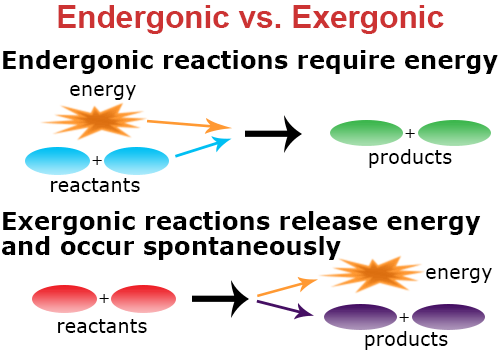
Exergonic Reaction: Releases free energy; ΔG < 0; occurs spontaneously (e.g., cellular respiration).
Endergonic Reaction: Absorbs free energy; ΔG > 0; not spontaneous (e.g., photosynthesis).
Energy Coupling and ATP
Coupled Reactions
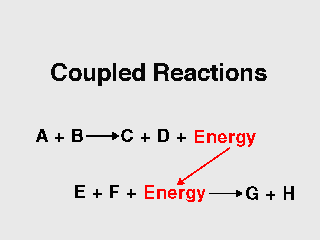
Cells use energy coupling to drive endergonic reactions by pairing them with exergonic reactions, often using ATP as the energy source.
Energy Coupling: The use of exergonic processes to drive endergonic ones.
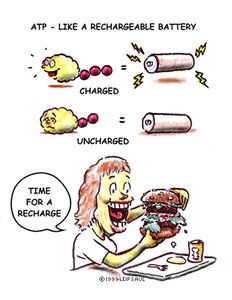
ATP (Adenosine Triphosphate): The primary energy currency of the cell, mediating most energy coupling.
ATP Structure and Function
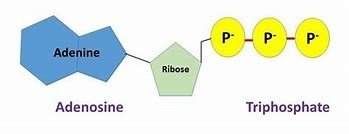
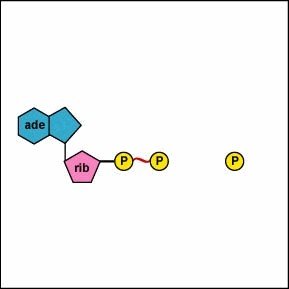
ATP consists of adenine, ribose, and three phosphate groups. The bonds between phosphate groups are high-energy bonds; breaking them releases energy for cellular work.
ATP Hydrolysis: ATP → ADP + Pi + energy
ATP Synthesis: ADP + Pi + energy → ATP
Enzymes: Biological Catalysts
Enzyme Function and Mechanism
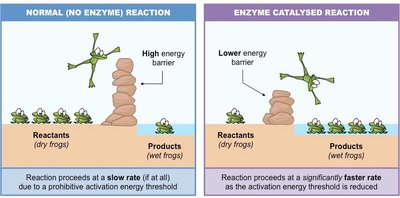
Enzymes are proteins that speed up chemical reactions by lowering the activation energy required. They are highly specific for their substrates and are not consumed in the reaction.
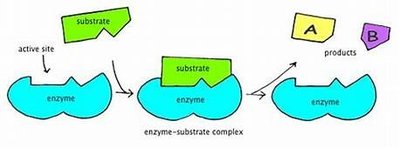
Substrate: The reactant an enzyme acts upon.
Active Site: The region of the enzyme where the substrate binds.
Enzyme-Substrate Complex: Temporary complex formed when an enzyme binds its substrate.
Induced Fit Model
The induced fit model describes how enzymes change shape slightly to fit the substrate more snugly, enhancing their ability to catalyze the reaction.
Factors Affecting Enzyme Activity
Temperature: Increases reaction rate up to an optimal point; excessive heat denatures enzymes.
pH: Each enzyme has an optimal pH range.
Cofactors: Nonprotein helpers (e.g., metal ions like copper, zinc, iron).
Coenzymes: Organic cofactors (e.g., vitamins).
Enzyme Inhibition
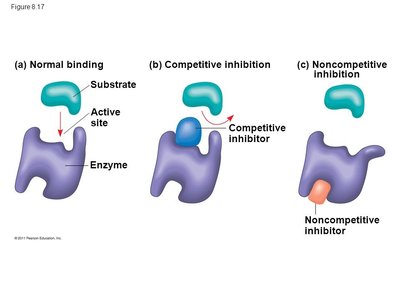
Enzyme inhibitors reduce or prevent enzyme activity. They can be competitive (binding to the active site) or noncompetitive (binding elsewhere and changing enzyme shape).
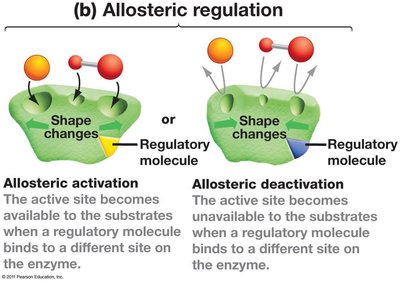
Allosteric Regulation
Allosteric regulation involves regulatory molecules binding to sites other than the active site, causing conformational changes that increase or decrease enzyme activity.
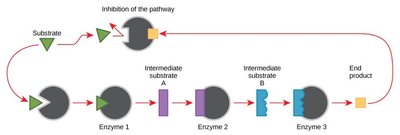
Feedback Inhibition
Feedback inhibition is a common regulatory mechanism where the end product of a metabolic pathway inhibits an enzyme involved earlier in the pathway, preventing overproduction of the product.
Summary Table: Key Concepts in Metabolism
Concept | Description | Example |
|---|---|---|
Anabolic Pathway | Builds complex molecules; requires energy | Protein synthesis |
Catabolic Pathway | Breaks down molecules; releases energy | Cellular respiration |
Exergonic Reaction | Releases free energy; spontaneous | ATP hydrolysis |
Endergonic Reaction | Requires free energy; nonspontaneous | Photosynthesis |
Enzyme | Protein catalyst; lowers activation energy | Amylase |
Feedback Inhibition | End product inhibits pathway | Threonine to isoleucine pathway |
