 Back
BackChapter 8: An Introduction to Metabolism – Study Notes
Study Guide - Smart Notes
 Tailored notes based on your materials, expanded with key definitions, examples, and context.
Chapter 8: An Introduction to Metabolism
Key Concepts in Metabolism
Metabolism encompasses all chemical reactions within a living organism, enabling the transformation of energy and matter necessary for life. These reactions are organized into metabolic pathways, each catalyzed by specific enzymes, and are governed by the laws of thermodynamics.
Energy and the Laws of Thermodynamics
First and Second Laws of Thermodynamics
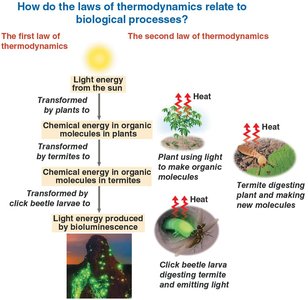
First Law of Thermodynamics: Energy can be transferred or transformed, but it cannot be created or destroyed.
Second Law of Thermodynamics: Every energy transfer or transformation increases the entropy (disorder) of the universe.
Entropy: A measure of randomness or disorder in a system.
Types of Energy
Kinetic Energy: Energy associated with motion (e.g., water flowing, muscle contraction).
Potential Energy: Stored energy due to position or structure (e.g., water behind a dam, chemical bonds).
Chemical Energy: Potential energy available for release in a chemical reaction (e.g., glucose molecules).
Thermal Energy: Kinetic energy from random movement of atoms or molecules; transfer is called heat.
Light Energy: Can be harnessed by organisms (e.g., photosynthesis).
Free Energy and Spontaneity
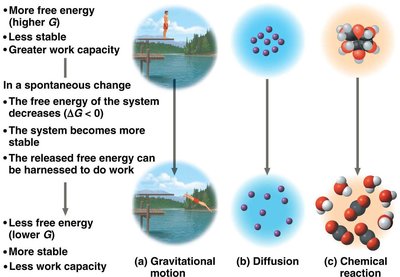
The change in free energy (ΔG) during a reaction determines whether a process is spontaneous or requires energy input. The equation is:
ΔG: Change in free energy
ΔH: Change in enthalpy (total energy)
ΔS: Change in entropy
T: Temperature in Kelvin
If ΔG is negative, the process is spontaneous; if zero or positive, it is nonspontaneous.
Types of Metabolic Pathways
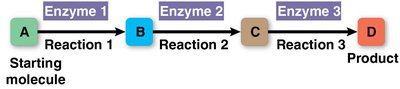
Catabolic and Anabolic Pathways
Catabolic Pathways: Release energy by breaking down complex molecules into simpler ones (e.g., cellular respiration).
Anabolic Pathways: Consume energy to build complex molecules from simpler ones (e.g., protein synthesis).
Exergonic and Endergonic Reactions
Definitions and Characteristics
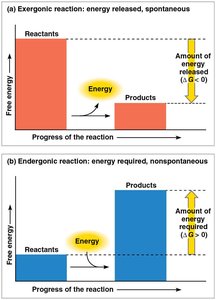
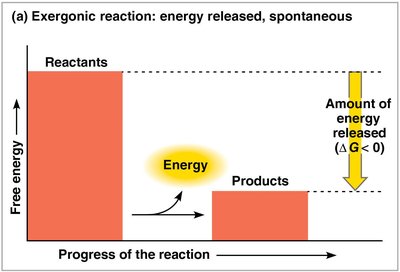
Exergonic Reaction: Proceeds with a net release of free energy (ΔG < 0); spontaneous.
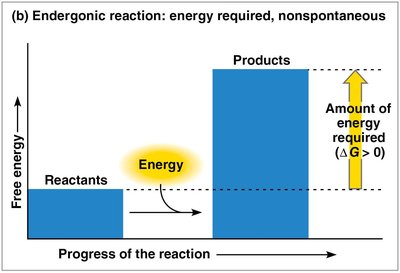
Endergonic Reaction: Absorbs free energy from surroundings (ΔG > 0); nonspontaneous.
Examples and Applications
Cellular respiration is exergonic; photosynthesis is endergonic.
The magnitude of ΔG indicates the maximum work possible (exergonic) or the energy required (endergonic).
Metabolic Equilibrium and Cellular Work
Metabolic Equilibrium
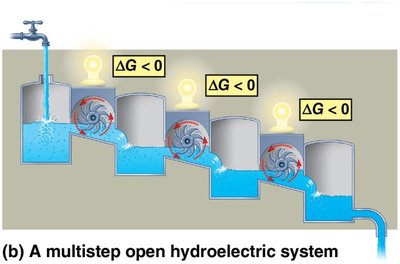
Cells maintain a state far from equilibrium by allowing a constant flow of materials, enabling continuous work and preventing metabolic shutdown.
Types of Cellular Work
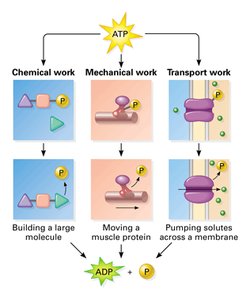
Chemical Work: Pushing endergonic reactions (e.g., synthesis of polymers).
Transport Work: Pumping substances across membranes against gradients.
Mechanical Work: Movement, such as muscle contraction or cilia beating.
ATP: Structure and Function
Structure of ATP
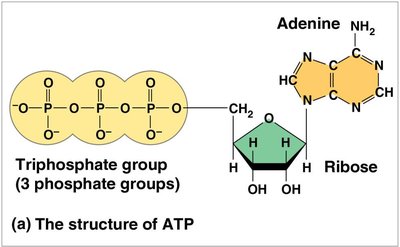
ATP (Adenosine Triphosphate): Composed of ribose (sugar), adenine (nitrogenous base), and three phosphate groups.
Functions as an energy carrier and as a building block for RNA.
ATP Hydrolysis and Energy Coupling
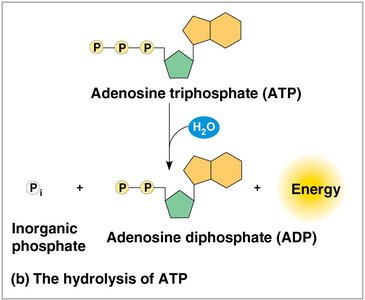
Energy is released when ATP's terminal phosphate bond is broken by hydrolysis.
This energy is used to drive endergonic reactions in the cell.
ATP hydrolysis changes protein shape and binding ability, powering cellular work.
Enzymes and Regulation of Metabolism
Enzyme Function and Catalysis
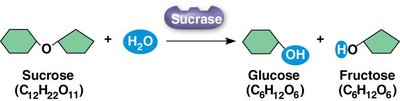
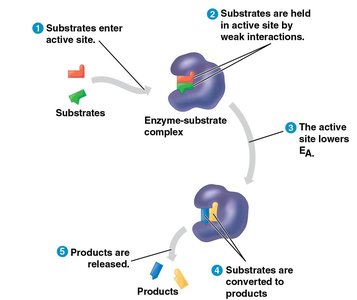
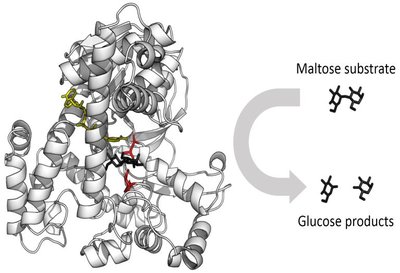
Enzymes: Biological catalysts (usually proteins) that speed up specific reactions without being consumed.
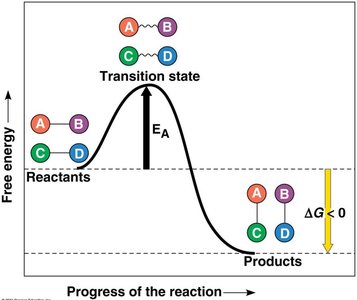
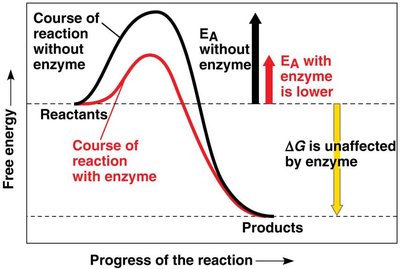
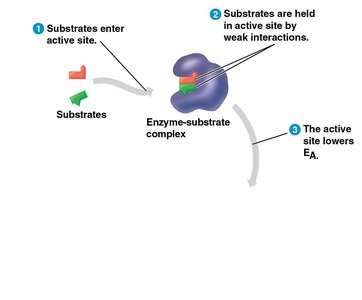
Lower the activation energy (EA) required for reactions to proceed.
Do not change ΔG; only increase the rate of reaction.
Enzyme-Substrate Interaction
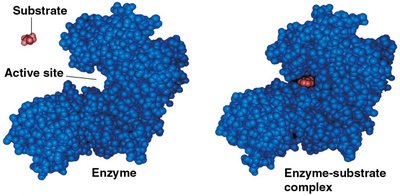
The substrate binds to the enzyme's active site, forming an enzyme-substrate complex.
Induced fit: The enzyme changes shape to better fit the substrate, enhancing catalysis.
Factors Affecting Enzyme Activity
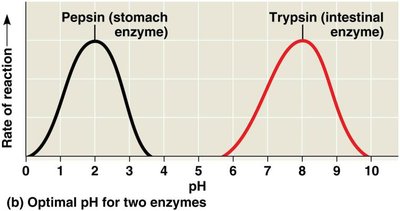
Temperature and pH can affect enzyme activity, with each enzyme having optimal conditions.
Enzyme activity can also be influenced by substrate concentration and the presence of inhibitors or activators.
Cofactors and Coenzymes
Cofactors: Nonprotein helpers required for enzyme function; can be inorganic (e.g., metal ions) or organic (coenzymes).
Coenzymes: Organic cofactors, often derived from vitamins.
Enzyme Inhibition
Competitive Inhibitors: Resemble the substrate and compete for the active site; can be overcome by increasing substrate concentration.
Noncompetitive Inhibitors: Bind elsewhere on the enzyme, altering its shape and reducing activity.
Inhibition can be reversible (weak interactions) or irreversible (covalent bonding, as with toxins or poisons).
Allosteric Regulation and Feedback Inhibition
Allosteric Regulation: Regulatory molecules bind to a site other than the active site, affecting enzyme activity (can inhibit or stimulate).
Cooperativity: Substrate binding to one active site increases activity at other sites (amplifies response).
Feedback Inhibition: The end product of a metabolic pathway inhibits an enzyme earlier in the pathway, preventing overproduction.
Enzyme Localization
Enzymes are often compartmentalized within specific organelles (e.g., mitochondria for cellular respiration), allowing for regulation and efficiency.
