Back
Chapter 8: An Introduction to Metabolism – Study Notes
Study Guide - Smart Notes
 Tailored notes based on your materials, expanded with key definitions, examples, and context.
Introduction to Energy
Energy in Biological Systems
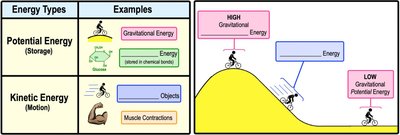
Energy is defined as the ability to perform work. In biological contexts, work refers to the transfer of energy that causes an overall change in a system. Energy exists in two main forms: potential energy (stored energy) and kinetic energy (energy of motion).
Potential Energy: Energy stored due to position or structure, such as chemical energy in bonds or gravitational energy.
Kinetic Energy: Energy associated with movement, such as muscle contractions or moving objects.
Example: A glucose molecule contains potential energy stored in its chemical bonds, while a moving bicycle demonstrates kinetic energy.
Thermodynamics: System vs. Surroundings
Basic Concepts of Thermodynamics
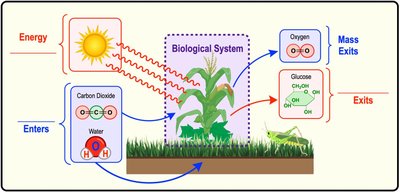
Thermodynamics is the study of energy transfers between bodies of matter. In this context:
System: The specific portion of matter being studied (e.g., a plant, a cell).
Surroundings: Everything outside the system.
Biological systems exchange both energy and matter with their surroundings.
Example: Plants absorb energy from sunlight and matter (CO2 and H2O) from the environment, converting them into glucose and oxygen.
Laws of Thermodynamics
First Law of Thermodynamics
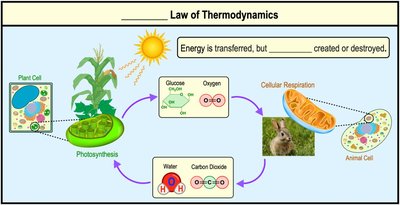
The First Law of Thermodynamics states that energy can be transferred and transformed, but it cannot be created or destroyed. This is also known as the Principle of Conservation of Energy. The total amount of energy in the universe remains constant.
Example: Energy from sunlight is converted by plants into chemical energy, which is then used by animals for cellular respiration.
Entropy and the Second Law of Thermodynamics
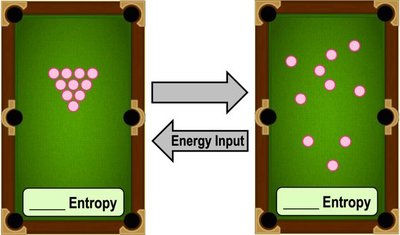
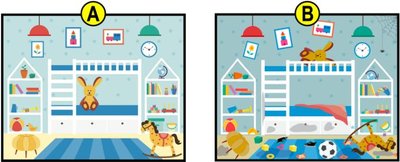
Entropy is a measure of disorder or randomness in a system. The greater the disorder, the higher the entropy. The natural tendency of reactions is to move the universe toward a state of higher entropy (greater disorder). Reactions can decrease the entropy of a system, but only with an input of energy.
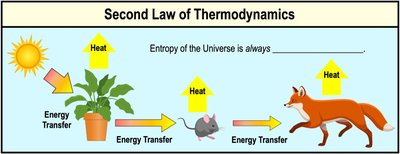
Second Law of Thermodynamics: No energy transfer is 100% efficient; some energy is always lost as heat, increasing the entropy of the universe.
Heat: A form of kinetic energy transferred between objects with different temperatures.
Example: When energy is transferred through a food chain, some is lost as heat at each step.
Chemical Reactions
Reactants, Products, and Types of Reactions
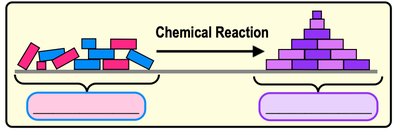
Chemical reactions involve the making and/or breaking of chemical bonds, leading to changes in matter.
Reactants: The starting materials in a chemical reaction.
Products: The resulting materials after the reaction.
Endergonic vs. Exergonic Reactions
Chemical reactions are categorized based on their energy requirements:
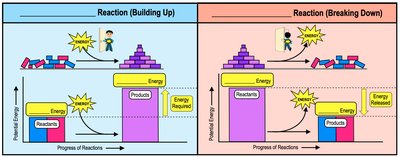
Endergonic Reactions: Require an input of energy (energy enters the reaction).
Exergonic Reactions: Release energy (energy exits the reaction).
Example: Building up molecules (anabolism) is endergonic, while breaking down molecules (catabolism) is exergonic.
ATP: The Energy Currency of the Cell
Structure and Function of ATP
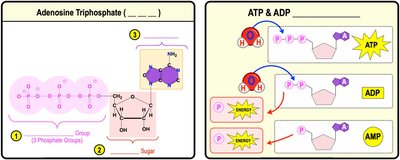
Adenosine Triphosphate (ATP) is the main energy molecule used to power cellular activities. ATP consists of three primary components:
A chain of three phosphate groups
Ribose sugar
Adenine nitrogenous base
ATP hydrolysis is the process of breaking bonds between phosphate groups, generating chemical energy and ADP (adenosine diphosphate). Sometimes, ADP can be hydrolyzed to form AMP (adenosine monophosphate).
ATP Cycle and Energy Coupling
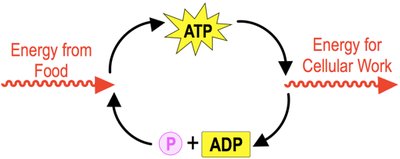
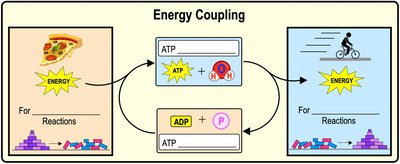
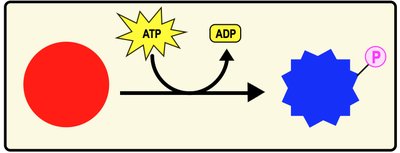
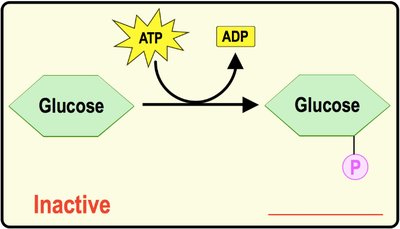
ATP acts as an intermediary to store and transfer energy for cellular work. The energy released by exergonic reactions is used to drive endergonic reactions through a process called energy coupling.
Hydrolysis of ATP fuels endergonic reactions.
Phosphorylation is the transfer of a phosphate group from ATP to another molecule, providing energy and often activating the target molecule or changing its shape.
Enzymes
Enzyme Structure and Function
Enzymes are biological catalysts that speed up chemical reactions without being consumed. The reactants in enzyme-catalyzed reactions are called substrates.
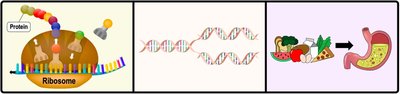
Enzymes build molecules, copy DNA, and digest food.

Environmental Factors Affecting Enzyme Activity
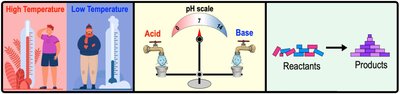
Enzyme activity is a measure of the amount of product an enzyme can produce in a certain amount of time. Factors affecting enzyme activity include:
Temperature
pH
Concentration of reactants
Extreme conditions can denature enzymes, causing them to lose their shape and activity.
Enzyme Activation Energy
Activation Energy and Catalysis
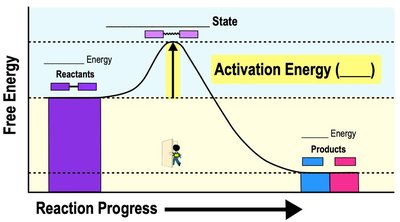
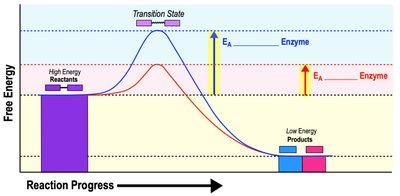
Activation energy (EA) is the minimum amount of energy required to start a chemical reaction. The higher the activation energy, the slower the reaction. The transition state is a temporary state of high energy during a reaction.
Enzymes catalyze reactions by lowering the activation energy barrier, allowing reactions to occur much faster.
Enzyme Binding and Cofactors
Enzyme-Substrate Complex
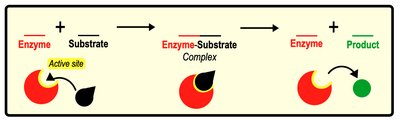
A substrate binds to an enzyme at the active site, forming the enzyme-substrate complex. After catalysis, products are released, and the enzyme remains unchanged.
Cofactors and Coenzymes
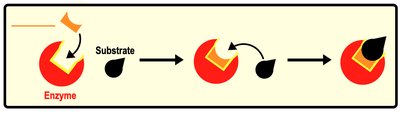
Some enzymes require cofactors (non-protein substances, such as metal ions) for catalysis. Coenzymes are organic cofactors derived from vitamins. Cofactors are not consumed in the reaction.
Enzyme Inhibition
Types of Enzyme Inhibitors
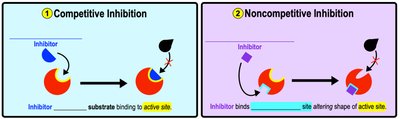
Enzyme inhibitors are compounds that interfere with and selectively block the catalysis of specific enzymes.
Competitive Inhibitors: Compete with the substrate for the active site and can only bind when the active site is free.
Noncompetitive Inhibitors: Bind at an allosteric site (not the active site), changing the enzyme's shape and reducing its activity.
Introduction to Metabolism
Metabolic Pathways
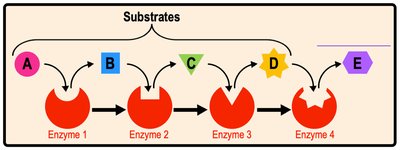
Metabolism is the sum of all chemical reactions in an organism. Metabolic pathways are series of reactions that alter a substrate multiple times before the final product is formed.
Catabolic and Anabolic Pathways
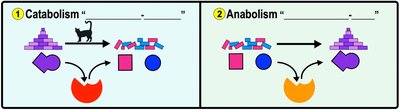
Catabolic Pathways (Catabolism): Release energy by breaking down large molecules into smaller ones.
Anabolic Pathways (Anabolism): Consume energy to build larger molecules from smaller ones (e.g., DNA and proteins).
Negative and Positive Feedback
Feedback Regulation in Metabolic Pathways
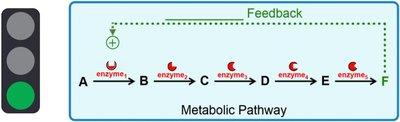
Negative Feedback: The final product of a metabolic pathway inhibits an earlier step in the same pathway, acting as a regulatory "red light" to prevent overproduction.
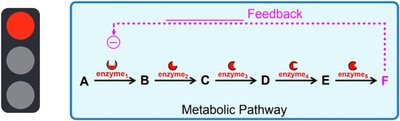
Positive Feedback: The final product of a metabolic pathway stimulates an earlier step, acting as a "green light" to further stimulate the pathway.