 Back
Chapter 8: Introduction to Metabolism – Study Notes
Study Guide - Smart Notes
 Tailored notes based on your materials, expanded with key definitions, examples, and context.
Introduction to Metabolism
Overview of Metabolism
Metabolism encompasses all chemical reactions occurring within an organism. These reactions are organized into metabolic pathways, where each step is catalyzed by a specific enzyme, converting a starting molecule into a final product through a series of intermediates.
Metabolic Pathways: Sequences of enzymatically catalyzed chemical reactions in a cell.
Enzymes: Biological catalysts that speed up reactions without being consumed.
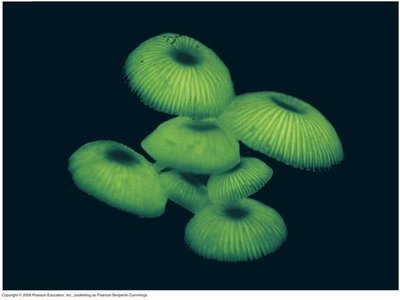
Example: Bioluminescence in mushrooms is a metabolic reaction producing light.

Types of Metabolic Pathways
Catabolic and Anabolic Pathways
Metabolic pathways are classified as either catabolic or anabolic, depending on whether they break down or build up molecules.
Catabolic Pathways: Break down complex molecules into simpler ones, releasing energy (e.g., hydrolysis of proteins to amino acids).
Anabolic Pathways: Build complex molecules from simpler ones, consuming energy (e.g., synthesis of proteins from amino acids).
Bioenergetics: The study of how organisms manage their energy resources.
Energy and Its Forms
Kinetic and Potential Energy
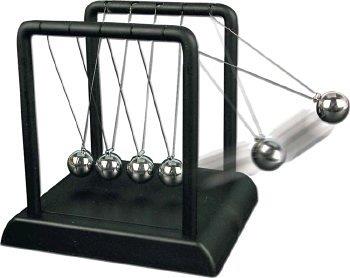
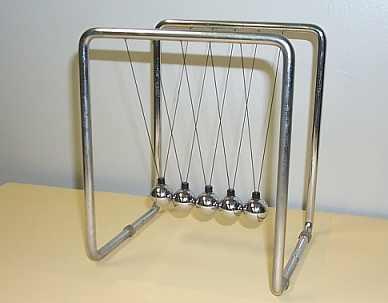
Energy is the capacity to cause change. It exists in various forms, primarily kinetic and potential energy.
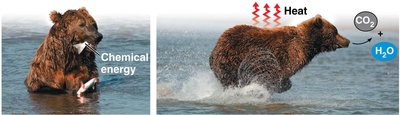
Kinetic Energy: Energy of motion (e.g., heat, movement of molecules).
Potential Energy: Stored energy due to position or structure (e.g., chemical energy in bonds).

Thermodynamics in Biology
First and Second Laws of Thermodynamics
Thermodynamics describes the principles governing energy transformations in biological systems.
First Law (Conservation of Energy): Energy can be transferred or transformed, but not created or destroyed.
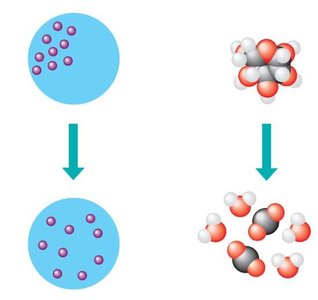
Second Law: Every energy transfer increases the entropy (disorder) of the universe.
Open Systems: Exchange energy and matter with surroundings (e.g., living cells).
Closed Systems: No exchange with surroundings; eventually reach equilibrium.
Free Energy and Spontaneity
Gibbs Free Energy (ΔG)
Free energy is the portion of a system's energy that can perform work under cellular conditions. The change in free energy (ΔG) determines whether a process is spontaneous.
Equation:
ΔH: Change in enthalpy (total energy)
T: Absolute temperature in Kelvin
ΔS: Change in entropy
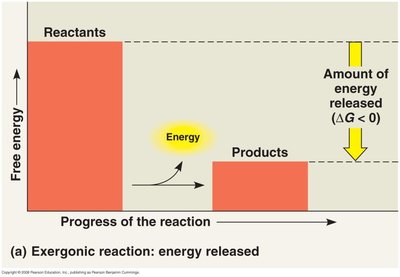
Spontaneous Process: Occurs when (exergonic)
Equilibrium: State of maximum stability; no net change in free energy
Exergonic vs. Endergonic Reactions
Exergonic Reactions: Release energy, spontaneous ()
Endergonic Reactions: Absorb energy, non-spontaneous ()
Example: Cellular respiration is exergonic; photosynthesis is endergonic.
Metabolic Disequilibrium and Cellular Work
Open vs. Isolated Systems in Cells
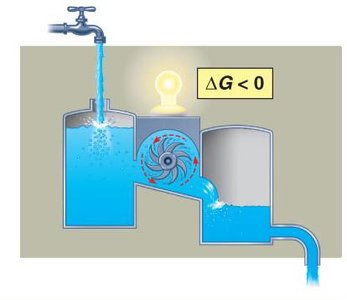
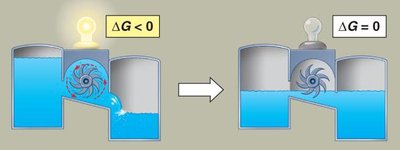
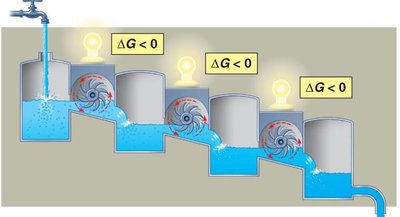
Cells are open systems, constantly exchanging materials with their environment. This prevents metabolic reactions from reaching equilibrium, which is essential for life.
Open System: Continuous input and output of materials; reactions proceed in a series.
Isolated System: Reactions reach equilibrium and stop; cells would die.
ATP: The Energy Currency of the Cell
Structure and Function of ATP
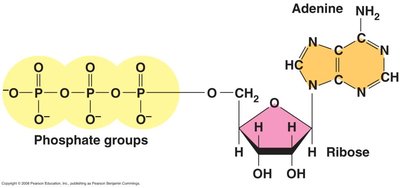
Adenosine triphosphate (ATP) is the primary energy carrier in cells. It consists of adenine, ribose, and three phosphate groups.
ATP Hydrolysis: Releases energy by breaking the bond between the second and third phosphate groups.
ΔG for ATP Hydrolysis: kcal/mol (standard conditions)
ATP Coupling and Cellular Work
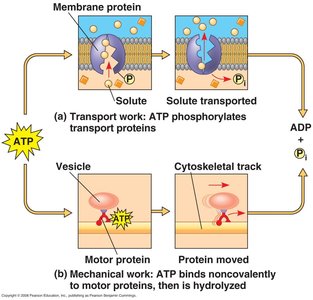
ATP powers cellular work by coupling exergonic reactions (ATP hydrolysis) to endergonic processes (e.g., biosynthesis, transport, movement).
Mechanical Work: Muscle contraction
Transport Work: Active transport across membranes
Chemical Work: Synthesis of macromolecules
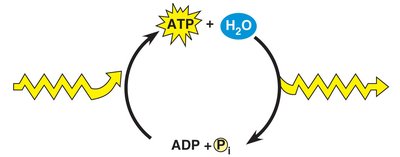
The ATP Cycle
ATP is continuously regenerated from ADP and inorganic phosphate () using energy from catabolic reactions.
ATP Cycle: Links catabolism (energy release) and anabolism (energy consumption).
Speed: A muscle cell recycles its entire ATP pool in less than one minute.
Enzymes and Metabolic Regulation
Enzyme Function and Activation Energy
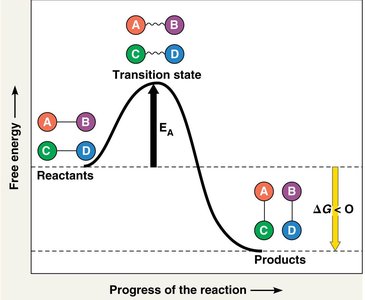
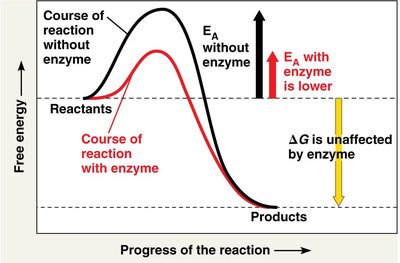
Enzymes are biological catalysts that lower the activation energy (EA) required for reactions, increasing reaction rates without altering ΔG.
Activation Energy: The energy barrier that must be overcome for a reaction to proceed.
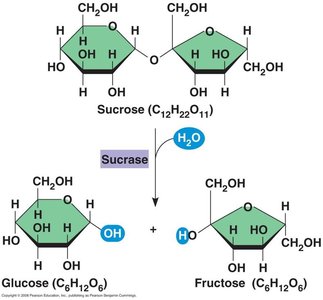
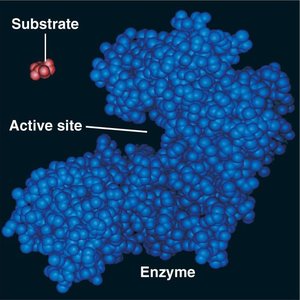
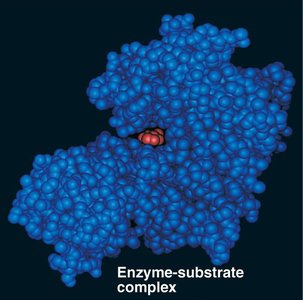
Enzyme Specificity: Each enzyme acts on a specific substrate due to its unique active site.
Enzyme-Substrate Interaction
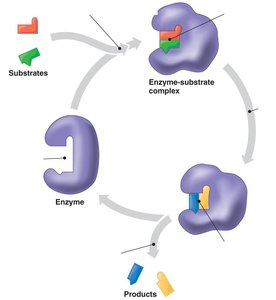
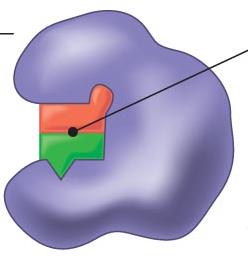
Enzymes bind substrates at their active sites, forming an enzyme-substrate complex. The induced fit model describes how enzymes change shape to better fit the substrate, enhancing catalysis.
Substrate: The reactant an enzyme acts upon.
Induced Fit: Enzyme changes shape for optimal binding and catalysis.
Mechanisms of Enzyme Action
Orienting substrates correctly
Straining substrate bonds
Providing a favorable microenvironment
Direct participation in the reaction
Factors Affecting Enzyme Activity
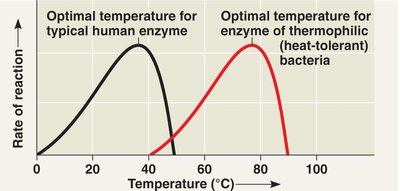
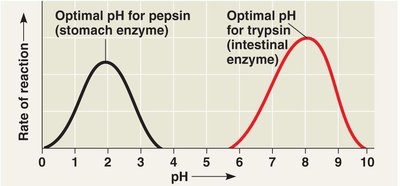
Enzyme activity is influenced by substrate concentration, temperature, pH, and the presence of specific chemicals.
Optimal Conditions: Each enzyme has an optimal temperature and pH for maximal activity.
Denaturation: Extreme conditions disrupt enzyme structure and function.
Cofactors and Coenzymes
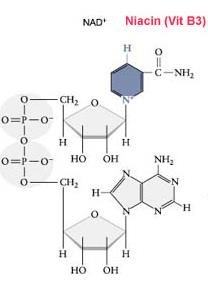
Some enzymes require non-protein helpers called cofactors for catalytic activity.
Inorganic Cofactors: Metal ions (e.g., Mg2+, Zn2+)
Coenzymes: Organic molecules, often derived from vitamins (e.g., NAD+ from niacin)
Enzyme Inhibition
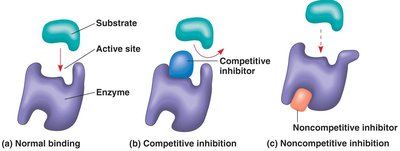
Enzyme inhibitors can decrease or halt enzyme activity. Inhibition can be reversible or irreversible.
Competitive Inhibitors: Bind to the active site, blocking substrate access.
Noncompetitive Inhibitors: Bind elsewhere, altering enzyme shape and function.
Feedback Inhibition
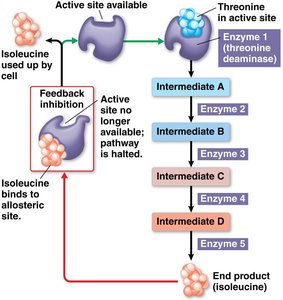
Feedback inhibition is a regulatory mechanism where the end product of a metabolic pathway inhibits an enzyme involved early in the pathway, preventing overproduction.
Example: Isoleucine synthesis pathway; isoleucine inhibits the first enzyme when its concentration is sufficient.
Summary Table: Catabolic vs. Anabolic Pathways
Pathway Type | Description | Energy Change | Example |
|---|---|---|---|
Catabolic | Breaks down molecules | Releases energy | Cellular respiration |
Anabolic | Builds molecules | Consumes energy | Protein synthesis |
Key Equations
Gibbs Free Energy:
ATP Hydrolysis:
Learning Objectives
Define metabolism and its major components
Compare anabolic and catabolic pathways
Explain energy forms, thermodynamics, and free energy
Describe ATP’s role in cellular work
Explain enzyme function, specificity, and regulation
