 Back
Chemical Bonding: Types, Properties, and Biological Relevance
Study Guide - Smart Notes
 Tailored notes based on your materials, expanded with key definitions, examples, and context.
The Nature of Chemical Bonds
Bonding to Fill the Valence Shell
Atoms form chemical bonds to achieve a stable electron configuration, typically by filling their valence shell. The type of bond formed depends on the characteristics of the elements involved, particularly their electronegativity and valence electron count.
Valence electrons are the outermost electrons and determine an atom's bonding capacity.
Elements in the same column of the periodic table have the same number of valence electrons, resulting in similar chemical behavior.
Common biological elements: Hydrogen (H), Carbon (C), Nitrogen (N), Oxygen (O), Phosphorus (P), Sulfur (S), Fluorine (F).
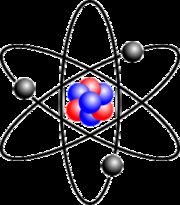
Major Types of Chemical Bonds
There are three major types of bonds between elements:
Covalent bonds (electrons are shared):
Nonpolar covalent
Polar covalent
Ionic bonds (electrons are transferred or 'stolen')
Covalent Bonds
Formation and Properties
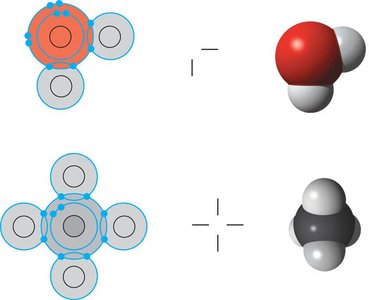
Covalent bonds involve the sharing of pairs of valence electrons between atoms. These bonds are common in biological molecules and are essential for the structure and function of organic compounds.
Single covalent bond: One pair of electrons shared (e.g., H2).
Double covalent bond: Two pairs of electrons shared (e.g., O2).
Covalent bonds usually involve C, O, N, H, P, F, S.
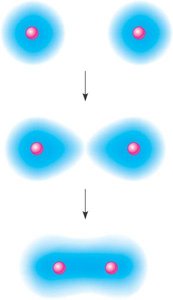
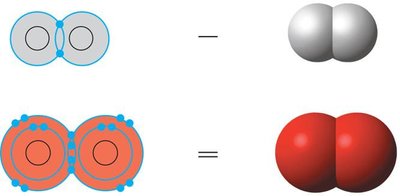
Visual Representations of Covalent Bonds
Covalent bonds can be represented in various ways, including electron-shell diagrams, structural formulas, and space-filling models. Understanding these representations is crucial for visualizing molecular structure.
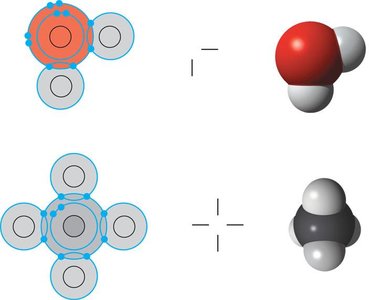
Electronegativity and Bond Polarity
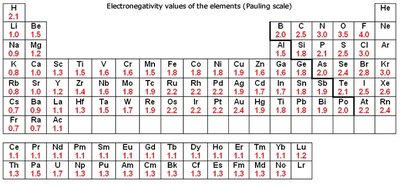
Electronegativity (EN) is the ability of an atom to attract electrons. The difference in electronegativity between two atoms determines whether electrons are shared equally (nonpolar) or unequally (polar).
Atoms with similar EN share electrons equally: nonpolar covalent bond.
Atoms with different EN share electrons unequally: polar covalent bond.
EN difference < 0.5: nonpolar; EN difference > 0.5 and < 1.7: polar; EN difference > 1.7: ionic.
Nonpolar Covalent Bonds
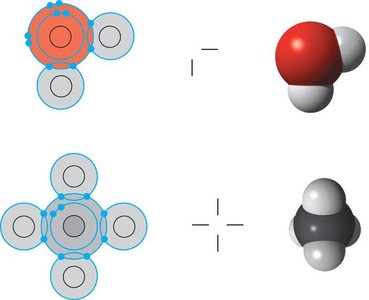
Nonpolar covalent bonds occur when atoms share electrons equally, usually between atoms of the same element or those with similar electronegativities.
Examples: H2, O2, C-H bonds in methane (CH4).
Polar Covalent Bonds
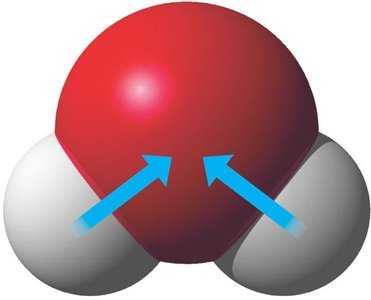
Polar covalent bonds occur when atoms share electrons unequally, resulting in partial charges (dipoles) within the molecule.
Examples: H2O, NH3, SO2, HCl, CO, ethanol (C2H6O).
Common elements in polar covalent bonds: H, O, F, S, N, P (except C-H bonds).
Ionic Bonds
Formation and Properties
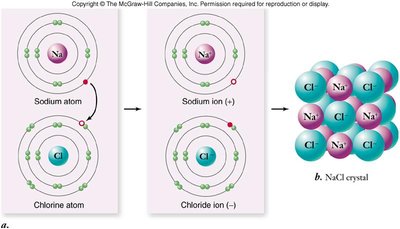
Ionic bonds form when atoms with very different electronegativities transfer electrons, resulting in the formation of ions (cations and anions) with full charges. These bonds are common between elements on opposite sides of the periodic table.
Cation: Positively charged ion (e.g., Na+).
Anion: Negatively charged ion (e.g., Cl-).
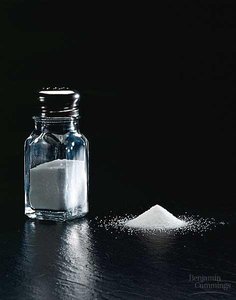
Ionic compounds are called salts (e.g., NaCl, MgCl2).
Bonding Types: Continuum and Metaphors
Bonding Continuum
Chemical bonds exist on a continuum based on electronegativity differences:
Nonpolar covalent: Equal sharing, uncharged.
Polar covalent: Unequal sharing, partial charges.
Ionic: Electron transfer, full charges.
Metaphors for Bonding Types
Metaphors can help visualize the differences between bond types:
Nonpolar covalent: "Dogs share their toys equally."
Polar covalent: "Dogs share their toys unequally."
Ionic: "Dogs steal each other's toys."



Summary Table: Types of Bonds and Interactions
Type of bond/interaction | Description | Example |
|---|---|---|
Nonpolar Covalent Bond | Equal sharing of electrons | H2, CH4 |
Polar Covalent Bond | Unequal sharing of electrons, partial charges | H2O, NH3 |
Ionic Bond | Electron transfer, full charges | NaCl, MgCl2 |
Ion-Dipole Interaction | Attraction between ion and polar molecule | Na+ in water |
Hydrogen Bond | Attraction between H and electronegative atom | Between water molecules |
Hydrophobic Interaction | Nonpolar molecules aggregate in water | Oil droplets in water |
Key Equations and Concepts
Electronegativity Difference and Bond Type
Bond type is determined by the difference in electronegativity ():
If : Nonpolar covalent
If : Polar covalent
If : Ionic
Applications in Biology
Biological Relevance of Bond Types
Covalent bonds are fundamental to the structure of biomolecules (proteins, nucleic acids, carbohydrates, lipids).
Polar covalent bonds (e.g., in water) are essential for life, influencing properties like solubility and hydrogen bonding.
Ionic bonds are important in cellular signaling and maintaining osmotic balance.
Example: Water Molecule
The polar covalent bonds in water create partial charges, leading to hydrogen bonding and unique properties such as high surface tension, cohesion, and adhesion.
Example: Sodium Chloride
Ionic bonds between sodium and chloride ions result in the formation of salt crystals, which are vital for biological processes.
Additional info: The notes have been expanded to include definitions, examples, and applications relevant to General Biology, with logical grouping and academic context for clarity and completeness.
