 Back
Chemical Context of Life: Atoms, Bonds, and Water
Study Guide - Smart Notes
 Tailored notes based on your materials, expanded with key definitions, examples, and context.
The Chemical Context of Life
Atoms and Their Structure
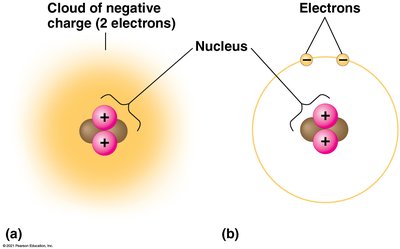
Atoms are the fundamental units of matter, and their structure determines the properties of elements and compounds. Each atom consists of a nucleus containing protons and neutrons, surrounded by electrons in specific energy levels or shells.
Subatomic Particles: Protons (positive charge), neutrons (neutral), and electrons (negative charge).
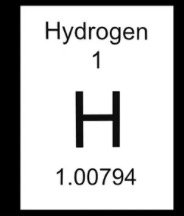
Atomic Number: The number of protons in the nucleus, which defines the element.
Mass Number: The sum of protons and neutrons in the nucleus.
Atomic Mass: Approximated by the mass number; represents the atom's total mass.
Electron Shells and Energy Levels
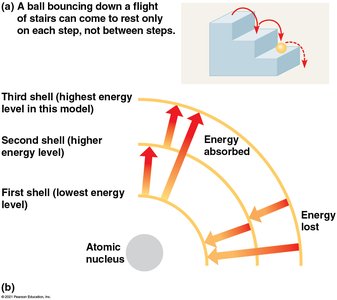
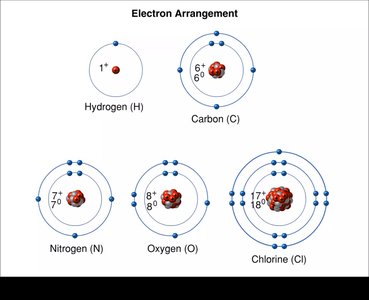
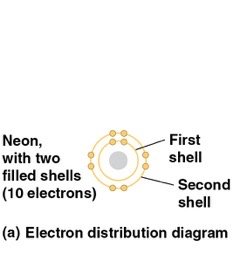
Electrons occupy energy levels (shells) around the nucleus. The energy of an electron depends on its distance from the nucleus; electrons in higher shells have more energy.
Energy Levels: Electrons can only exist at specific energy levels, not between them.
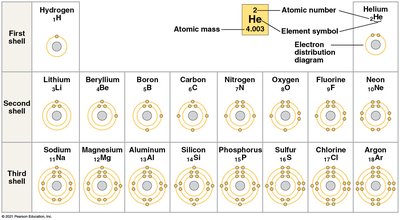
Valence Electrons: Electrons in the outermost shell, crucial for chemical bonding.
Electron Distribution and the Periodic Table
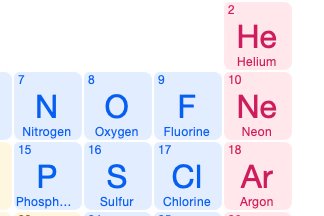
The arrangement of electrons in shells determines the chemical behavior of elements. The periodic table organizes elements by their electron configuration and properties.
Electron Distribution: Elements in the same column have similar valence electron configurations.
Noble Gases: Elements with full valence shells are chemically inert.
Chemical Bonds and the Octet Rule
The Octet Rule
Atoms tend to bond in ways that complete their valence shell with eight electrons, known as the octet rule. This drives the formation of molecules and compounds.
Bond Formation: Atoms with incomplete valence shells share or transfer electrons to achieve stability.
Types of Bonds: Covalent, ionic, and hydrogen bonds.
Covalent Bonds
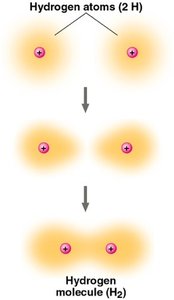
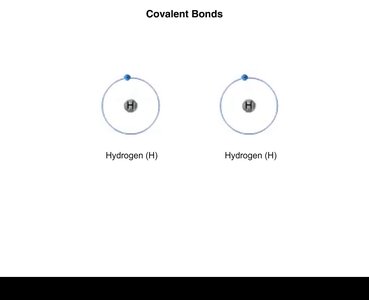
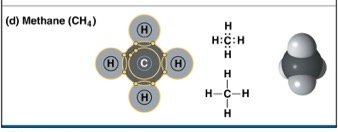
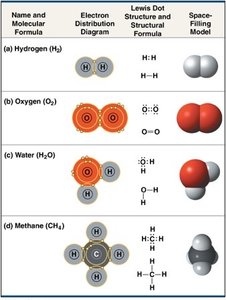
Covalent bonds involve the sharing of valence electrons between atoms. These bonds are strong and form the backbone of most biological molecules.
Single Covalent Bond: Sharing one pair of electrons.
Double Covalent Bond: Sharing two pairs of electrons.
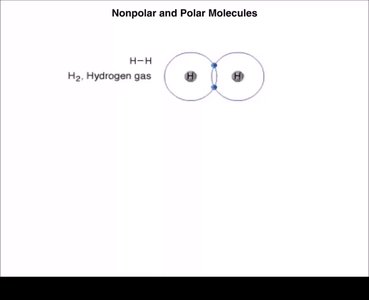
Structural Formula: Notation representing atoms and bonds (e.g., H—H for hydrogen gas).
Ionic Bonds
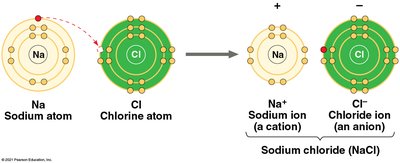
Ionic bonds form when atoms transfer electrons, resulting in oppositely charged ions that attract each other. This is common in compounds like sodium chloride (NaCl).
Cation: Positively charged ion (e.g., Na+).
Anion: Negatively charged ion (e.g., Cl-).
Electronegativity and Bond Polarity
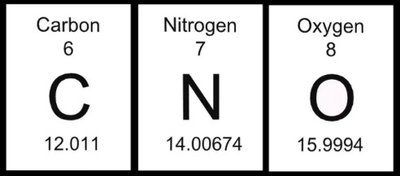
Electronegativity is an atom's ability to attract electrons in a covalent bond. Differences in electronegativity lead to polar and nonpolar bonds.
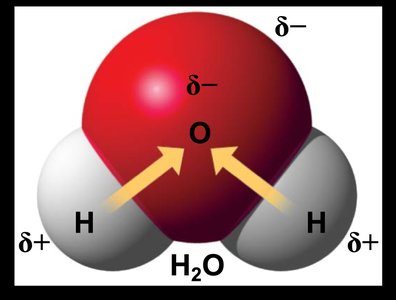
Polar Covalent Bond: Unequal sharing of electrons, resulting in partial charges (e.g., H2O).
Nonpolar Covalent Bond: Equal sharing of electrons (e.g., H2 gas).
Hydrogen Bonds and Weak Interactions
Hydrogen Bonds
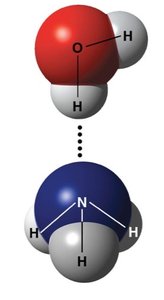
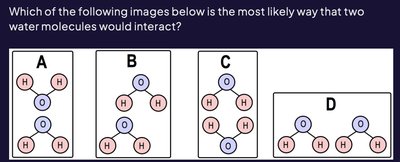
Hydrogen bonds are weak attractions between a hydrogen atom covalently bonded to an electronegative atom (usually O or N) and another electronegative atom. These bonds are crucial for the structure of water and biological molecules.
Partial Charges: Hydrogen bonds form due to partial positive and negative charges.
Biological Importance: Stabilize DNA, proteins, and water structure.
Van der Waals Interactions
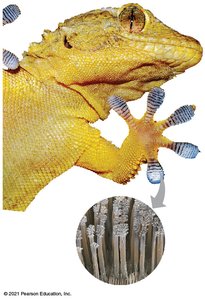
Van der Waals interactions are weak attractions between molecules due to temporary uneven electron distributions. These are important for molecular recognition and interactions.
Temporary Charges: Electrons may accumulate in one part of a molecule, creating temporary dipoles.
Biological Example: Gecko feet adhere to surfaces via van der Waals forces.
Water: Structure and Properties
Water Molecule Structure
Water (H2O) is a polar molecule with unique properties due to its structure and hydrogen bonding.
Partial Charges: Oxygen is partially negative (δ−), hydrogens are partially positive (δ+).
Hydrogen Bonding: Water molecules interact via hydrogen bonds, leading to cohesion, adhesion, and high specific heat.
Practice and Applications
Understanding atomic structure, bonding, and water properties is fundamental for biology, as these concepts underpin molecular interactions, cellular processes, and life itself.
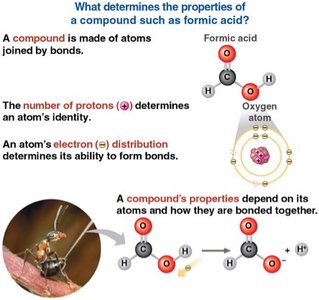
Example: Formic acid in ants demonstrates how atomic structure and bonding determine compound properties.
Additional info: The notes expand on brief points from slides and practice questions, providing academic context and examples for clarity.
