 Back
Chemical Context of Life, Water, and Biological Macromolecules: Study Notes
Study Guide - Smart Notes
 Tailored notes based on your materials, expanded with key definitions, examples, and context.
Chemical Context of Life
Chemical Bonds and Their Importance in Biology
Chemical bonds are the attractions that hold atoms together, forming molecules essential for life. The strength and type of bond influence molecular properties and biological functions.
Covalent Bonds: Strongest type; atoms share pairs of electrons. Can be represented by dots or solid lines.
Ionic Bonds: Formed between ions (charged atoms) via electron transfer.
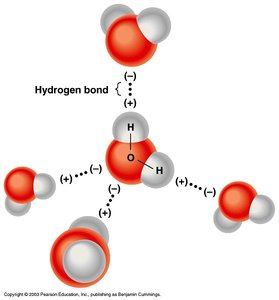
Hydrogen Bonds: Weak attractions between hydrogen and electronegative atoms (e.g., oxygen, nitrogen).
Van der Waals Interactions: Weak, temporary attractions due to fluctuating electron distributions.
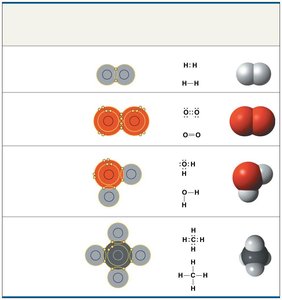
Covalent Bonds: Polar and Nonpolar
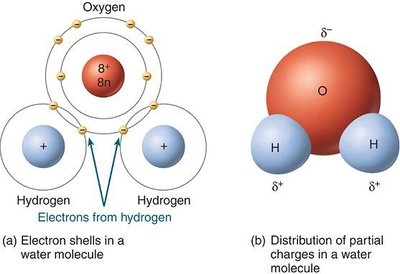
Covalent bonds involve the sharing of electrons between atoms. The nature of this sharing depends on the atoms' electronegativity.
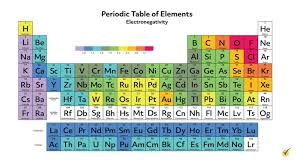
Electronegativity: The tendency of an atom to attract electrons. Oxygen and nitrogen are highly electronegative.
Polar Covalent Bonds: Electrons are shared unequally, resulting in partial charges (e.g., water).
Nonpolar Covalent Bonds: Electrons are shared equally; no charge separation (e.g., methane).
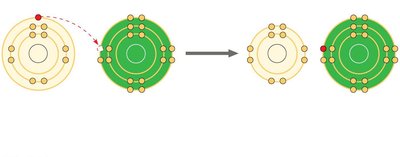
Ionic Bonds and Ion Formation
Ionic bonds occur when atoms transfer electrons, resulting in charged ions that attract each other.
Cation: Positively charged ion (lost electron).
Anion: Negatively charged ion (gained electron).
Example: Sodium chloride (NaCl) forms from Na+ and Cl-.
Hydrogen Bonds
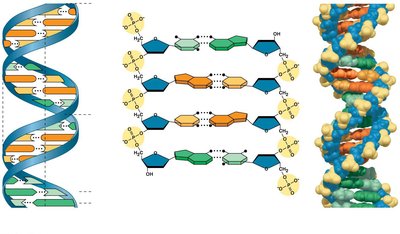
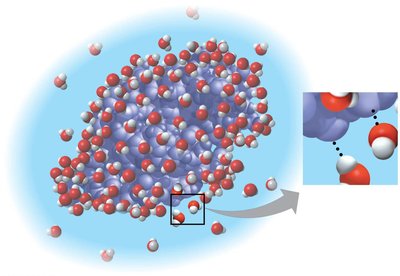
Hydrogen bonds are weak attractions between the positive hydrogen of one molecule and the negative region of another, especially in water and DNA.
Essential for water's properties and DNA structure.
Responsible for cohesion, adhesion, and surface tension in water.
Chemical Reactions
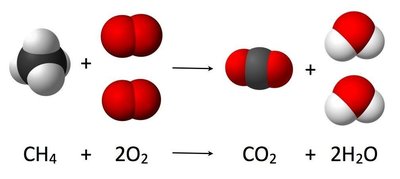
Chemical reactions involve making and breaking bonds, rearranging atoms but conserving matter.
Example: Combustion of methane:
Water and Life
Properties of Water Essential for Life
Water's unique properties arise from its polar covalent bonds and hydrogen bonding. These properties are crucial for biological processes.
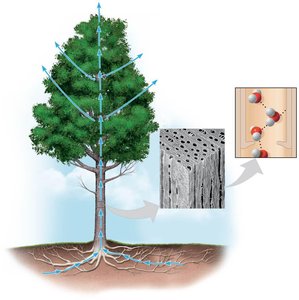
Cohesion: Water molecules stick together via hydrogen bonds.
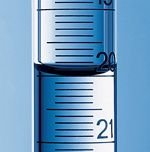
Adhesion: Water molecules stick to other surfaces.
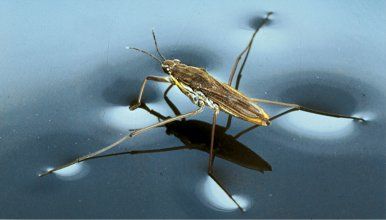
Surface Tension: Water's surface resists external force, supporting small organisms.
Moderation of Temperature
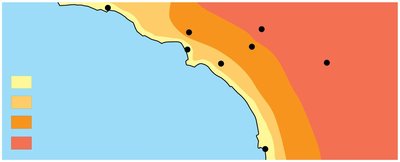
Water moderates temperature due to its high specific heat and heat of vaporization.
Absorbs and releases heat slowly.
Stabilizes climate and internal body temperature.
Floating of Ice
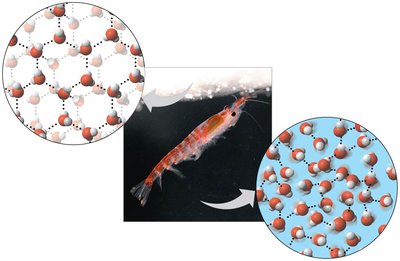
Ice is less dense than liquid water because hydrogen bonds keep molecules farther apart.
Ice floats, insulating water below and supporting aquatic life.
Water as a Solvent
Water dissolves ionic and polar molecules, making it a universal solvent.
Hydrophilic: Polar molecules that interact with water.
Hydrophobic: Nonpolar molecules that do not interact with water.
Acids, Bases, and Buffers
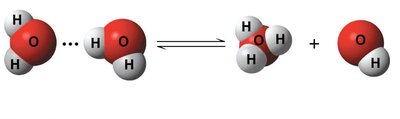
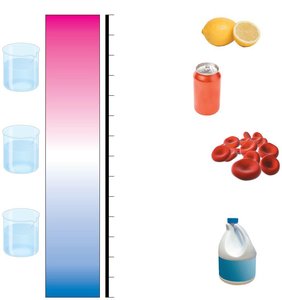
Acids: Increase H+ concentration.
Bases: Decrease H+ concentration.
pH Scale: Measures acidity/alkalinity; 7 is neutral.
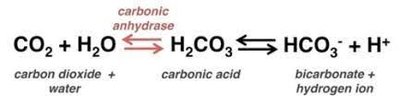
Buffers: Weak acids/bases that stabilize pH, crucial for homeostasis.
Carbon Molecules and Organic Chemistry
Properties of Carbon
Carbon is the backbone of organic molecules due to its ability to form four covalent bonds and diverse structures.
Binds to H, O, N, P, S, and other C atoms.
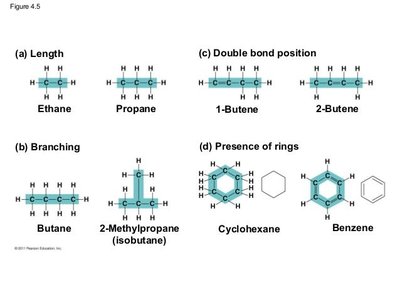
Forms chains, rings, and branched structures.
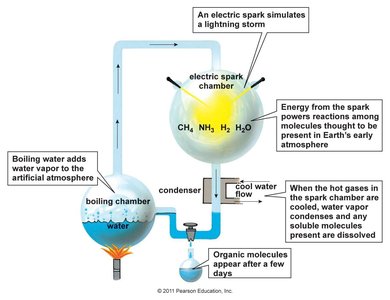
Can create isomers—same formula, different structure.
Functional Groups
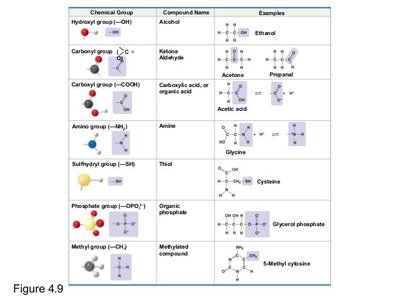
Functional groups are specific chemical groups attached to carbon skeletons, directly involved in chemical reactions.
Chemical Group | Compound Name | Examples |
|---|---|---|
Hydroxyl (–OH) | Alcohol | Ethanol |
Carbonyl (–CO) | Ketone, Aldehyde | Acetone, Propanal |
Carboxyl (–COOH) | Carboxylic acid | Acetic acid |
Amino (–NH2) | Amine | Glycine |
Sulfhydryl (–SH) | Thiol | Cysteine |
Phosphate (–PO4) | Organic phosphate | Glycerol phosphate |
Methyl (–CH3) | Methylated compound | 5-Methyl cytosine |
Structure and Function of Macromolecules
Polymers and Monomers
Macromolecules are large molecules made of repeating subunits (monomers).
Polymer: Chain of monomers (e.g., DNA, proteins).
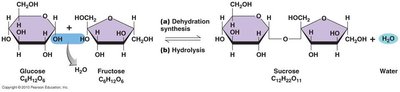
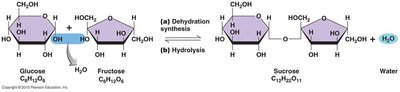
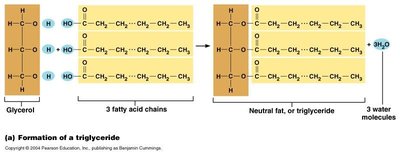
Condensation (Dehydration) Reaction: Joins monomers, releases water.
Hydrolysis: Breaks polymers, adds water.
Carbohydrates
Carbohydrates serve as energy sources and structural materials.
Monosaccharides: Simple sugars (e.g., glucose).
Disaccharides: Two monosaccharides joined (e.g., sucrose).
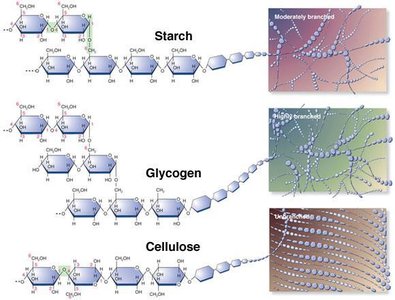
Polysaccharides: Long chains for storage (starch, glycogen) or structure (cellulose, chitin).
Lipids
Lipids are hydrophobic molecules including fats, phospholipids, steroids, and waxes.
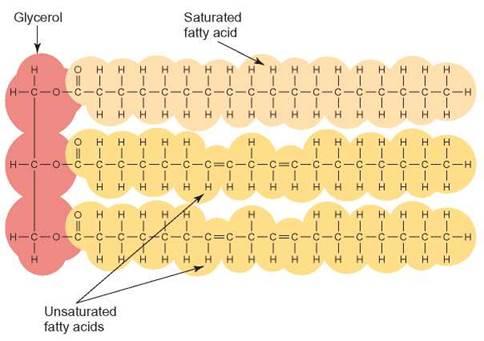
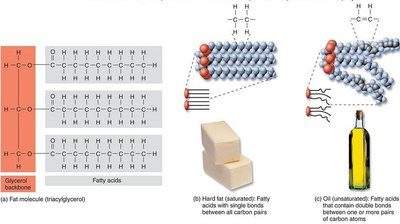
Fats (Triglycerides): Glycerol + 3 fatty acids; energy storage, insulation.
Saturated Fats: No double bonds; solid at room temperature.
Unsaturated Fats: One or more double bonds; liquid at room temperature.
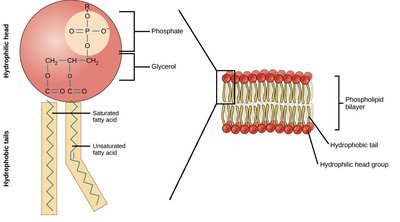
Phospholipids: Major component of cell membranes; amphipathic.
Steroids: Four fused rings; includes cholesterol.
Proteins
Proteins are polymers of amino acids, performing diverse functions.
Polypeptide: Chain of amino acids.
Protein: One or more polypeptides folded into a specific shape.
Functions: Structural support, transport, signaling, receptors, enzymes, movement, immunity.
Levels of Protein Structure
Primary: Sequence of amino acids (determined by DNA).
Secondary: Coiling/folding (alpha helix, beta sheet).
Tertiary: 3D shape due to R group interactions.
Quaternary: Interactions between multiple polypeptide chains.
Protein Denaturation
Extreme temperature or pH disrupts tertiary structure, causing loss of function.
Renaturation is possible if primary structure remains intact.
Nucleic Acids
Nucleic acids (DNA and RNA) are polymers of nucleotides, storing and transmitting genetic information.
DNA: Double-stranded, deoxyribose sugar, bases G, C, A, T.
RNA: Single-stranded, ribose sugar, bases G, C, A, U.
Nitrogenous Bases: Pyrimidines (C, T, U) and Purines (A, G).
Bases held together by hydrogen bonds.
Property | DNA | RNA |
|---|---|---|
Strands | Double | Single |
Sugar | Deoxyribose | Ribose |
Bases | G, C, A, T | G, C, A, U |
Example:
DNA stores genetic information; RNA is involved in protein synthesis.
