 Back
ch 38
Study Guide - Smart Notes
 Tailored notes based on your materials, expanded with key definitions, examples, and context.
Chapter 38: Chemical Control of the Animal Body – The Endocrine System
Introduction to the Endocrine System
The endocrine system is a major regulatory system in animals, coordinating physiological processes through the secretion of hormones. These chemical messengers are produced by specialized glands and travel through the bloodstream to target organs, where they elicit specific responses essential for homeostasis, growth, metabolism, and reproduction.
How Do Animal Cells Communicate?
Types of Cellular Communication
Animal cells utilize several mechanisms to communicate and coordinate activities:
Direct Communication: Involves gap junctions that allow ions and small molecules to pass directly between adjacent cells. This is rapid but requires close contact.
Synaptic Communication: Utilizes neurotransmitters released from neurons across synapses to target cells, primarily in the nervous system.
Paracrine Communication: Local hormones diffuse through interstitial fluid to affect nearby cells. Examples include histamine and cytokines.
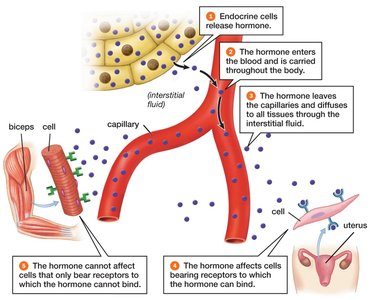
Endocrine Communication: Hormones are secreted into the bloodstream and can affect distant target cells throughout the body.
Each method relies on the presence of specific receptors on or in target cells, which determine the cell's response to a given messenger.
Hormones and Target Cells
Hormones are chemical messengers secreted by endocrine glands or cells.
Only cells with the appropriate receptors (target cells) can respond to a specific hormone.
Cells lacking the necessary receptors are unaffected by the hormone.
How Do Endocrine Hormones Produce Their Effects?
Classes of Vertebrate Endocrine Hormones
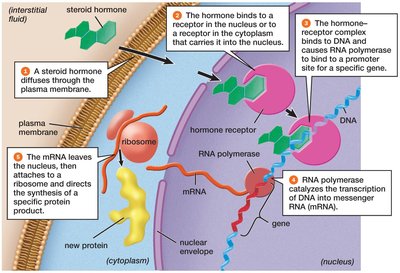
Steroid Hormones: Synthesized from cholesterol; lipid-soluble and can diffuse through cell membranes.
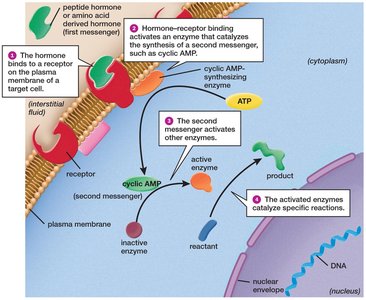
Peptide Hormones: Chains of amino acids; water-soluble and cannot cross cell membranes unaided.
Amino Acid Derived Hormones: Modified amino acids; may be water- or lipid-soluble.
Mechanisms of Hormone Action
Steroid Hormones: Enter target cells, bind to intracellular receptors, and regulate gene transcription, altering protein synthesis.
Peptide and Most Amino Acid Derived Hormones: Bind to receptors on the cell surface, triggering intracellular signaling cascades via second messengers (e.g., cyclic AMP).
Regulation of Hormone Release
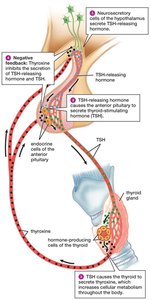
Negative Feedback: Most hormone release is regulated by negative feedback, where a change in a physiological variable triggers a response that counteracts the initial change, restoring homeostasis.
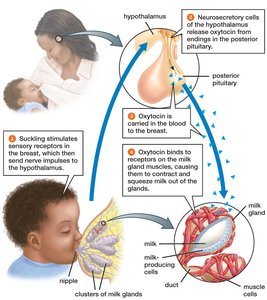
Positive Feedback: Less common; a change triggers a response that amplifies the change (e.g., oxytocin release during childbirth).
Structures and Functions of the Mammalian Endocrine System
Major Endocrine Glands and Their Hormones
The mammalian endocrine system includes several key glands and organs, each producing specific hormones with distinct functions:
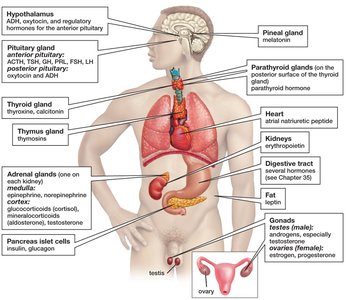
Hypothalamus: Produces releasing and inhibiting hormones that regulate the pituitary gland.
Pituitary Gland: Divided into anterior and posterior lobes, each releasing different hormones that regulate growth, metabolism, reproduction, and water balance.
Thyroid Gland: Produces thyroxine (regulates metabolism) and calcitonin (regulates blood calcium).
Parathyroid Glands: Secrete parathyroid hormone (increases blood calcium).
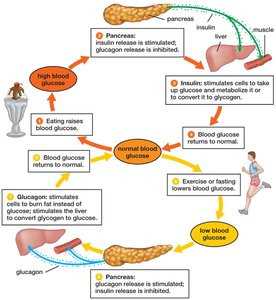
Pancreas: Produces insulin (lowers blood glucose) and glucagon (raises blood glucose).
Adrenal Glands: Cortex produces steroid hormones (cortisol, aldosterone); medulla produces epinephrine and norepinephrine.
Gonads (Testes and Ovaries): Produce sex hormones (testosterone, estrogen, progesterone).
Pineal Gland: Produces melatonin (regulates sleep-wake cycles).
Other Organs: Thymus (thymosin), kidneys (erythropoietin), digestive tract (various peptide hormones), fat cells (leptin), heart (atrial natriuretic peptide).
The Hypothalamus–Pituitary Complex
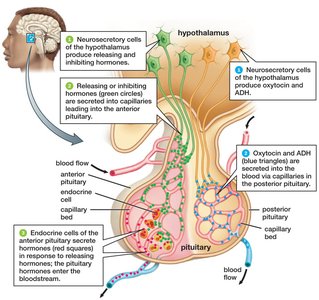
The hypothalamus and pituitary gland form a central regulatory axis for many endocrine functions. The hypothalamus produces hormones that either stimulate or inhibit the release of pituitary hormones. The pituitary gland, in turn, secretes hormones that regulate other endocrine glands and various physiological processes.
Anterior Pituitary Hormones
FSH and LH: Regulate reproductive processes in both sexes.
TSH: Stimulates thyroid hormone release.
ACTH: Stimulates adrenal cortex hormone release.
Prolactin: Stimulates milk production.
Growth Hormone (GH): Stimulates growth and metabolism.
Posterior Pituitary Hormones
Oxytocin: Stimulates uterine contractions and milk ejection.
Antidiuretic Hormone (ADH): Promotes water reabsorption in kidneys.
Thyroid and Parathyroid Glands
Thyroxine: Increases metabolic rate and regulates growth and development.
Calcitonin: Lowers blood calcium by inhibiting bone resorption.
Parathyroid Hormone: Raises blood calcium by stimulating bone resorption, intestinal absorption, and kidney reabsorption.

The Pancreas and Blood Glucose Regulation
Insulin: Lowers blood glucose by promoting cellular uptake and storage as glycogen.
Glucagon: Raises blood glucose by stimulating glycogen breakdown and glucose release from the liver.
Diabetes Mellitus
Type 1 Diabetes: Autoimmune destruction of insulin-producing cells; requires insulin therapy.
Type 2 Diabetes: Insulin resistance, often associated with obesity; managed with lifestyle changes and medication.

Sex Hormones and Reproductive Function
Testosterone: Stimulates male secondary sexual characteristics and sperm production.
Estrogen and Progesterone: Regulate female reproductive system, secondary sexual characteristics, and menstrual cycle.
Adrenal Glands
Adrenal Cortex: Produces glucocorticoids (e.g., cortisol) for glucose metabolism and mineralocorticoids (e.g., aldosterone) for salt balance.
Adrenal Medulla: Produces epinephrine and norepinephrine for the "fight or flight" response.
Other Endocrine Organs and Hormones
Pineal Gland: Melatonin regulates circadian rhythms.
Thymus: Thymosin stimulates immune cell development.
Kidneys: Erythropoietin stimulates red blood cell production; renin regulates blood pressure.
Digestive Tract: Produces hormones that regulate digestion and appetite (e.g., gastrin, ghrelin, leptin).
Heart: Atrial natriuretic peptide (ANP) lowers blood pressure by increasing salt and water excretion.
Tables: Summary of Endocrine Glands, Hormones, and Functions
The following table summarizes the major endocrine glands, the hormones they produce, their chemical nature, and their principal functions:
Endocrine Gland | Hormone | Type of Chemical | Principal Function |
|---|---|---|---|
Hypothalamus | Releasing and Inhibiting Hormones | Peptide | Regulate anterior pituitary hormone release |
Anterior Pituitary | FSH, LH, TSH, ACTH, PRL, GH | Peptide | Regulate gonads, thyroid, adrenal cortex, milk production, growth |
Posterior Pituitary | ADH, Oxytocin | Peptide | Water reabsorption, uterine contractions, milk ejection |
Thyroid | Thyroxine, Calcitonin | Amino acid derivative, Peptide | Metabolic rate, calcium regulation |
Parathyroid | Parathyroid hormone | Peptide | Increases blood calcium |
Pancreas | Insulin, Glucagon | Peptide | Regulate blood glucose |
Testes | Testosterone | Steroid | Male sexual development, sperm production |
Ovaries | Estrogen, Progesterone | Steroid | Female sexual development, egg maturation, uterine lining |
Adrenal Cortex | Glucocorticoids, Mineralocorticoids | Steroid | Glucose metabolism, salt balance |
Adrenal Medulla | Epinephrine, Norepinephrine | Amino acid derivative | Fight or flight response |
Pineal Gland | Melatonin | Amino acid derivative | Regulates sleep-wake cycles |
Thymus | Thymosin | Peptide | Immune cell maturation |
Kidneys | Erythropoietin | Peptide | Red blood cell production |
Digestive Tract | Gastrin, Ghrelin, etc. | Peptide | Regulate digestion and appetite |
Fat Cells | Leptin | Peptide | Regulates appetite, metabolism |
Heart | Atrial natriuretic peptide (ANP) | Peptide | Lowers blood pressure |
Key Terms and Concepts
Hormone: Chemical messenger secreted by endocrine glands, affecting distant target cells.
Endocrine Gland: Organ that secretes hormones directly into the bloodstream.
Target Cell: Cell with specific receptors for a hormone.
Negative Feedback: Regulatory mechanism that restores a variable to its set point.
Second Messenger: Intracellular molecule (e.g., cyclic AMP) that mediates hormone action.
Insulin Resistance: Condition in which cells fail to respond to insulin, leading to elevated blood glucose.
Summary
The endocrine system is essential for maintaining homeostasis and coordinating complex physiological processes in animals. Understanding hormone types, mechanisms of action, and the regulation of endocrine glands is fundamental for comprehending how the body responds to internal and external changes.
