 Back
Chemical Energy and ATP: Structure, Function, and Biomolecule Energy Sources
Study Guide - Smart Notes
 Tailored notes based on your materials, expanded with key definitions, examples, and context.
Chemical Energy & ATP
Introduction to ATP and Cellular Energy
Cells require a constant supply of energy to perform essential life processes. The primary energy carrier in all living organisms is adenosine triphosphate (ATP). ATP stores and releases energy as needed for cellular work.
Structure of ATP
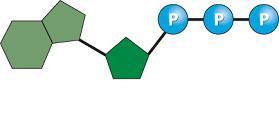
ATP is a nucleic acid derivative composed of three main parts: an adenine base, a ribose sugar, and three phosphate groups. The bonds between the phosphate groups, especially the bond between the second and third phosphate, are high-energy bonds that store significant chemical energy.
Adenine: A nitrogenous base
Ribose: A five-carbon sugar
Three phosphate groups: Linked in a chain, with the last bond being the most energy-rich
ATP-ADP Cycle
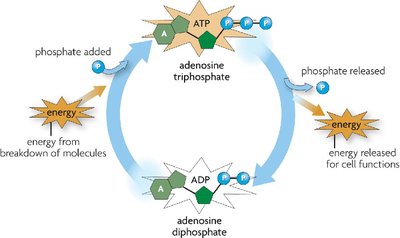
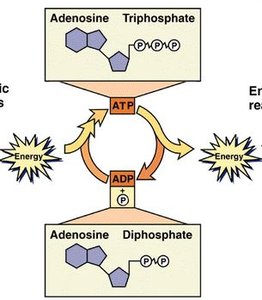
ATP releases energy when its terminal (third) phosphate group is removed, forming adenosine diphosphate (ADP). This process is reversible: ADP can be converted back to ATP by the addition of a phosphate group, using energy derived from the breakdown of food molecules.
ATP → ADP + Pi + energy (Pi = inorganic phosphate)
ADP + Pi + energy → ATP
This cycle is fundamental to cellular metabolism, powering processes such as muscle contraction, active transport, and biosynthesis.
Sources of Energy for ATP Production
Cells obtain energy to regenerate ATP from the breakdown of biomolecules. The three main types of biomolecules used for energy are carbohydrates, lipids, and proteins, each providing different amounts of energy per gram.
Carbohydrates: Most commonly used for ATP production; not stored in large amounts; yield about 36 ATP per glucose molecule.
Lipids (Fats): Store the most energy; provide long-term energy storage; yield about 146 ATP per triglyceride molecule.
Proteins: Least likely to be used for energy; amino acids are primarily used for building cellular structures rather than energy.
MOLECULE | ENERGY |
|---|---|
Carbohydrate | 4 calories per mg |
Lipid | 9 calories per mg |
Protein | 4 calories per mg |

Carbohydrates: Structure and Role in ATP Production
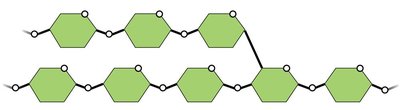
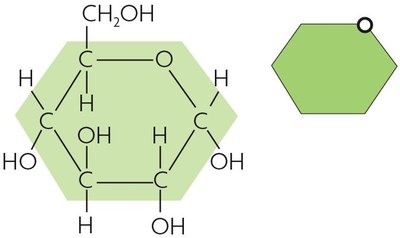
Carbohydrates, such as glucose and starch, are the primary source of energy for most cells. Glucose is a simple sugar, while starch is a polysaccharide composed of many glucose units. During cellular respiration, glucose is broken down to produce ATP.
Glucose: C6H12O6, a monosaccharide
Starch: A polysaccharide made of glucose monomers
Lipids and Proteins: Alternative Energy Sources
Lipids are used for long-term energy storage and yield more ATP per molecule than carbohydrates. Proteins are rarely used for energy unless carbohydrates and lipids are unavailable, as their amino acids are needed for other cellular functions.
Lipids: Triglycerides are the main form; yield high ATP but are metabolized more slowly.
Proteins: Used as a last resort for energy; breakdown produces less ATP and releases nitrogenous waste.
Summary Table: Energy Yield of Biomolecules
Biomolecule | ATP Yield (approximate) |
|---|---|
Glucose (Carbohydrate) | ~36 ATP per molecule |
Triglyceride (Lipid) | ~146 ATP per molecule |
Protein | Varies; least efficient for ATP production |
Key Equations
ATP hydrolysis (energy release):
ATP synthesis (energy storage):
Review Questions
What do the letters of ATP stand for?
What type of biomolecule is ATP?
What do our cells use ATP for?
Where is the energy stored in a molecule of ATP?
What has to happen to the molecule of ATP to release the energy?
