 Back
Chemical Foundations of Life: Atoms, Bonds, and Biomolecules
Study Guide - Smart Notes
 Tailored notes based on your materials, expanded with key definitions, examples, and context.
Chemical Foundations of Life
Introduction to Chemistry in Biology
The study of biology requires an understanding of basic chemistry, as all living organisms are composed of chemical substances. This section introduces the foundational chemical concepts necessary for understanding biological processes.
Atoms, Elements, and Compounds
Definition of Matter
Matter is anything that has mass and occupies space.
All matter is composed of elements and compounds.
Atoms: The Building Blocks of Matter
Atoms are the smallest units of an element that retain the properties of that element.
Each atom consists of a nucleus (containing protons and neutrons) and electrons that orbit the nucleus.
Subatomic particles:
Protons: Positively charged particles in the nucleus.
Neutrons: Neutral particles in the nucleus.
Electrons: Negatively charged particles in orbitals around the nucleus.
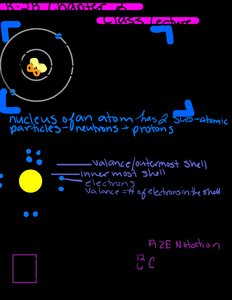
Atomic Structure and Notation
Atomic Number (Z): Number of protons in the nucleus; defines the element.
Mass Number (A): Total number of protons and neutrons.
Isotopes: Atoms of the same element with different numbers of neutrons.
AZE Notation: Used to represent isotopes, e.g., .
Electron Shells and Valence Electrons
Electrons are arranged in shells around the nucleus.
The valence shell is the outermost shell and determines chemical reactivity.
Valence electrons are the electrons in the outermost shell.
Chemical Bonds
Types of Chemical Bonds
Covalent Bonds: Atoms share pairs of electrons. These are strong bonds found in most biological molecules.
Ionic Bonds: Electrons are transferred from one atom to another, resulting in oppositely charged ions that attract each other.
Hydrogen Bonds: Weak attractions between a hydrogen atom in one molecule and an electronegative atom (like oxygen or nitrogen) in another molecule.
Bond Strength
Covalent bonds are the strongest, followed by ionic bonds, and then hydrogen bonds (which are much weaker but important in biological systems).
Electronegativity
Electronegativity is a measure of an atom's ability to attract electrons in a covalent bond. It determines the polarity of molecules.
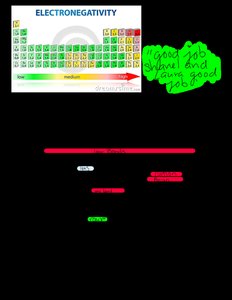
Oxygen and nitrogen are highly electronegative, leading to polar covalent bonds in water and other molecules.
Water and Its Properties
Importance of Water in Biology
Water is essential for life due to its unique chemical and physical properties.
It is a polar molecule, allowing it to form hydrogen bonds.
These properties contribute to water's high specific heat, cohesion, adhesion, and its role as a universal solvent.
Biomolecules: Carbohydrates
Classification of Carbohydrates
Monosaccharides: Simple sugars (e.g., glucose, fructose).
Disaccharides: Two monosaccharides joined by a glycosidic bond (e.g., sucrose).
Polysaccharides: Long chains of monosaccharides (e.g., starch, cellulose).
Aldoses and Ketoses
Aldose: A monosaccharide with an aldehyde group (e.g., glucose).
Ketose: A monosaccharide with a ketone group (e.g., fructose).

Biomolecules: Proteins
Levels of Protein Structure
Primary Structure: Sequence of amino acids in a polypeptide chain.
Secondary Structure: Local folding into alpha-helices and beta-sheets, stabilized by hydrogen bonds.
Tertiary Structure: Overall three-dimensional shape of a single polypeptide chain.
Quaternary Structure: Association of multiple polypeptide chains to form a functional protein.
Summary Table: Types of Chemical Bonds
Bond Type | Description | Relative Strength | Biological Example |
|---|---|---|---|
Covalent | Sharing of electron pairs between atoms | Strongest | Peptide bonds in proteins |
Ionic | Transfer of electrons, attraction between ions | Intermediate | Sodium chloride (NaCl) |
Hydrogen | Attraction between hydrogen and electronegative atom | Weakest | Between water molecules |
Additional info:
Understanding the chemical foundation of life is essential for grasping more advanced biological concepts such as metabolism, genetics, and cellular processes.
Knowledge of atomic structure and bonding is foundational for all molecular biology.
