 Back
Chemical Signals in Animals: Hormones and the Endocrine System
Study Guide - Smart Notes
 Tailored notes based on your materials, expanded with key definitions, examples, and context.
Chemical Signals in Animals
Introduction to Chemical Signals
Animals use chemical and electrical signals to coordinate cellular activities and respond to both internal and external stimuli. The central nervous system (CNS) and the endocrine system release molecules called hormones, which are secreted into the bloodstream and act at low concentrations, resulting in longer-lasting responses compared to action potentials.
Major Categories of Chemical Signals
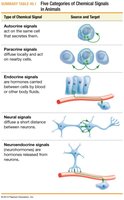
There are five major categories of chemical signals in animals, each with distinct sources and targets:
Autocrine signals: Act on the same cell that secretes them.
Paracrine signals: Diffuse locally and act on nearby cells.
Endocrine signals: Hormones carried between cells by blood or other body fluids.
Neural signals: Diffuse a short distance between neurons.
Neuroendocrine signals: Released from neurons but act as hormones.
Chemical Characteristics of Hormones
Hormone Families
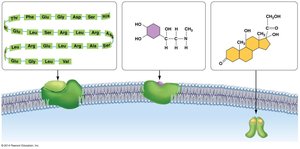
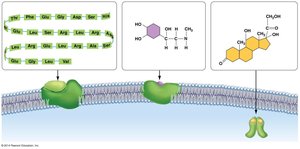
Most animal hormones belong to one of three chemical families:
Polypeptides: Chains of amino acids linked by peptide bonds; lipid-insoluble, bind to receptors on the cell surface.
Amino acid derivatives: Most are lipid-insoluble, but some (e.g., thyroxine) are lipid-soluble.
Steroids: Characterized by a four-ring structure; lipid-soluble, bind to receptors inside target cells.
Hormone Concentration and Effects
Hormones are generally present in low concentrations but have significant effects. For example, growth hormone (GH) stimulates mitosis and growth; removal of the pituitary gland halts animal growth.
Hormone Signaling Pathways
Pathways of Hormone Action
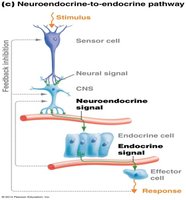
Hormones act via three main pathways:
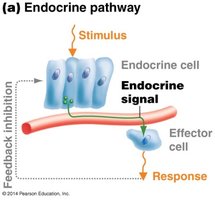
Endocrine pathway: Hormones are sent directly from endocrine cells to effector cells (no CNS involvement).
Neuroendocrine pathway: Neuroendocrine signals act directly on effector cells.
Neuroendocrine-to-endocrine pathway: Neuroendocrine signals stimulate endocrine cells, which then produce an endocrine signal that acts on effector cells.
All pathways are regulated by negative feedback (feedback inhibition).
The Endocrine System
Structure and Function
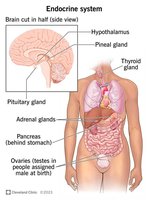
The endocrine system is a collection of cells, tissues, and organs responsible for hormone production and excretion. Organs that secrete hormones into the bloodstream are called endocrine glands. Not all glands are part of the endocrine system; exocrine glands deliver their secretions through ducts into spaces other than the circulatory system.
Organs of the Human Endocrine System
Major endocrine glands include the hypothalamus, pituitary gland, thyroid gland, adrenal glands, pancreas, ovaries, and testes. Each gland produces specific hormones that regulate various physiological processes.
Hormones and Their Functions
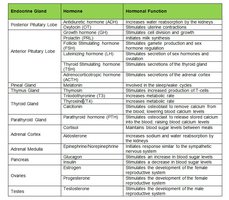
The following table summarizes key hormones and their functions:
Endocrine Gland | Hormone | Hormonal Function |
|---|---|---|
Posterior Pituitary Lobe | Antidiuretic hormone (ADH) | Increases water reabsorption by the kidneys |
Posterior Pituitary Lobe | Oxytocin | Stimulates uterine contractions and milk ejection |
Anterior Pituitary Lobe | Growth hormone (GH) | Stimulates cell growth and division |
Anterior Pituitary Lobe | Follicle-stimulating hormone (FSH) | Stimulates gamete production |
Anterior Pituitary Lobe | Luteinizing hormone (LH) | Stimulates sex steroid hormone production |
Thyroid Gland | Thyroid hormones (T3, T4) | Increase metabolic rate, heart rate, and promote growth |
Parathyroid Gland | Parathyroid hormone (PTH) | Increases blood Ca2+ |
Adrenal Cortex | Cortisol | Regulates stress responses |
Adrenal Medulla | Epinephrine/Norepinephrine | Short-term stress response |
Pancreas | Insulin | Decreases blood glucose |
Pancreas | Glucagon | Increases blood glucose |
Ovaries | Estradiol | Regulates female sex characteristics |
Testes | Testosterone | Regulates male sex characteristics |
What Hormones Do
Coordination of Cellular Activities
Hormones coordinate activities in three main areas: metabolism, growth and development, and homeostasis. A single hormone can exert multiple effects, and different hormones may affect the same physiological aspect. For example, insulin, glucagon, and epinephrine all influence blood glucose levels.
Hormones Direct Growth and Development
Combinations of growth and sex hormones promote cell division, growth, and sexual differentiation. In insects, metamorphosis depends on interactions between juvenile hormone (JH) and ecdysone. High JH levels trigger molting, while low JH levels trigger metamorphosis.

Sexual Development and Activity in Vertebrates
Primary sex determination in vertebrates is controlled by genes on sex chromosomes. Once fetal testes or ovaries develop, they produce hormones that influence reproductive development. In humans, fetal testes produce hormones that induce male reproductive system development and inhibit female system development, while fetal ovaries produce estradiol for female tract development. Puberty is triggered by surges of testosterone or estradiol.
Photoperiodism and Hormone Release
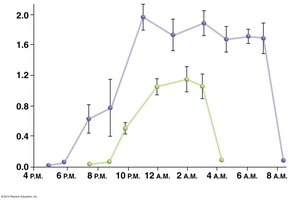
Environmental cues such as day length can trigger the release of reproductive hormones in seasonally breeding animals. Photoreceptors sense light and send signals to the hypothalamus, which initiates sex hormone production. The pineal gland secretes melatonin, and its levels fluctuate with day length.
Hormone Disruptors
Chemicals that disrupt hormone action are called endocrine disruptors. Many are xenoestrogens, which bind to estrogen receptors and cause estrogen-like effects, affecting physiology and behavior. Examples include atrazine and bisphenol A (BPA).
Hormones and Stress Responses
Short-Term Stress Response
The fight-or-flight response is triggered by the sympathetic nervous system, which stimulates the adrenal gland to release epinephrine. Epinephrine triggers various physiological processes to prepare the body for rapid action.
Long-Term Stress Response
Cortisol regulates the long-term response to stress by ensuring continued availability of glucose. It induces liver enzymes to make glucose, makes adipose tissue and muscles resistant to insulin, and promotes the release of fatty acids for energy.
Hormones and Homeostasis
Water and Electrolyte Balance
Hormones such as ADH and aldosterone regulate water and electrolyte balance. ADH increases kidney permeability to water, while aldosterone increases sodium ion reabsorption.
Oxygen Availability
When blood oxygen levels fall, erythropoietin (EPO) is released, stimulating red blood cell production and increasing oxygen-carrying capacity.
Regulation of Hormone Production
Control Mechanisms
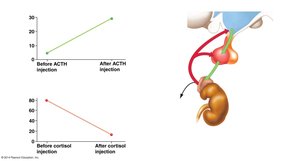
Most hormones are released in response to environmental cues and are regulated by the CNS, usually via the hypothalamus. Regulation occurs through negative feedback mechanisms, such as feedback inhibition by glucocorticoids.

The Hypothalamic–Pituitary Axis
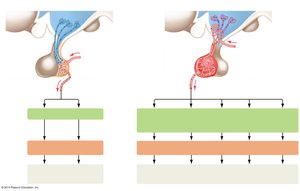
The hypothalamic–pituitary axis forms two distinct systems: the posterior pituitary stores neurohormones, while the anterior pituitary secretes regulatory hormones. These systems coordinate the release of hormones affecting various target tissues.
How Hormones Act on Target Cells
Receptor Specificity
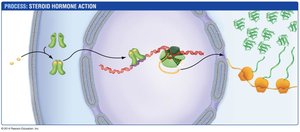
Hormones act only on cells with the appropriate receptor. Lipid solubility determines whether the hormone acts inside the cell (steroids) or at the cell surface (amino acid derivatives and polypeptides).
Model for Steroid Hormone Action
Steroid hormones diffuse into target cells, bind to intracellular receptors, and induce gene transcription, amplifying the signal.
Model for Epinephrine Action
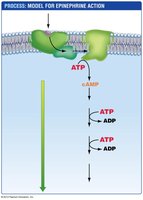
Epinephrine binds to cell surface receptors, activating a G protein and adenylyl cyclase, which catalyzes the formation of cAMP. This initiates a signaling cascade, amplifying the hormonal signal and resulting in glucose production from glycogen.
Diversity of Signal Transduction
The same hormone can trigger different responses in different target cells due to variations in receptors, second messengers, amplification steps, and gene expression.
Additional info: Academic context was added to clarify hormone families, pathways, and regulatory mechanisms, and to ensure completeness for exam preparation.
