 Back
Chemical Signals in Animals: The Endocrine System and Hormonal Regulation
Study Guide - Smart Notes
 Tailored notes based on your materials, expanded with key definitions, examples, and context.
Chemical Signals in Animals
Internal Communication Systems
Animals utilize two primary systems for internal communication: the nervous system and the endocrine system. These systems coordinate physiological responses and maintain homeostasis.
Neural signals: Action potentials transmitted by neurons; fast, specific, and short-lived.
Hormonal signals: Chemical messengers (hormones) transported via blood; slower, broadly targeted, and longer-lasting.
Classes of Chemical Signals
Chemical signals are categorized based on their source and the distance they travel to reach their target cells.
Neurotransmitters: Released by neurons, act on adjacent cells.
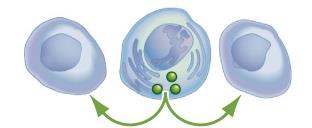
Autocrine signals: Affect the same cell that secretes them.
Paracrine signals: Affect nearby cells.
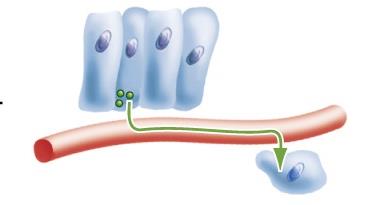
Endocrine signals: Hormones released into the bloodstream, affecting distant cells.
Neuroendocrine signals: Neurohormones released by neurons into the blood, acting on distant cells.

Hormones and Their Receptors
Hormone Action and Receptor Types
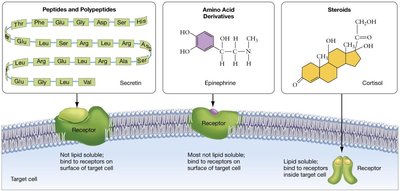
Hormones reach nearly all cells, but only cells with the appropriate receptors respond. The nature of the hormone determines its mechanism of action.
Membrane-bound receptors: Most hormones bind to receptors on the cell surface, activating or deactivating biochemical pathways.
Intracellular receptors: Lipophilic hormones (e.g., steroids) pass through cell membranes and bind to receptors inside the cell, often affecting DNA transcription rates.
Major Vertebrate Endocrine Glands
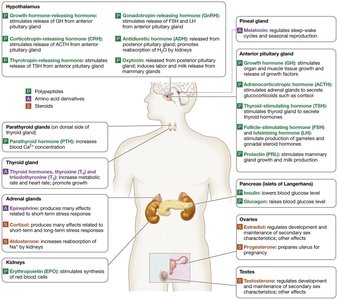
Endocrine glands secrete hormones that regulate various physiological processes. Some organs have both endocrine and exocrine functions.
Hypothalamus: Releases hormones that control the pituitary gland.
Pituitary gland: Master gland controlling other endocrine glands.
Thyroid gland: Regulates metabolism and growth.
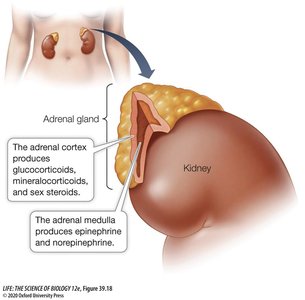
Adrenal glands: Produce stress hormones (epinephrine, cortisol).
Pancreas: Regulates blood glucose; both endocrine and exocrine.
Other tissues: GI tract, fat cells, heart, kidney, liver also secrete hormones.
Endocrine Signaling Pathways
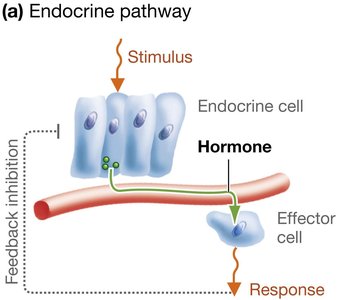
Endocrine Pathway
Endocrine cells respond directly to environmental signals by secreting hormones, which act on effector cells to produce a response. Feedback inhibition regulates hormone levels.
Stimulus: Triggers hormone release.
Effector cell: Responds to hormone.
Feedback inhibition: Response inhibits further hormone release.
Neuroendocrine Pathway
Neurons in the central nervous system (CNS) integrate information and produce neurohormones, which act on effector cells or stimulate endocrine cells to release hormones.
Neuroendocrine-to-endocrine pathway: Neurohormones stimulate endocrine cells, leading to hormone release.
Hypothalamic-Pituitary Axis
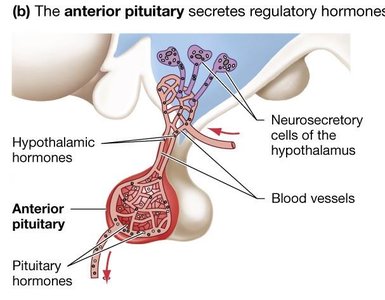
Anterior Pituitary
The anterior pituitary produces hormones that regulate many systems, including reproductive function, metabolism, and growth. It is controlled by neurohormones from the hypothalamus.
Gonadal function: Controlled by pituitary hormones.
Metabolism and growth: Regulated by pituitary hormones.
Posterior Pituitary
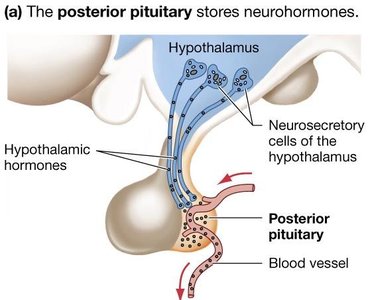
The posterior pituitary is an extension of the hypothalamus and stores neurohormones produced by hypothalamic neurons.
ADH (antidiuretic hormone): Controls water reabsorption in kidneys.
Oxytocin: Promotes uterine contractions during labor and milk release.
Hormonal Responses to Stress and Danger
Acute Stress Response: Fight-or-Flight
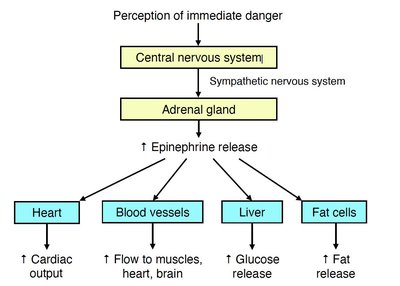
Immediate danger triggers the fight-or-flight response, primarily driven by epinephrine (adrenaline) released from the adrenal medulla.
Effects: Increased cardiac output, blood flow to muscles, glucose release from liver, and fat release.
Long-Term Stress Response
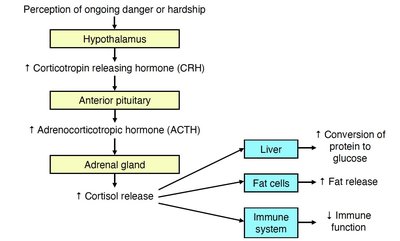
Sustained stress leads to increased cortisol release, which affects metabolism and immune function.
Cortisol: Promotes conversion of protein to glucose, fat release, and suppresses immune function.
Thyroid Hormones and Their Functions
Role of Thyroid Hormones
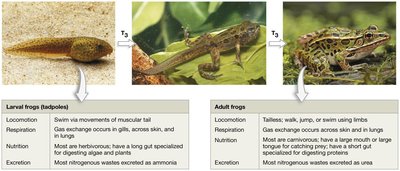
Thyroid hormones regulate metabolic rate, CNS development, protein synthesis, and growth. In amphibians, they trigger metamorphosis.
Metamorphosis: Transformation from larval to adult form in amphibians.
Thyroid Axis Regulation in Mammals
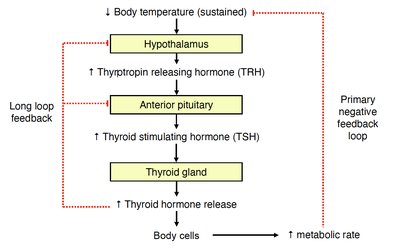
The hypothalamic-pituitary-thyroid axis regulates thyroid hormone levels through negative feedback loops.
TRH (thyrotropin releasing hormone): Released by hypothalamus.
TSH (thyroid stimulating hormone): Released by anterior pituitary.
Thyroid hormones: Released by thyroid gland; regulate metabolic rate.
Feedback inhibition: High thyroid hormone levels inhibit TRH and TSH release.
Hormone Regulation and Pathway Failures
Negative Feedback and Pathway Failures
Hormone levels are typically regulated by negative feedback loops. Pathway failures can result in abnormal hormone levels or responsiveness.
Hypersecretion: Excess hormone production (e.g., hyperthyroidism).
Hyposecretion: Insufficient hormone production (e.g., Type I diabetes).
Hyporesponsiveness: Reduced receptor sensitivity (e.g., early Type II diabetes).
Summary Table: Hormonal Pathway Failures
Failure Type | Description | Example |
|---|---|---|
Hypersecretion | Too much hormone secreted | Hyperthyroidism |
Hyposecretion | Too little hormone secreted | Type I diabetes |
Hyporesponsiveness | Too few hormone receptors | Type II diabetes (early stages) |
Key Equations and Concepts
Negative Feedback Loop (Generalized)
Negative feedback is a fundamental mechanism for hormone regulation:
Equation:
Additional info: This study guide expands on the original notes by providing definitions, examples, and diagrams for each major concept, ensuring completeness and clarity for exam preparation.
