 Back
Chemical Signals in Animals: The Endocrine System and Hormonal Regulation
Study Guide - Smart Notes
 Tailored notes based on your materials, expanded with key definitions, examples, and context.
Chemical Signals in Animals
Introduction to Internal Communication
Animals rely on two primary systems for internal communication: the nervous system and the endocrine system. These systems coordinate physiological processes by transmitting signals throughout the body.
Neural signals (action potentials): Fast, precisely targeted, and short-lived.
Hormonal signals (chemical messengers in blood): Slower, broadly targeted, and longer-lasting.
Classes of Chemical Signals
Chemical signals are classified based on their source and the distance they travel to reach target cells. The main types include:
Neurotransmitters: Released by neurons, act across synapses.
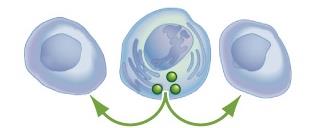
Autocrine signals: Affect the same cell that releases them.
Paracrine signals: Affect nearby cells.
Endocrine signals (hormones): Secreted into the bloodstream, act on distant target cells.
Neuroendocrine signals: Neurohormones released by neurons into the blood, affecting distant cells.
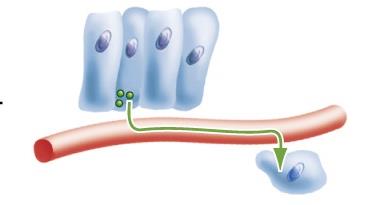

Hormone Classes and Mechanisms of Action
Hormones are categorized by their chemical structure, which determines their solubility and mechanism of action:
Peptides and polypeptides: Not lipid-soluble; bind to receptors on the cell surface (e.g., secretin).
Amino acid derivatives: Most are not lipid-soluble; bind to cell surface receptors (e.g., epinephrine).
Steroids: Lipid-soluble; pass through cell membranes and bind to intracellular receptors (e.g., cortisol).
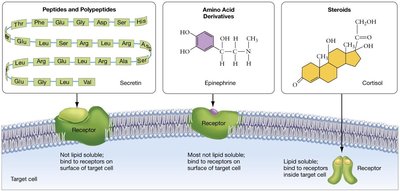
Hormones only affect cells with the appropriate receptors.
Binding to receptors can activate or deactivate biochemical pathways or alter gene expression by changing DNA transcription rates.
Major Vertebrate Endocrine Glands and Tissues
Overview of Endocrine Glands
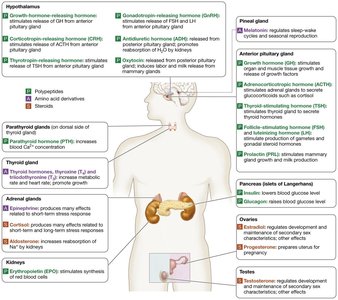
The vertebrate endocrine system consists of specialized glands and tissues that secrete hormones.
Major glands: Hypothalamus, pituitary, thyroid, parathyroid, adrenal glands, pancreas, ovaries, testes, pineal gland.
Other endocrine tissues: Gastrointestinal tract, fat cells, heart, kidney, liver.
Some glands are exocrine (release fluids to the outside, e.g., sweat glands), while others are both endocrine and exocrine (e.g., pancreas).
Endocrine Signaling Pathways
Endocrine Pathway
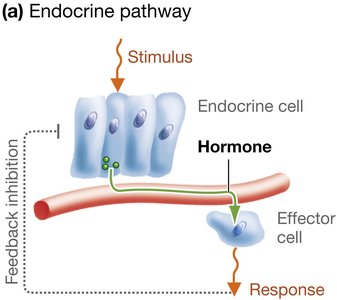
In the endocrine pathway, endocrine cells respond directly to environmental stimuli by secreting hormones into the bloodstream, which then act on effector cells to produce a response.
Feedback inhibition (negative feedback) regulates hormone levels.
Neuroendocrine and Neuroendocrine-to-Endocrine Pathways
Neuroendocrine pathway: Neurons in the CNS integrate information and release neurohormones into the blood, which act on effector cells.
Neuroendocrine-to-endocrine pathway: Neurohormones stimulate endocrine cells to release additional hormones, amplifying the response.
Hypothalamic-Pituitary Axis
The hypothalamic-pituitary axis is a central regulatory system in vertebrates.
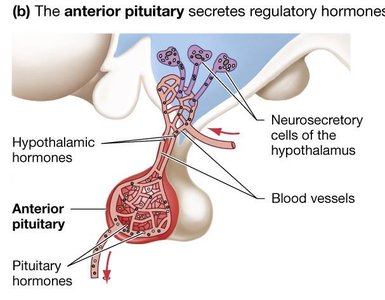
Anterior pituitary: Produces hormones that regulate other endocrine glands and physiological processes (e.g., growth, metabolism, reproduction). Controlled by hypothalamic neurohormones.
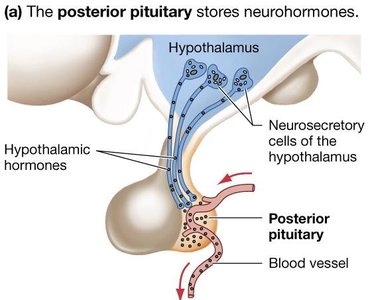
Posterior pituitary: Stores and releases neurohormones produced by the hypothalamus (e.g., ADH for water balance, oxytocin for labor and milk release).
Hormonal Responses to Stress and Danger
Acute Stress: Fight-or-Flight Response
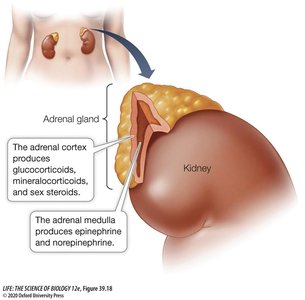
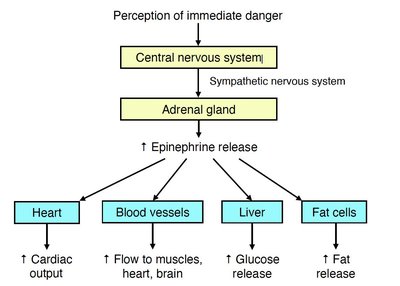
The fight-or-flight response is an immediate reaction to danger, primarily mediated by the hormone epinephrine (adrenaline) released from the adrenal medulla.
Increases heart rate, blood flow to muscles, glucose release from the liver, and fat release from adipose tissue.
Chronic Stress: Sustained Stress Response
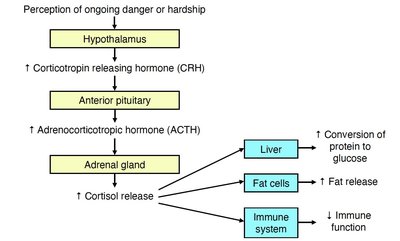
Prolonged stress triggers the release of cortisol from the adrenal cortex, regulated by the hypothalamic-pituitary-adrenal (HPA) axis.
Cortisol increases glucose production, fat release, and modulates immune function.
Thyroid Hormones and Their Regulation
Functions of Thyroid Hormones
Thyroid hormones regulate metabolic rate, central nervous system development, protein synthesis, and growth. In amphibians, they trigger metamorphosis from larval to adult forms. 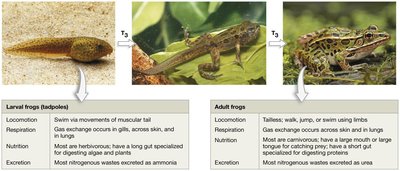
Thyroid Axis in Mammals
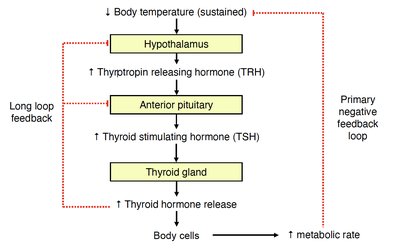
The hypothalamic-pituitary-thyroid axis controls thyroid hormone levels through a series of negative feedback loops.
Low body temperature stimulates the hypothalamus to release TRH (thyrotropin-releasing hormone).
TRH stimulates the anterior pituitary to release TSH (thyroid-stimulating hormone).
TSH stimulates the thyroid gland to release thyroid hormones, increasing metabolic rate.
Elevated thyroid hormone levels inhibit TRH and TSH release (feedback inhibition).
Hormone Regulation and Pathologies
Negative Feedback and Feedback Inhibition
Most hormone levels are regulated by negative feedback loops, where the effect of a hormone reduces its further secretion. In the hypothalamic-pituitary axis, long-loop feedback occurs when downstream hormones inhibit upstream hormone release.
Hormonal Pathway Failures
Hypersecretion: Excess hormone production (e.g., hyperthyroidism: overheating, weight loss, restlessness).
Hyposecretion: Insufficient hormone production (e.g., Type I diabetes: inability to metabolize and store glucose).
Hyporesponsiveness: Reduced cellular response due to fewer receptors (e.g., early Type II diabetes: milder symptoms).
Summary Table: Types of Chemical Signals
Type | Source | Target | Distance |
|---|---|---|---|
Neurotransmitter | Neuron | Adjacent cell (synapse) | Short |
Autocrine | Cell | Same cell | Very short |
Paracrine | Cell | Nearby cells | Short |
Endocrine | Endocrine cell | Distant cells via blood | Long |
Neuroendocrine | Neuron | Distant cells via blood | Long |
Key Terms
Hormone: A chemical messenger secreted into the bloodstream that regulates physiological processes.
Endocrine gland: A gland that secretes hormones directly into the blood.
Negative feedback: A regulatory mechanism in which a change in a variable triggers a response that counteracts the initial change.
Hypothalamic-pituitary axis: The interaction between the hypothalamus and pituitary gland, central to endocrine regulation.
