 Back
Chemistry Comes to Life: The Chemical Basis of Life
Study Guide - Smart Notes
 Tailored notes based on your materials, expanded with key definitions, examples, and context.
Chapter 2: Chemistry Comes to Life
The Nature of Atoms
All matter is composed of atoms, which are the fundamental units that cannot be broken down by ordinary chemical means. Understanding atomic structure is essential for grasping the chemical basis of life.
Atoms: The smallest units of matter, consisting of a nucleus (protons and neutrons) and a surrounding cloud of electrons.
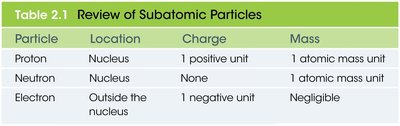
Subatomic particles:
Particle | Location | Charge | Mass |
|---|---|---|---|
Proton | Nucleus | 1 positive unit | 1 atomic mass unit |
Neutron | Nucleus | None | 1 atomic mass unit |
Electron | Outside the nucleus | 1 negative unit | Negligible |
Element: A pure substance made of only one kind of atom (e.g., gold, iron, oxygen).
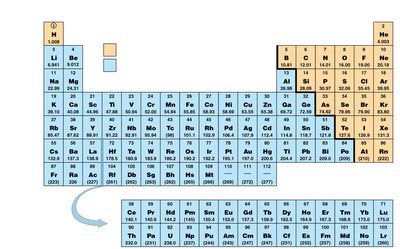
Atomic number: Number of protons in the nucleus; determines the element.
Atomic mass: Number of protons plus neutrons.
Isotopes: Atoms of the same element with different numbers of neutrons. Some are stable, others are radioactive (radioisotopes).
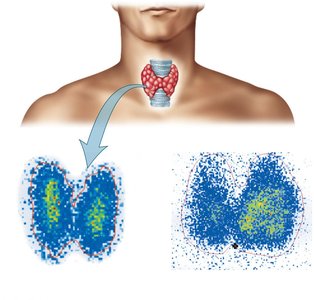
Radioisotopes: Unstable isotopes that emit radiation; used in medicine for imaging and treatment (e.g., radioactive iodine for thyroid scans).
Chemical Bonds and Compounds
Atoms combine to form compounds through chemical bonds, which determine the properties of molecules essential for life.
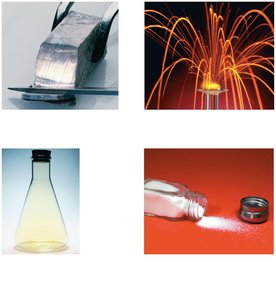
Compound: Substance formed when two or more elements combine in fixed proportions (e.g., NaCl, H2O).
Covalent bonds: Atoms share electrons; form molecules. Can be single, double, or triple bonds depending on the number of shared electron pairs.
Ionic bonds: Formed by the transfer of electrons from one atom to another, resulting in oppositely charged ions that attract each other. Weaker than covalent bonds.
Ions: Atoms or groups of atoms with a net electrical charge due to loss or gain of electrons.
The Role of Water in Life
Water is the most abundant molecule in living organisms and is essential for life due to its unique chemical properties.
Polar covalent bonds: In water, electrons are shared unequally, making the molecule polar (partial charges on different ends).
Hydrogen bonds: Weak attractions between the slightly positive hydrogen of one water molecule and the slightly negative oxygen of another. Responsible for many of water's unique properties.
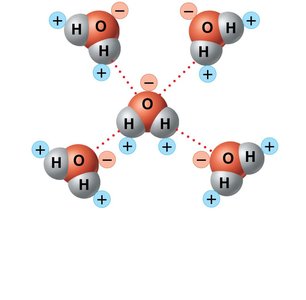
Unique properties of water:
High heat capacity (absorbs and retains heat)
High heat of vaporization (requires much energy to change from liquid to gas)
Excellent solvent (dissolves many substances)
Participates in chemical reactions
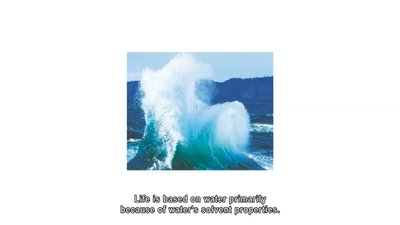
Acids: Release hydrogen ions (H+) in water.
Bases: Release hydroxide ions (OH−) in water.
pH scale: Measures hydrogen ion concentration; ranges from 0 (most acidic) to 14 (most basic). pH 7 is neutral.
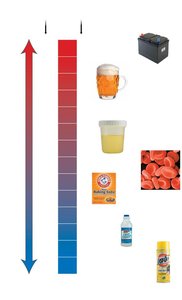
Buffers: Substances that minimize changes in pH by removing or donating H+ as needed; crucial for maintaining homeostasis in biological systems.
Major Molecules of Life
Living organisms are composed of four major classes of biological macromolecules: carbohydrates, lipids, proteins, and nucleic acids.
Formation and Breakdown of Polymers
Polymers: Large molecules made of repeating units called monomers.
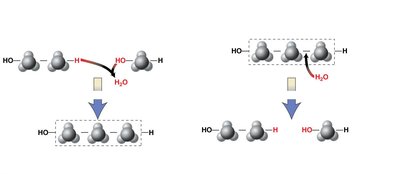
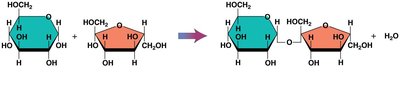
Dehydration synthesis: Joins monomers by removing water to form polymers.
Hydrolysis: Breaks polymers into monomers by adding water.
Carbohydrates
Monosaccharides: Simple sugars (e.g., glucose, fructose).
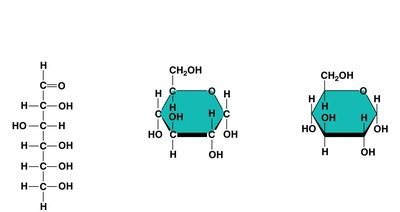
Oligosaccharides: Short chains of monosaccharides; disaccharides (e.g., sucrose, maltose) are common examples.
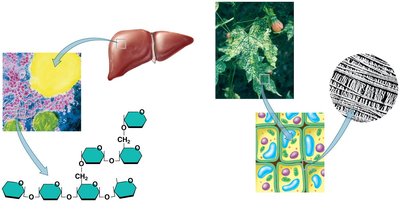
Polysaccharides: Long chains of monosaccharides; used for energy storage (glycogen in animals, starch in plants) and structural support (cellulose in plants).
Lipids
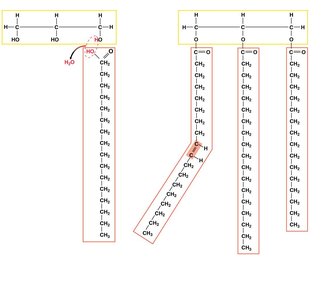
Triglycerides: Composed of glycerol and three fatty acids; used for long-term energy storage. Can be saturated (no double bonds) or unsaturated (one or more double bonds).
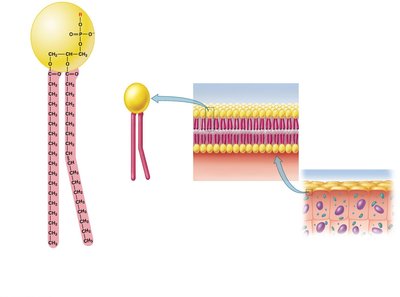
Phospholipids: Glycerol, two fatty acids, and a phosphate group; form the main structure of cell membranes with hydrophilic heads and hydrophobic tails.
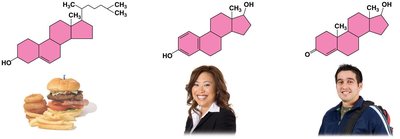
Steroids: Lipids with four fused carbon rings; include cholesterol (component of cell membranes), estrogen, and testosterone (hormones).
Proteins
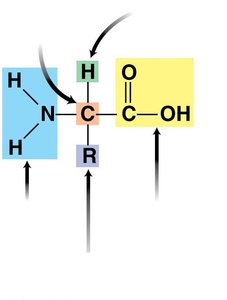
Amino acids: Building blocks of proteins; each has a central carbon, hydrogen, amino group, carboxyl group, and a unique side chain (R group).
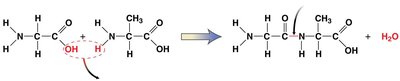
Peptide bonds: Link amino acids via dehydration synthesis to form peptides and polypeptides.
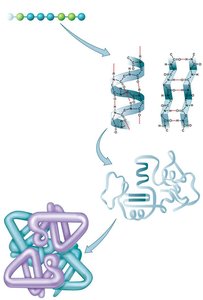
Protein structure:
Primary: Sequence of amino acids
Secondary: Alpha helices and beta sheets (hydrogen bonding)
Tertiary: 3D folding due to side chain interactions
Quaternary: Multiple polypeptide chains
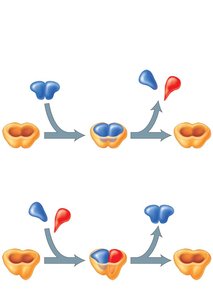
Enzymes: Proteins that act as catalysts, speeding up chemical reactions without being consumed. Highly specific due to their active site structure.
Denaturation: Loss of protein structure (and function) due to changes in temperature or pH.
Nucleic Acids
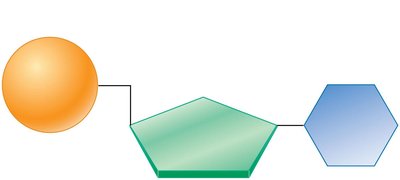
Nucleotides: Monomers of nucleic acids; each consists of a five-carbon sugar, a phosphate group, and a nitrogenous base.
DNA (Deoxyribonucleic acid): Double-stranded, stores genetic information.
RNA (Ribonucleic acid): Single-stranded, involved in protein synthesis.
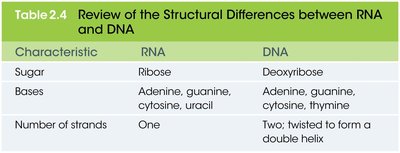
Characteristic | RNA | DNA |
|---|---|---|
Sugar | Ribose | Deoxyribose |
Bases | A, G, C, U | A, G, C, T |
Number of strands | One | Two (double helix) |
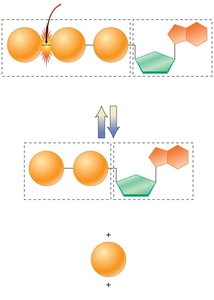
ATP (Adenosine triphosphate): A nucleotide that stores and transfers energy within cells. Energy is released when a phosphate bond is broken, forming ADP (adenosine diphosphate).
Summary Table: Key Biological Molecules
Molecule | Monomer | Function | Example |
|---|---|---|---|
Carbohydrate | Monosaccharide | Energy, structure | Glucose, cellulose |
Lipid | Fatty acid, glycerol | Energy storage, membranes, hormones | Triglyceride, cholesterol |
Protein | Amino acid | Structure, enzymes, transport | Hemoglobin, enzymes |
Nucleic acid | Nucleotide | Genetic information, energy transfer | DNA, RNA, ATP |
