 Back
Chemistry Foundations for General Biology: Atoms, Elements, and Chemical Bonds
Study Guide - Smart Notes
 Tailored notes based on your materials, expanded with key definitions, examples, and context.
Chemistry
Atoms: The Smallest Unit of Matter
All matter, which includes everything that takes up space and has mass (such as organisms, rocks, and oceans), is composed of atoms. Atoms are the fundamental building blocks of chemical elements and, by extension, all matter.
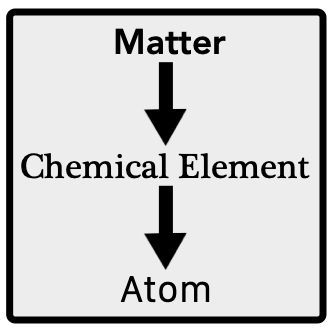
Matter: Anything that occupies space and has mass.
Chemical Element: A pure substance made of only one type of atom.
Atom: The smallest unit of an element that retains its chemical properties.
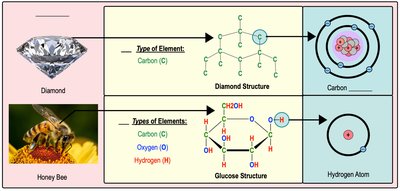
Example: Both living (e.g., honey bee) and non-living (e.g., diamond) things are made of atoms. Diamonds are composed of carbon atoms, while honey bees are made of molecules containing carbon, hydrogen, and oxygen.
Atomic Structure
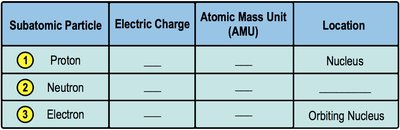
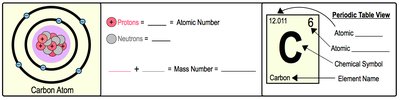
Atoms are composed of three main subatomic particles: protons, neutrons, and electrons. Each has a characteristic charge, mass, and location within the atom.
Subatomic Particle | Electric Charge | Atomic Mass Unit (AMU) | Location |
|---|---|---|---|
Proton | +1 | 1 | Nucleus |
Neutron | 0 | 1 | Nucleus |
Electron | -1 | ~0 | Orbiting Nucleus |
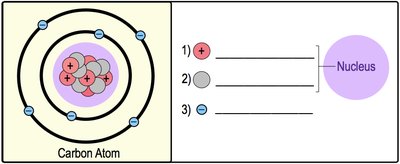
Example: In a carbon atom, protons and neutrons are found in the nucleus, while electrons orbit the nucleus in energy shells.
Elements of Life and the Periodic Table
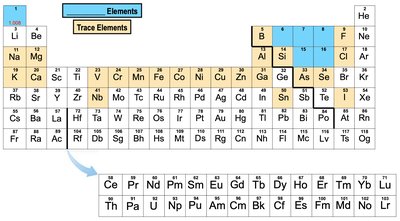
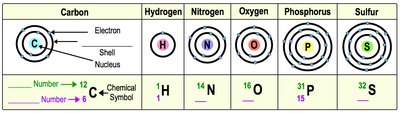
Of all known elements, only a small subset is found in living organisms. The periodic table arranges all known elements based on their chemical properties. Approximately 97% of the mass of most living organisms is composed of six elements: Carbon, Hydrogen, Nitrogen, Oxygen, Phosphorus, and Sulfur (CHNOPS).
Trace Elements: Elements required for life in very small amounts.
Atomic Properties
Each atom of an element has unique properties:
Atomic Number: The number of protons in the nucleus (defines the element).
Mass Number: The sum of protons and neutrons in the nucleus.
Atomic Mass: The average total mass of all atoms of an element, accounting for isotopes.
Electron Orbitals and Energy Shells
Electrons occupy orbitals, which are three-dimensional regions around the nucleus. These are organized into energy shells:
Shells closer to the nucleus are lower in energy; distant shells are higher in energy.
Valence Electrons: Electrons in the outermost energy shell (valence shell).
The first shell holds up to 2 electrons; the second shell holds up to 8 electrons.
The Octet Rule
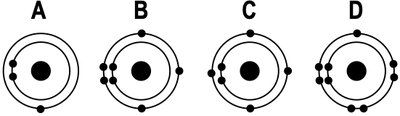
The octet rule states that atoms are more stable (less reactive) when their valence shells are fully occupied, typically with 8 electrons (except for the first shell, which is full with 2 electrons). Atoms with incomplete valence shells are more reactive.
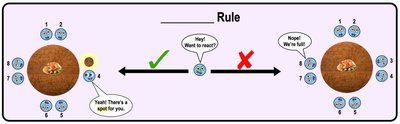
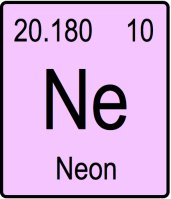
Example: Neon (Ne) is unreactive because its valence shell is full with 8 electrons.
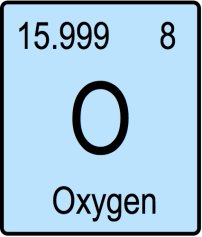
Example: Oxygen (O) needs 2 more electrons to fill its valence shell and satisfy the octet rule.
Isotopes
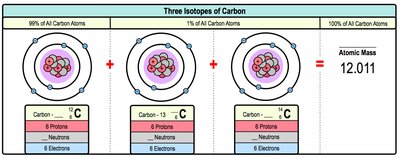
Isotopes are atoms of the same element that differ in the number of neutrons. All isotopes of an element have the same atomic number (protons) but different mass numbers (protons + neutrons). The atomic mass is the average mass of all isotopes.
Radioactive Isotopes
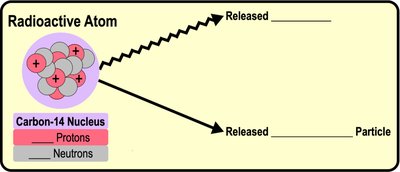
Radioactive isotopes are unstable and break down, emitting energy as rays or particles. The half-life is the time it takes for half of the radioactive atoms in a sample to decay. Radioactive isotopes are used in medicine (e.g., imaging) and in radiometric dating of fossils.

Introduction to Chemical Bonding
Chemical bonds are attractive forces that hold atoms together to form molecules and compounds.
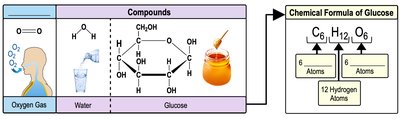
Molecule: A substance containing two or more chemically bound atoms (e.g., O2).
Compound: A molecule composed of two or more different elements (e.g., H2O).
Chemical Formula: Indicates the type and number of atoms in a molecule (e.g., C6H12O6).
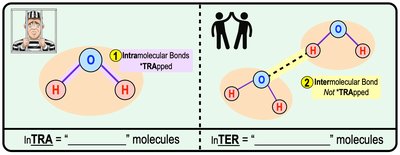
Intramolecular vs. Intermolecular Bonds
Bonds can be classified as intramolecular (within a molecule) or intermolecular (between molecules):
Intramolecular Bonds: Hold atoms together within a molecule.
Intermolecular Bonds: Occur between atoms of different molecules.
Types of Chemical Bonds
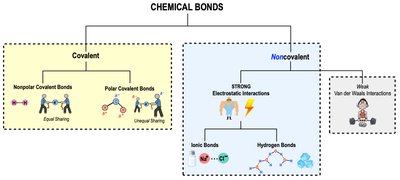
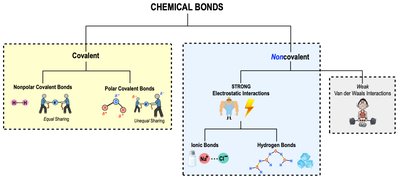
Chemical bonds are broadly classified into covalent and noncovalent bonds. Covalent bonds involve the sharing of electrons, while noncovalent bonds involve attractions due to charges.
Covalent Bonds
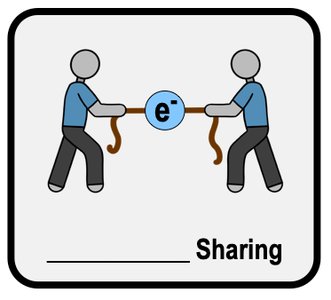
Covalent bonds are formed when two atoms share electrons. There are two main types:
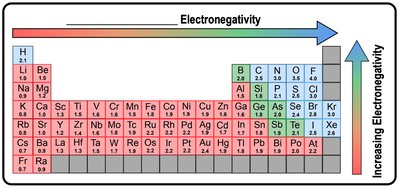
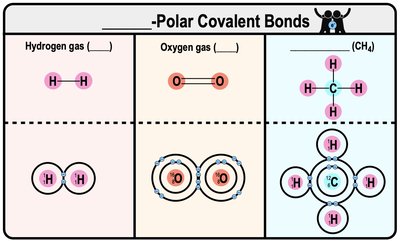
Nonpolar Covalent Bonds: Equal sharing of electrons between atoms with similar electronegativities.
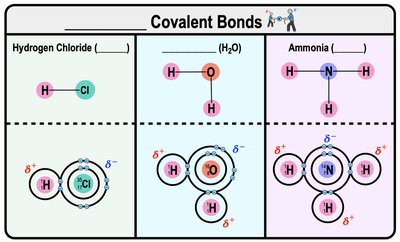
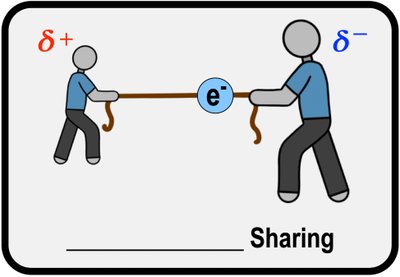
Polar Covalent Bonds: Unequal sharing of electrons due to differences in electronegativity, resulting in partial charges (δ+ and δ-).
Noncovalent Bonds
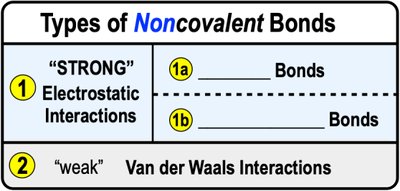
Noncovalent bonds are interactions between atoms resulting from full or partial charges, without sharing electrons. Types include:
Ionic Bonds: Electrical attractions between oppositely charged ions (cations and anions).
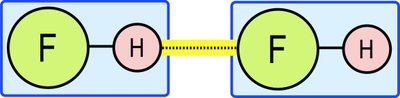
Hydrogen Bonds: Weak interactions between a highly electronegative atom (F, O, or N) and a hydrogen atom.
Van der Waals Interactions: Weak attractions due to transient partial charges.
Ions: Anions vs. Cations
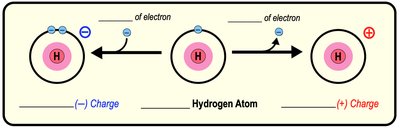
Ions are atoms or molecules with a net electrical charge due to the gain or loss of electrons:
Anion: Negatively charged ion (gains electrons).
Cation: Positively charged ion (loses electrons).
Ionic Bonding
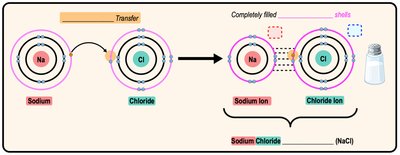
Ionic bonds are formed by the transfer of electrons from one atom to another, resulting in the attraction between oppositely charged ions. This transfer fills the valence shells of both atoms, making them more stable.
Hydrogen Bonding
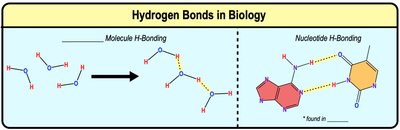
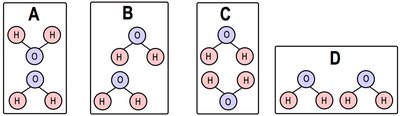
Hydrogen bonds are weak interactions between a hydrogen atom covalently bonded to a highly electronegative atom (F, O, or N) and another electronegative atom. While individually weak, hydrogen bonds are collectively strong and play crucial roles in the properties of water and the structure of biological macromolecules.
Additional info: These foundational chemistry concepts are essential for understanding biological molecules, cellular structure, and metabolic processes in living organisms.
