Back
Chemistry Foundations for General Biology: Atoms, Elements, and Chemical Bonds
Study Guide - Smart Notes
 Tailored notes based on your materials, expanded with key definitions, examples, and context.
Chemistry
Atoms: The Smallest Unit of Matter
All matter, which includes everything that takes up space and has mass (such as organisms, rocks, and oceans), is composed of chemical elements. Each chemical element is a pure substance made of only one type of atom, and an atom is the smallest unit of an element and thus the smallest unit of matter. Atoms make up both living and non-living matter.
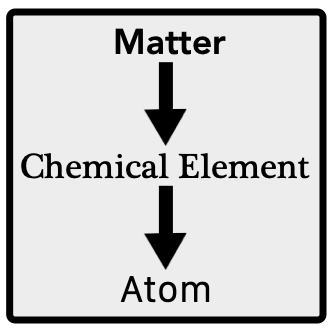
Matter: Anything that occupies space and has mass.
Chemical Element: A pure substance consisting of one type of atom.
Atom: The smallest unit of an element, retaining its chemical properties.
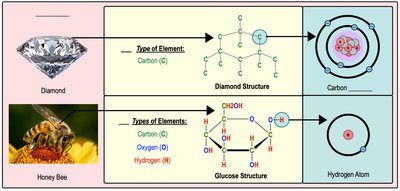
Example: Both a diamond (pure carbon) and a honey bee (composed of many elements) are made of atoms.
Atomic Structure
Atoms are composed of three main subatomic particles: protons, neutrons, and electrons. Each has a characteristic charge, mass, and location within the atom.
Subatomic Particle | Electric Charge | Atomic Mass Unit (AMU) | Location |
|---|---|---|---|
Proton | +1 | 1 | Nucleus |
Neutron | 0 | 1 | Nucleus |
Electron | -1 | ~0 | Orbiting Nucleus |
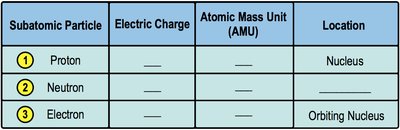
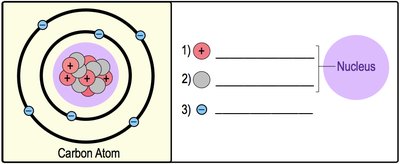
Proton: Positively charged, mass of 1 AMU, found in the nucleus.
Neutron: No charge, mass of 1 AMU, found in the nucleus.
Electron: Negatively charged, negligible mass, orbits the nucleus.
Elements of Life
Of all known elements, only a small subset is found in living organisms. The periodic table arranges all known elements based on their chemical properties. Approximately 97% of the mass of most living organisms is composed of six elements: Carbon, Hydrogen, Nitrogen, Oxygen, Phosphorus, and Sulfur (CHNOPS). Trace elements are required in minute amounts for life.
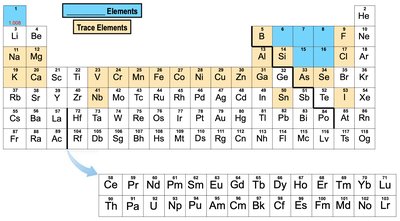
Major elements in life: C, H, N, O, P, S
Trace elements: Required in small amounts (e.g., Fe, Zn, I)
Atomic Properties
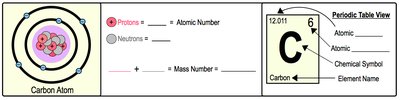
Each atom of an element has unique properties, including atomic number, mass number, and atomic mass.
Atomic Number: Number of protons in the nucleus; defines the element.
Mass Number: Total number of protons and neutrons in the nucleus.
Atomic Mass: The average mass of all isotopes of an element.
Electron Orbitals and Energy Shells
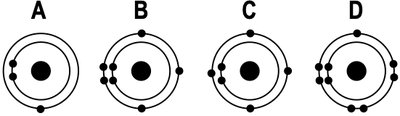
Electrons occupy orbitals, which are three-dimensional regions around the nucleus. These are organized into energy shells. Shells closer to the nucleus are lower in energy, while those farther away are higher in energy. The outermost shell is called the valence shell, and electrons in this shell are called valence electrons. The first shell holds up to 2 electrons, the second up to 8, and so on.
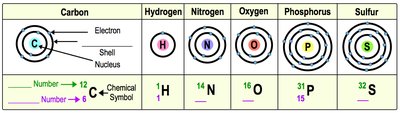
Valence Electrons: Electrons in the outermost shell, important for chemical bonding.
The Octet Rule
The octet rule states that atoms are more stable (less reactive) when their valence shells are fully occupied, typically with 8 electrons (except for the first shell, which is full with 2 electrons). Atoms with incomplete valence shells are more reactive.
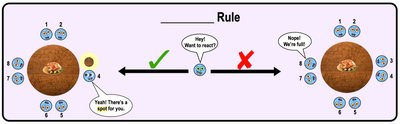
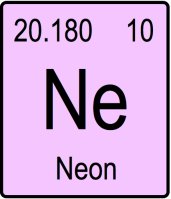
Example: Neon (Ne) is unreactive because its valence shell is full.
Isotopes
Isotopes are atoms of the same element that differ in the number of neutrons. All isotopes of an element have the same atomic number (protons) but different mass numbers (protons + neutrons). The atomic mass is the average mass of all isotopes.
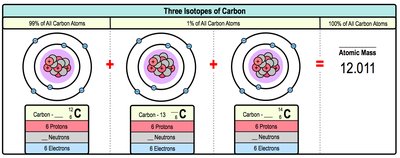
Example: Carbon-12, Carbon-13, and Carbon-14 are isotopes of carbon.
Radioactive Isotopes
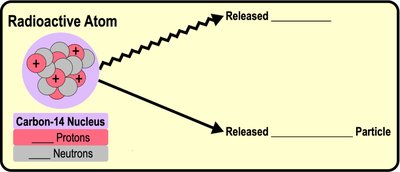
Radioactive isotopes are unstable and break down, emitting energy as rays or particles. The half-life is the time it takes for half of the radioactive atoms in a sample to decay. Radioactive isotopes are used in medicine and for radiometric dating of fossils.

Introduction to Chemical Bonding
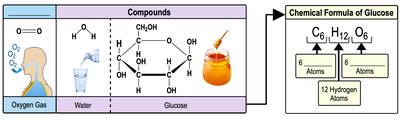
Chemical bonds are attractive forces that hold atoms together to form molecules and compounds. A molecule is a substance containing two or more chemically bound atoms (e.g., O2), while a compound is a molecule composed of two or more different elements (e.g., H2O). The chemical formula shows the type and number of atoms in a molecule (e.g., C6H12O6).
Intramolecular vs. Intermolecular Bonds
Bonds can be classified as intramolecular (within a molecule) or intermolecular (between molecules).
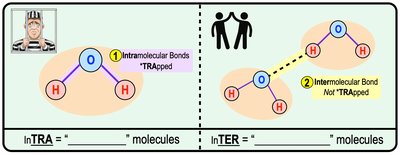
Intramolecular Bonds: Hold atoms together within a molecule (e.g., covalent bonds in H2O).
Intermolecular Bonds: Occur between different molecules (e.g., hydrogen bonds between water molecules).
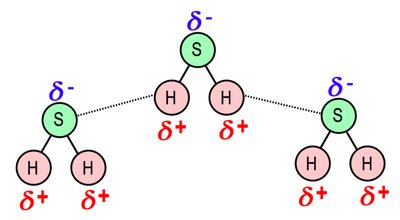
Types of Chemical Bonds
Chemical bonds are broadly classified into covalent and noncovalent bonds. Covalent bonds involve the sharing of electrons, while noncovalent bonds involve attractions due to charges.
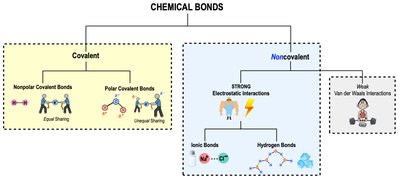
Covalent Bonds
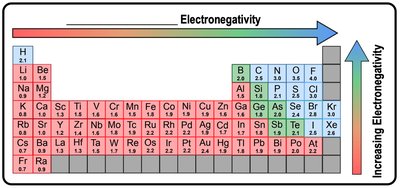
Covalent bonds are formed when two atoms share electrons. There are two main types: nonpolar covalent and polar covalent bonds, which differ based on the atoms' electronegativities.
Electronegativity: A measure of an atom's attraction for electrons (scale: 0–4).
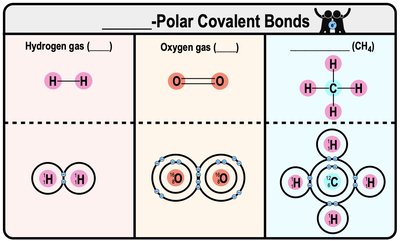
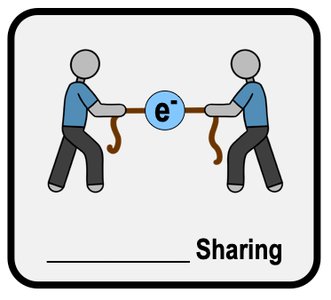
Nonpolar Covalent Bonds
Nonpolar covalent bonds involve equal sharing of electrons between atoms with similar electronegativities. Examples include H2, O2, and CH4.
Polar Covalent Bonds
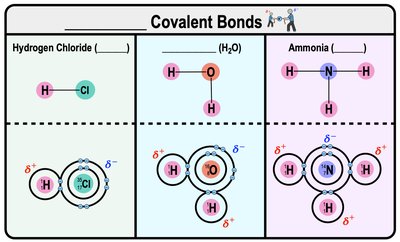
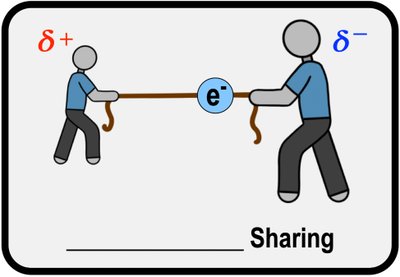
Polar covalent bonds involve unequal sharing of electrons due to differences in electronegativity. This results in partial positive (δ+) and partial negative (δ−) charges on the atoms. Examples include H2O, NH3, and HCl.
Noncovalent Bonds
Noncovalent bonds are interactions between atoms resulting from full or partial charges, without sharing electrons. Types include ionic bonds, hydrogen bonds, and van der Waals interactions.
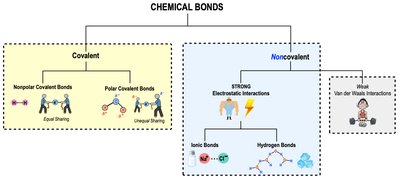
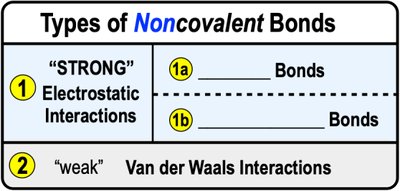
Ionic Bonds: Electrical attractions between oppositely charged ions.
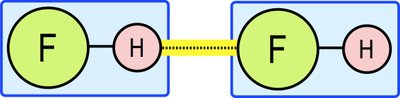
Hydrogen Bonds: Weak attractions between a hydrogen atom and an electronegative atom (F, O, N).
Van der Waals Interactions: Weak, transient attractions between molecules.
Ionic Bonding: Ions, Anions, and Cations
Ions are atoms or molecules with a net electrical charge, formed by gaining or losing electrons. Anions are negatively charged (gain electrons), while cations are positively charged (lose electrons).
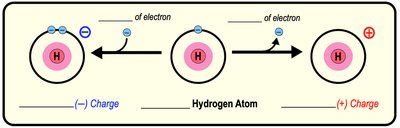
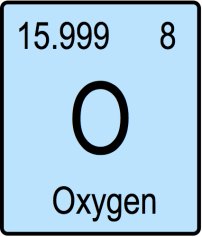
Example: If oxygen gains an electron, it becomes a negatively charged anion.
Ionic Bonds
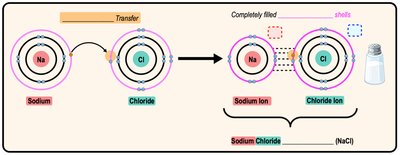
Ionic bonds are electrical attractions between oppositely charged ions. The transfer of electrons fills the valence shells of both atoms, creating charged ions. Example: Sodium chloride (NaCl) forms when sodium donates an electron to chlorine.
Hydrogen Bonding
Hydrogen bonds are interactions between a highly electronegative atom (F, O, or N) and a hydrogen atom. Individually, these bonds are weak, but collectively, they are significant in biology, influencing the properties of water and the structure of macromolecules such as DNA and proteins.
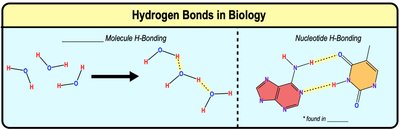
Example: Water molecules interact via hydrogen bonds, which are crucial for water's unique properties.