 Back
Lecture 3 Slides: Chemistry of Life: Biological Molecules and Their Properties
Study Guide - Smart Notes
 Tailored notes based on your materials, expanded with key definitions, examples, and context.
Chemistry of Life
Introduction
The chemistry of life is foundational to understanding biological processes. The structure and function of cells depend on the chemical properties of molecules, which influence their transport, reactivity, and roles in living systems. This guide covers the major classes of biological molecules, their chemical properties, and their significance in cellular processes.
Transport of Molecules in Cells
Diffusion and Osmosis
Cells rely on the movement of molecules to maintain homeostasis and perform essential functions. Two key processes are:
Diffusion: The passive movement of molecules from an area of higher concentration to an area of lower concentration.
Osmosis: The diffusion of water across a selectively permeable membrane.
These processes are driven by the chemical properties of molecules, such as polarity and size, which determine how they cross cell membranes.
Atomic Structure and Chemical Bonding
Major Elements in Organic Molecules
Organic molecules are primarily composed of carbon (C), hydrogen (H), oxygen (O), and nitrogen (N). The number of valence electrons in these atoms determines their bonding capacity and the types of molecules they can form.
Valence electrons: Electrons in the outermost shell that participate in chemical bonding.
Bonding capacity: The number of bonds an atom can form, determined by the number of unpaired valence electrons.
Element | Valence Electrons | Typical Bonds Formed |
|---|---|---|
Hydrogen (H) | 1 | 1 |
Oxygen (O) | 6 | 2 |
Nitrogen (N) | 5 | 3 |
Carbon (C) | 4 | 4 |




Why Carbon is the Backbone of Organic Molecules
Carbon's ability to form four covalent bonds allows it to create complex structures such as chains, branches, and rings. In contrast, oxygen can only form two bonds, limiting its structural versatility. This property makes carbon ideal as the backbone of organic molecules.
Example: Carbon skeletons can form the framework for carbohydrates, proteins, nucleic acids, and lipids.
Functional Groups and Molecular Properties
Functional Groups
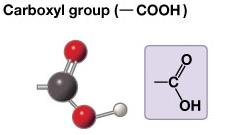
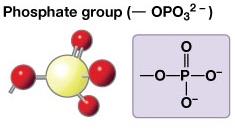
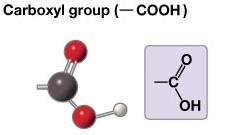
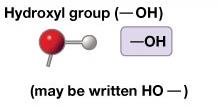
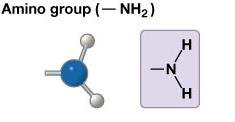
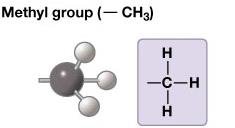
Functional groups are specific groups of atoms attached to carbon skeletons that determine the chemical reactivity and properties of organic molecules. Common functional groups include:
Hydroxyl (–OH)
Carboxyl (–COOH)
Amino (–NH2)
Phosphate (–OPO32–)
Methyl (–CH3)
Major Classes of Biological Molecules
Overview
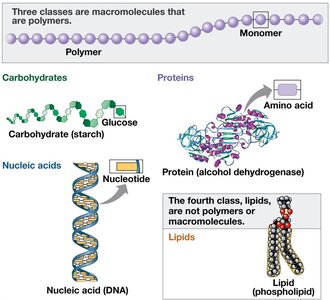
Biological macromolecules are classified into four main categories:
Carbohydrates
Proteins
Nucleic acids
Lipids
Carbohydrates, proteins, and nucleic acids are polymers made from monomers, while lipids are not true polymers.
Carbohydrates
Carbohydrates are sugars and their polymers. They serve as fuel and structural materials in cells.
Monosaccharides: Simple sugars like glucose.
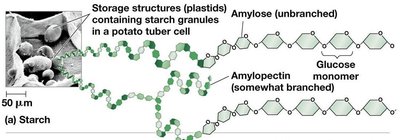
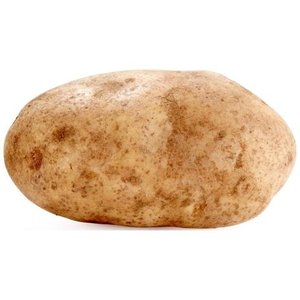
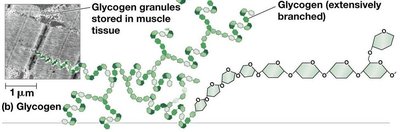
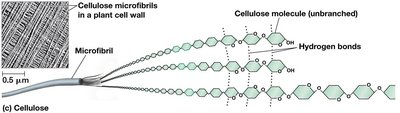
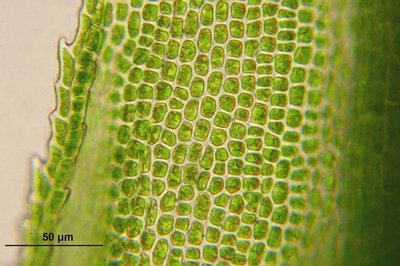
Polysaccharides: Long chains of monosaccharides, such as starch (storage in plants), glycogen (storage in animals), and cellulose (structural in plants).
Proteins
Proteins are polymers of amino acids. Their sequence determines their structure and function. Each amino acid contains an amino group and a carboxyl group.
Polypeptide: A chain of amino acids linked by peptide bonds.
Protein: One or more polypeptides folded into a functional shape.
Nucleic Acids
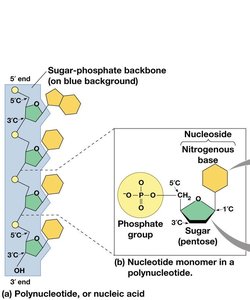
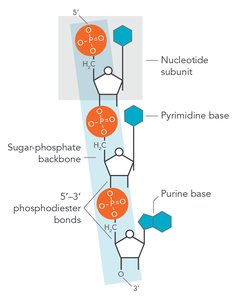
Nucleic acids (DNA and RNA) are polymers of nucleotides. Each nucleotide consists of a sugar, a phosphate group, and a nitrogenous base (A, T, C, G, or U).
Phosphodiester bonds: Link nucleotides together to form the sugar-phosphate backbone.
Lipids
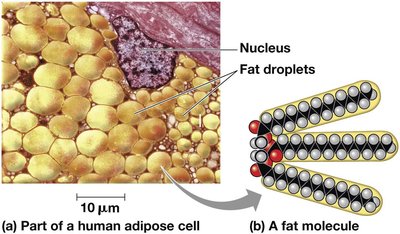
Lipids are hydrophobic molecules that include fats, phospholipids, and steroids. They are not true polymers because they are not made from repeating monomer units.
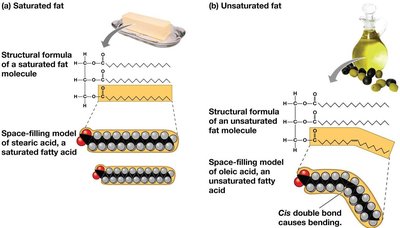
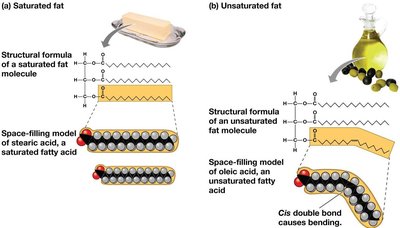
Fats: Composed of glycerol and fatty acids. Saturated fats have no double bonds; unsaturated fats have one or more double bonds, causing kinks in the structure.
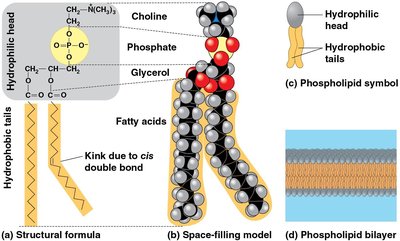
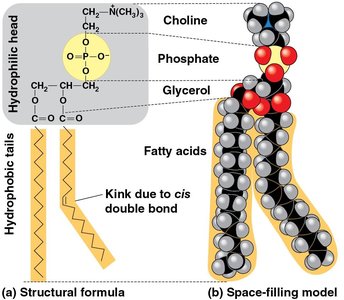
Phospholipids: Major component of cell membranes, with hydrophilic heads and hydrophobic tails.
Hydrophilic and Hydrophobic Molecules
Polarity and Solubility
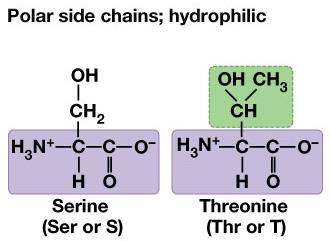
Hydrophilic molecules are polar or ionic and interact well with water, while hydrophobic molecules are non-polar and do not mix with water. Most macromolecules have both hydrophilic and hydrophobic regions, influencing their behavior in aqueous environments.
Polymerization and Hydrolysis
Formation and Breakdown of Polymers
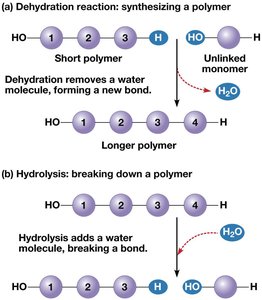
Polymers are formed by dehydration reactions, which remove water to create new bonds. They are broken down by hydrolysis, which adds water to break bonds.
Dehydration reaction: Synthesizes a polymer by removing water.
Hydrolysis: Breaks down a polymer by adding water.
ATP: The Energy Currency of the Cell
Structure and Function of ATP
ATP (adenosine triphosphate) stores energy in its phosphate bonds. Hydrolysis of ATP releases energy for cellular work. The bonds between phosphate groups in ATP are easy to break, while those in DNA are much harder to break once formed.
ATP: Composed of adenine, ribose, and three phosphate groups.
Energy release:
Summary Table: Major Biological Molecules
Class | Monomer | Polymer | Key Elements | Hydrophilic/Hydrophobic |
|---|---|---|---|---|
Carbohydrates | Monosaccharide | Polysaccharide | C, H, O | Hydrophilic |
Proteins | Amino acid | Polypeptide | C, H, O, N, S | Both |
Nucleic acids | Nucleotide | DNA/RNA | C, H, O, N, P | Hydrophilic |
Lipids | Fatty acids, glycerol | Not true polymers | C, H, O (sometimes P) | Hydrophobic |
Key Takeaways
All biological macromolecules have a carbon skeleton, which allows for structural diversity.
Functional groups determine the chemical reactivity and properties of molecules.
Lipids are unique in being hydrophobic and not true polymers.
Understanding the chemistry of life is essential for studying cell structure, function, and metabolism.
