 Back
Chemistry of Life: Elements, Macromolecules, and Their Properties
Study Guide - Smart Notes
 Tailored notes based on your materials, expanded with key definitions, examples, and context.
Unit 1: Chemistry of Life
Topic 1.2: Elements of Life
Biological systems require specific elements to build macromolecules essential for life. The most prevalent elements are carbon, hydrogen, and oxygen, which form the backbone of carbohydrates, proteins, lipids, and nucleic acids. Sulfur, phosphorus, and nitrogen are also critical for the structure and function of these molecules.
Key Elements:
Carbon (C): Forms the backbone of all organic molecules.
Hydrogen (H): Present in all macromolecules.
Oxygen (O): Essential for carbohydrates, lipids, proteins, and nucleic acids.
Nitrogen (N): Required for proteins and nucleic acids.
Phosphorus (P): Found in nucleic acids and phospholipids.
Sulfur (S): Present in some amino acids in proteins.
Macromolecules and Their Monomers:
Macromolecule
Monomer
Elements
Carbohydrates
Monosaccharides
C, H, O
Lipids
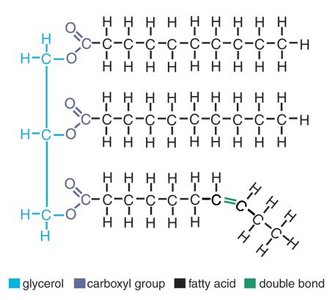
Glycerol + Fatty Acids
C, H, O (P in phospholipids)
Proteins
Amino Acids
C, H, O, N, (S)
Nucleic Acids
Nucleotides
C, H, O, N, P
Organisms must exchange matter with the environment to grow, reproduce, and maintain organization.
Topic 1.3: Introduction to Biological Macromolecules
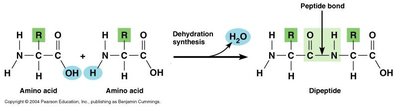
Macromolecules are large, complex molecules formed by joining smaller subunits (monomers) through chemical reactions. The two main reactions are dehydration synthesis (building polymers) and hydrolysis (breaking polymers).
Dehydration Synthesis:
Joins two monomers by removing a water molecule.
Forms covalent bonds, resulting in polymerization.
Hydrolysis:
Breaks covalent bonds between monomers by adding water.
Produces smaller molecules from polymers.
Properties of Monomers:
Monosaccharides: Easily dissolve in water, sweet, reducing, show stereo-isomerism.
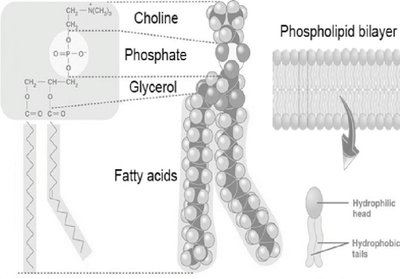
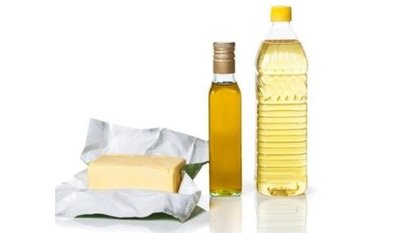
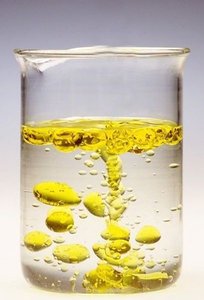
Lipids: Long-term energy storage, water-insoluble, hydrophobic, solid or liquid at room temperature.
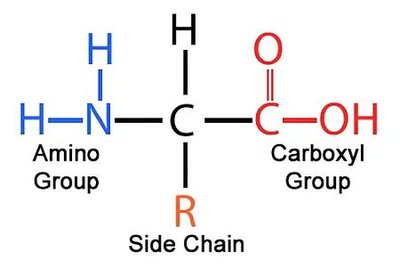
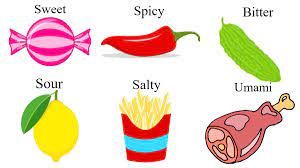
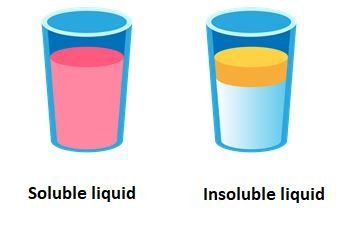
Amino Acids: High melting/boiling point, crystalline solids, varied taste, mostly water-soluble.
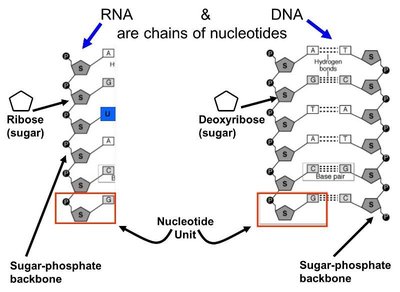
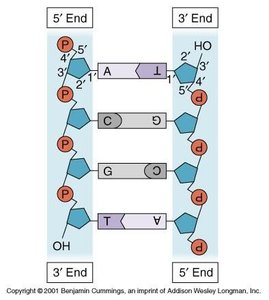
Nucleotides: Strong acids, water-soluble, directional (5’ and 3’ ends), form hydrogen bonds.
Types of Bonds Connecting Monomers:
Macromolecule
Bond Type
Carbohydrates
Glycosidic Linkages
Lipids
Ester Bonds
Proteins
Peptide Bonds
Nucleic Acids
Phosphodiester Bonds

Topic 1.4: Carbohydrates
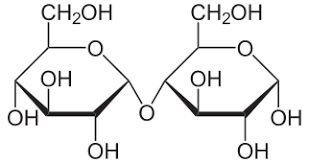
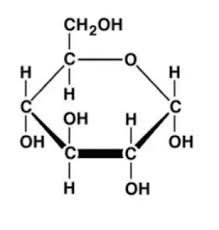
Carbohydrates are polymers made of sugar monomers (monosaccharides) connected by glycosidic linkages. Their structure determines their function, which includes energy storage and providing structural support.
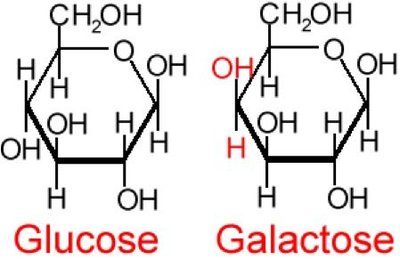
Monosaccharides: Simple sugars, such as glucose and galactose.
Polysaccharides: Polymers of hundreds to thousands of monosaccharides. Can be linear or branched.
Examples:
Starch: Energy storage in plants; some linear, some branched.
Glycogen: Energy storage in animals; highly branched.
Cellulose: Structural support in plant cell walls; linear, forms hydrogen bonds between parallel molecules.
Chitin: Structural support in arthropod exoskeletons and fungi cell walls; contains nitrogen.
Bond Types:
1-4 α-linkages (linear portions)
1-6 α-linkages (branch points)
β-linkages (cellulose and chitin)
Topic 1.5: Lipids
Lipids are nonpolar, hydrophobic molecules that serve various functions in living organisms. Their structure and function depend on the saturation of their fatty acid tails.
Saturated Fatty Acids: Only single bonds between carbon atoms; solid at room temperature.
Unsaturated Fatty Acids: At least one double bond; causes kinks in the chain; more liquid at room temperature.
Phospholipids: Contain polar (hydrophilic) heads and nonpolar (hydrophobic) tails; form cell membranes.
Functions:
Fats: Energy storage, insulation, support cell function.
Steroids: Hormones for growth, development, metabolism, homeostasis.
Cholesterol: Structural stability in animal cell membranes.
Phospholipids: Form lipid bilayers in plasma and cell membranes.
Topic 1.7: Proteins
Proteins are polymers of amino acids linked by peptide bonds. The sequence and chemical properties of amino acids determine the structure and function of proteins.
Amino Acid Structure: Central carbon atom, hydrogen, carboxyl group, amine group, and variable R group.
R Group Properties: Hydrophobic/nonpolar, hydrophilic/polar, or ionic; interactions determine protein structure and function.
Protein Structure Levels:
Primary: Sequence of amino acids; peptide bonds.
Secondary: Local folding; hydrogen bonds form α-helices and β-pleated sheets.
Tertiary: 3D shape; hydrogen, ionic, disulfide bonds, van der Waals forces.
Quaternary: Multiple polypeptide chains; hydrogen bonds and van der Waals forces between chains.
Directionality: Amino (NH2) terminus and carboxyl (COOH) terminus allow ribosomes to build chains.
Additional info: The notes cover the essential chemistry of life, focusing on the elements, macromolecules, their monomers, properties, and the chemical reactions that build and break them. The notes emphasize the structure-function relationship for carbohydrates, lipids, and proteins, with relevant images to reinforce key concepts.
