 Back
Chemistry of Life: Foundations for General Biology
Study Guide - Smart Notes
 Tailored notes based on your materials, expanded with key definitions, examples, and context.
Overview: The Importance of Chemistry to Life
Interdisciplinary Nature of Biology
Biology is fundamentally connected to chemistry, as the chemical properties of substances underpin all biological processes. Understanding water and other substances is central to the study of life.
Biology is the study of life, integrating principles from chemistry and physics.
Basic chemical concepts are essential for understanding biological phenomena.
Concept 2.1: Matter Consists of Chemical Elements and Compounds
Elements and Compounds
Organisms are composed of matter, which includes elements and compounds.
Element: A substance that cannot be broken down by chemical reactions (e.g., oxygen, hydrogen).
Compound: A substance consisting of two or more elements in a fixed ratio (e.g., NaCl).
Compounds exhibit emergent properties distinct from their constituent elements.
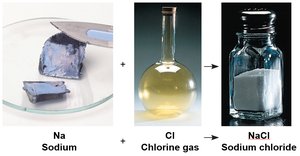
Example: Sodium (Na) and chlorine (Cl) combine to form sodium chloride (NaCl), which has properties different from either element.
The Elements of Life
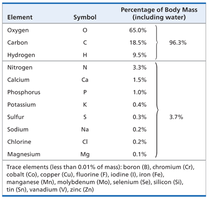
Of the 92 natural elements, only a subset are essential for life.
About 20-25% of elements are essential elements for organisms.
Trace elements are required in minute quantities (e.g., iodine for thyroid function).
Element | Symbol | Percentage of Body Mass |
|---|---|---|
Oxygen | O | 65.0% |
Carbon | C | 18.5% |
Hydrogen | H | 9.5% |
Nitrogen | N | 3.3% |
Calcium | Ca | 1.5% |
Phosphorus | P | 1.0% |
Potassium | K | 0.4% |
Sulfur | S | 0.3% |
Sodium | Na | 0.2% |
Chlorine | Cl | 0.2% |
Magnesium | Mg | 0.1% |
Concept 2.2: An Element’s Properties Depend on the Structure of its Atoms
Atomic Structure
Atoms are the smallest units of matter retaining the properties of an element.
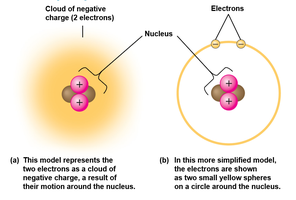
Atoms consist of protons (positive), neutrons (neutral), and electrons (negative).
Protons and neutrons form the atomic nucleus; electrons form a cloud around the nucleus.
Atomic Number, Mass Number, and Isotopes
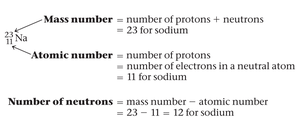
Atomic number: Number of protons in the nucleus.
Mass number: Sum of protons and neutrons.
Atomic mass: Approximate total mass of the atom.
Isotopes: Atoms of the same element with different numbers of neutrons.
Radioactive Isotopes
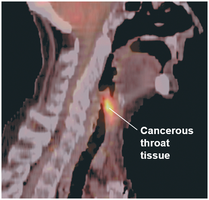
Radioactive isotopes decay spontaneously, emitting particles and energy.
Applications include dating fossils, tracing metabolic processes, and diagnosing medical disorders.
Example: Radioactive isotopes can highlight cancerous tissue in medical imaging.
The Energy Levels of Electrons
Electron Shells and Potential Energy
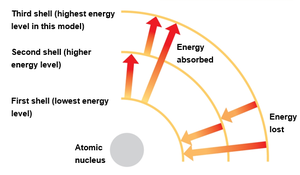
Electrons occupy energy levels (shells) based on their distance from the nucleus.
Potential energy: Energy due to location or structure.
Electrons in higher shells have greater potential energy.
Electrons absorb energy to move to higher shells and release energy to move to lower shells.
Electron Distribution and Chemical Properties
Valence Electrons and Reactivity
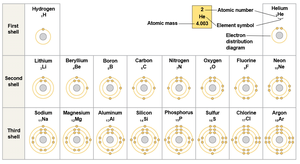
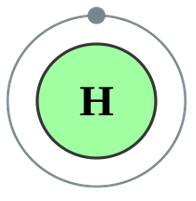
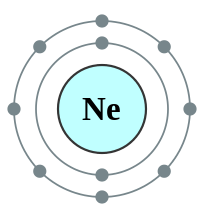
The chemical behavior of an atom is determined by the distribution of electrons, especially in the valence shell.
Valence shell: Outermost electron shell.
Valence electrons: Electrons in the valence shell.
Atoms with incomplete valence shells are reactive; those with complete shells are inert (e.g., neon).
Concept 2.3: Chemical Bonding Between Atoms
Types of Chemical Bonds
Atoms with incomplete valence shells form chemical bonds by sharing or transferring electrons.
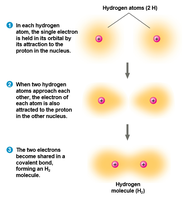
Covalent bonds: Sharing of valence electrons.
Ionic bonds: Transfer of electrons, resulting in charged ions.
Hydrogen bonds: Attraction between hydrogen and electronegative atoms.
Van der Waals forces: Weak attractions due to transient charge distributions.
Covalent Bonds
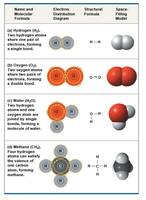
Covalent bonds involve sharing pairs of electrons between atoms. Two non metals!!!
Molecules are formed by covalent bonds (e.g., H2O).
 e
Structural Formulas and Bonding Capacity
Structural formulas use lines to represent shared electron pairs.
Double and triple bonds involve sharing two or three pairs of electrons, respectively.
Bonding capacity (valence) is the number of bonds an atom can form.
Electronegativity and Bond Types
Electronegativity: An atom’s attraction for electrons in a covalent bond.
Nonpolar covalent bond: Electrons are shared equally (e.g., CO2).
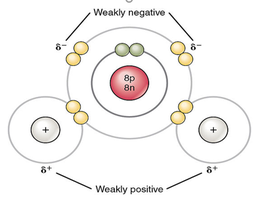
Polar covalent bond: Electrons are shared unequally, resulting in partial charges (e.g., H2O).
Ionic Bonds
Atoms may strip electrons from less electronegative partners, forming ions.
Cation: Positively charged ion (e.g., Na+).
Anion: Negatively charged ion (e.g., Cl-).
Ionic bonds are attractions between cations and anions (e.g., NaCl).
Hydrogen Bonds
Hydrogen bonds form when hydrogen covalently bonded to one electronegative atom is attracted to another electronegative atom.
Common in water and biological molecules.
Van der Waals Interactions
Weak attractions due to transient charge distributions.
Collectively, these interactions can be strong (e.g., gecko’s toe hairs sticking to surfaces).
Molecular Shape and Function
Shape Determines Function
The size and shape of molecules are crucial for their biological function.
Molecular shape determines recognition and response between biological molecules.
Complementary shapes allow temporary binding through weak interactions.
Molecular mimics can have similar biological effects.
Concept 2.4: Chemical Reactions Make and Break Bonds
Chemical Reactions
Chemical reactions involve making and breaking chemical bonds.
Reactants: Starting molecules.
Products: Final molecules.
All chemical reactions are reversible; equilibrium is reached when forward and reverse rates are equal.
Photosynthesis Example
Sunlight powers the conversion of CO2 and H2O to glucose and O2.
Concept 2.5: Hydrogen Bonding Gives Water Properties That Help Make Life Possible
Properties of Water
Water’s unique properties arise from hydrogen bonding.
Cohesion: Water molecules stick together, aiding transport in plants.
Adhesion: Water clings to other substances.
Surface tension: Difficulty in breaking the surface of water.
Moderation of temperature: Water absorbs/releases heat with minimal temperature change.
High specific heat: Water resists temperature change due to hydrogen bonding.
Evaporative cooling: Surface cooling as water evaporates.
Expansion upon freezing: Ice is less dense than liquid water, allowing it to float.
Versatility as a solvent: Water dissolves many substances due to its polarity.
Cohesion and Surface Tension
Hydrogen bonds link water molecules, resulting in cohesion.
Surface tension is related to cohesion and affects water’s surface properties.
Moderation of Temperature
Water absorbs heat from warmer air and releases it to cooler air.
Specific heat of water:
High specific heat keeps temperature fluctuations within limits suitable for life.
Evaporative Cooling
Evaporation transforms liquid to gas, cooling the surface.
Heat of vaporization: Heat required to convert 1 g of liquid to gas.
Expansion Upon Freezing
Ice floats because hydrogen bonds are more ordered, making ice less dense.
Floating ice insulates water below, supporting aquatic life.
Water as a Solvent
Water’s polarity allows it to dissolve ionic and polar substances.
Hydration shells form around dissolved ions.
Hydrophilic: Affinity for water (e.g., sugars).
Hydrophobic: No affinity for water (e.g., oils).
Solute Concentration and Molarity
Molecular mass: Sum of atomic masses in a molecule.
Mole: molecules.
Molarity (M): Number of moles of solute per liter of solution.
Acids, Bases, and pH
Acids and Bases
Acids increase H+ concentration; bases decrease it.
Strong acids/bases dissociate completely; weak acids/bases act reversibly.
The pH Scale
pH is the negative logarithm of H+ concentration:
Neutral solution:
Acidic: pH < 7; Basic: pH > 7
Buffers
Buffers minimize changes in H+ and OH- concentrations.
Carbonic acid acts as a buffer in blood.
Acidification: A Threat to Our Oceans
CO2 from fossil fuels forms carbonic acid in oceans, causing acidification.
Acidification reduces carbonate ions, threatening organisms that build shells and coral reefs.
Practice Problems: Molarity
Calculating Molarity
1M solution of glucose (C6H12O6): 180g per liter.
Number of molecules: per mole.
0.5M solution of NaCl: 29.25g per liter; molecules per liter.
Summary Table: Essential Elements
Element | Symbol | Body Mass (%) |
|---|---|---|
Oxygen | O | 65.0 |
Carbon | C | 18.5 |
Hydrogen | H | 9.5 |
Nitrogen | N | 3.3 |
Calcium | Ca | 1.5 |
Phosphorus | P | 1.0 |
Potassium | K | 0.4 |
Sulfur | S | 0.3 |
Sodium | Na | 0.2 |
Chlorine | Cl | 0.2 |
Magnesium | Mg | 0.1 |
Key Equations
Mass number:
Atomic number:
Number of neutrons:
pH:
Water dissociation:
Additional info:
All chemical reactions are reversible, and equilibrium is a dynamic state.
Water’s properties are critical for life, including its role as a solvent and its ability to moderate temperature.
