 Back
Chemistry of Life: Properties of Water and Biological Macromolecules
Study Guide - Smart Notes
 Tailored notes based on your materials, expanded with key definitions, examples, and context.
1. Structure of Water and Hydrogen Bonding
Chemical Structure of Water
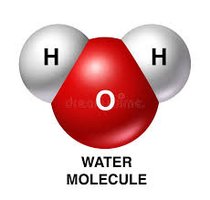
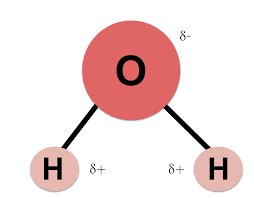
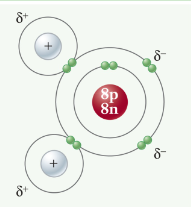
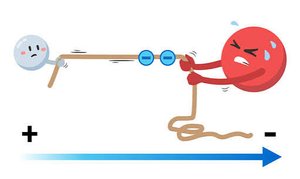
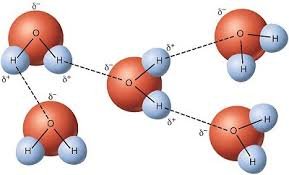
Water (H2O) is a molecule composed of two hydrogen atoms covalently bonded to one oxygen atom. The oxygen atom is more electronegative, resulting in an unequal sharing of electrons and a bent molecular shape. This leads to a polar molecule with partial charges: the oxygen end is partially negative (δ–), and the hydrogen ends are partially positive (δ+).
Polarity and Hydrogen Bonding
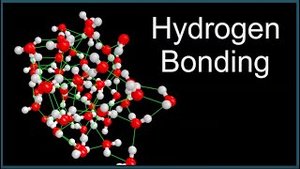
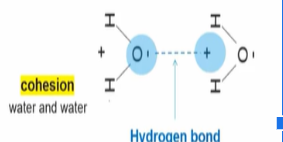
The polarity of water molecules allows them to form hydrogen bonds—weak attractions between the partially positive hydrogen of one molecule and the partially negative oxygen of another. These bonds are responsible for many of water’s unique properties.
2. Properties of Water
Cohesion, Adhesion, and Surface Tension
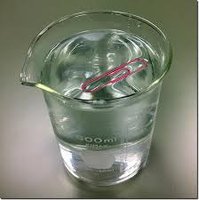
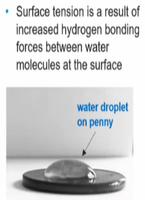
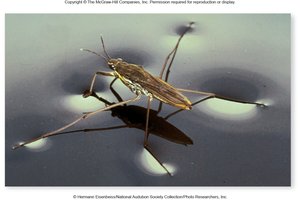
Cohesion is the attraction between water molecules due to hydrogen bonding, leading to high surface tension. Adhesion is the attraction between water molecules and other polar substances. These properties enable phenomena such as water droplets forming beads and capillary action in plants.
Surface tension allows small objects or insects to rest on water’s surface without sinking.
Capillary action is the movement of water within narrow spaces, important for water transport in plants.

High Specific Heat and Heat of Vaporization
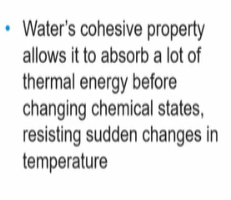
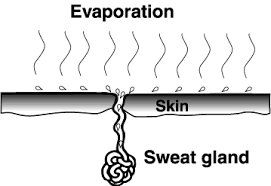
Water has a high specific heat, meaning it can absorb or release large amounts of heat with little temperature change. This property stabilizes temperatures in organisms and environments. Water also has a high heat of vaporization, so it requires significant energy to change from liquid to gas, which allows for cooling mechanisms like sweating.
Helps maintain stable temperatures in aquatic environments.
Evaporation of sweat cools the body.


Density of Solid vs. Liquid Water
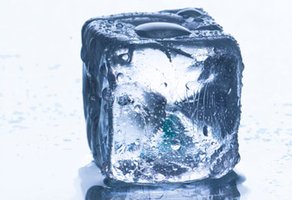
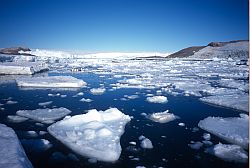
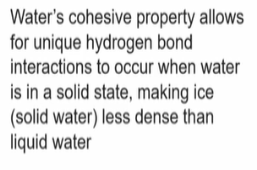
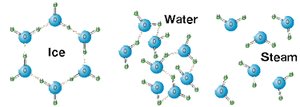
Unlike most substances, solid water (ice) is less dense than liquid water due to the hydrogen-bonded lattice structure that forms when water freezes. This causes ice to float, insulating aquatic life in winter.
Ice forms on the surface of bodies of water, protecting organisms below.
Water as a Universal Solvent
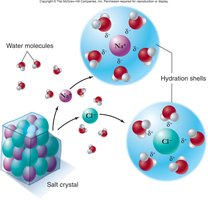
Water’s polarity allows it to dissolve many substances, especially ionic and other polar molecules, making it the universal solvent. This property is essential for biological reactions and transport of nutrients and wastes in living organisms.
Dissociation of Water and pH
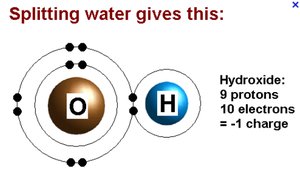
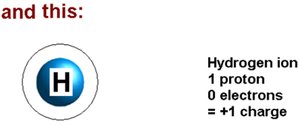
Water can dissociate into hydrogen ions (H+) and hydroxide ions (OH–):
This property is fundamental to acid-base chemistry and the maintenance of pH in biological systems.
3. Introduction to Biological Macromolecules
Elements of Life
Living organisms are primarily composed of six elements: carbon (C), hydrogen (H), oxygen (O), nitrogen (N), phosphorus (P), and sulfur (S). These elements form the basis of biological macromolecules.
Macromolecules and Monomers
Biological macromolecules are large molecules made from smaller units called monomers. Monomers join to form polymers through dehydration synthesis (removal of water), and polymers can be broken down into monomers by hydrolysis (addition of water).
Carbohydrates: Monomer = monosaccharide
Lipids: Monomer = fatty acid + glycerol
Proteins: Monomer = amino acid
Nucleic acids: Monomer = nucleotide
4. Properties and Functions of Biological Macromolecules
Carbohydrates
Carbohydrates are composed of carbon, hydrogen, and oxygen in a 1:2:1 ratio (e.g., glucose: C6H12O6). They serve as energy sources and structural materials.
Monosaccharides: Simple sugars (e.g., glucose)
Polysaccharides: Long chains of monosaccharides (e.g., starch, glycogen, cellulose, chitin)
Lipids
Lipids are hydrophobic molecules used for long-term energy storage, insulation, and cell membrane structure. They include fats, oils, waxes, phospholipids, and steroids.
Saturated fats: No double bonds, solid at room temperature
Unsaturated fats: One or more double bonds, liquid at room temperature
Phospholipids: Main component of cell membranes
Steroids: Four fused carbon rings (e.g., cholesterol)
Proteins
Proteins are polymers of amino acids joined by peptide bonds. They perform a wide variety of functions, including catalysis (enzymes), transport, support, motion, regulation, and defense.
Primary structure: Sequence of amino acids
Secondary structure: Alpha helices and beta sheets formed by hydrogen bonding
Tertiary structure: 3D folding due to side chain interactions
Quaternary structure: Multiple polypeptide chains
Nucleic Acids
Nucleic acids (DNA and RNA) store and transmit genetic information. They are polymers of nucleotides, each consisting of a sugar, phosphate group, and nitrogenous base.
DNA: Double-stranded, deoxyribose sugar, bases A, T, C, G
RNA: Single-stranded, ribose sugar, bases A, U, C, G
5. Summary Table: Properties of Water
Property | Description | Biological Importance |
|---|---|---|
Polarity | Unequal sharing of electrons, partial charges | Allows hydrogen bonding, solvent abilities |
Cohesion | Water molecules stick to each other | Surface tension, water transport in plants |
Adhesion | Water molecules stick to other substances | Capillary action |
High Specific Heat | Absorbs/releases heat with little temperature change | Stabilizes environments and organisms |
High Heat of Vaporization | Requires much energy to evaporate | Evaporative cooling (sweating) |
Lower Density of Ice | Ice floats on liquid water | Insulates aquatic life in winter |
Universal Solvent | Dissolves polar and ionic substances | Facilitates chemical reactions, transport |
