 Back
Chromosomal Basis of Inheritance and Genetic Disorders
Study Guide - Smart Notes
 Tailored notes based on your materials, expanded with key definitions, examples, and context.
Chromosomal Basis of Inheritance
Mendelian Inheritance and Chromosome Theory
The physical basis of Mendelian inheritance lies in the behavior of chromosomes during meiosis. Mendel's "hereditary units" were theoretical until biologists observed parallels between chromosome behavior and inheritance patterns. The chromosome theory of inheritance was developed in the early 1900s, notably by Sutton and Boveri, and later supported by Thomas Hunt Morgan's experiments with Drosophila melanogaster (fruit flies).
Genes are segments of DNA located along chromosomes.
Homologous chromosomes carry the same genes, but may have different alleles.
Sister chromatids are identical copies formed by DNA replication.
Chromosome theory of inheritance states that genes are located on chromosomes, and the behavior of chromosomes during meiosis accounts for inheritance patterns.
Morgan's Experiments with Fruit Flies
Thomas Hunt Morgan used fruit flies for genetic studies due to their rapid life cycle, high offspring number, and simple chromosome structure. He distinguished between wild type (normal) and mutant phenotypes, discovering the first mutant with white eyes.
Wild type: Red eyes (common phenotype)
Mutant: White eyes (rare phenotype)
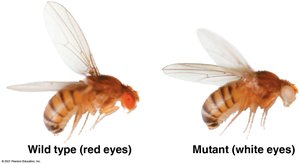
Morgan's cross between wild-type females and mutant males showed that the white-eyed trait was sex-linked, appearing only in males in the F2 generation. This supported the chromosome theory of inheritance.
Sex-Linked Genes and Patterns of Inheritance
Chromosomal Basis of Sex
Sex determination in humans and other mammals is based on the presence of X and Y chromosomes. The X chromosome is larger and contains more genes, while the Y chromosome is smaller and carries fewer genes, mostly related to sex determination.
XX: Female
XY: Male
SRY gene: Located on the Y chromosome, responsible for testis development
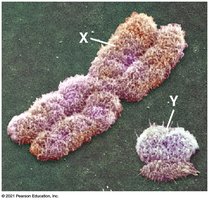
Sex-linked genes are located on either the X or Y chromosome. X-linked genes are more numerous and can affect traits unrelated to sex, while Y-linked genes are fewer and mostly related to male development.
Inheritance of X-Linked Genes
X-linked genes follow unique inheritance patterns. For recessive X-linked traits:
Females must inherit two copies of the allele (homozygous) to express the trait.
Males need only one copy (hemizygous) due to having a single X chromosome.
X-linked recessive disorders are more common in males.
Examples of X-linked disorders include color blindness, Duchenne muscular dystrophy, and hemophilia.
X Inactivation in Female Mammals
In female mammals, one X chromosome in each cell is randomly inactivated during embryonic development, forming a Barr body. This process involves DNA and histone modification, and the gene XIST is crucial for inactivation. Heterozygous females are mosaics for X-linked traits.
Linked Genes and Genetic Recombination
Linked Genes
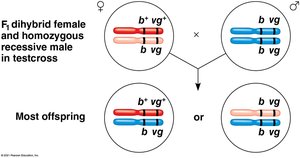
Genes located near each other on the same chromosome tend to be inherited together and are called linked genes. Morgan's experiments with fruit flies demonstrated that linked genes do not assort independently.
Parental phenotypes: Traits matching the original parents
Recombinant phenotypes: New combinations of traits not seen in parents
Genetic recombination: Production of offspring with new allele combinations
Genetic Recombination and Linkage Mapping
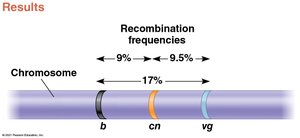
Recombination occurs through independent assortment (for unlinked genes) and crossing over (for linked genes). The frequency of recombination between genes can be used to map their relative positions on chromosomes.
Linkage map: Ordered list of genetic loci based on recombination frequencies
Map unit: Represents a 1% recombination frequency
Genes far apart on the same chromosome may behave as if they are on different chromosomes (genetically unlinked)
Alterations of Chromosome Number and Structure
Abnormal Chromosome Number
Nondisjunction during meiosis can result in gametes with abnormal chromosome numbers, leading to conditions such as aneuploidy and polyploidy.
Aneuploidy: Abnormal number of a particular chromosome (e.g., monosomic or trisomic zygotes)
Polyploidy: More than two complete sets of chromosomes (common in plants)
Alterations of Chromosome Structure
Chromosome breakage can cause structural changes:
Deletion: Removes a chromosomal fragment
Duplication: Repeats a segment
Inversion: Reverses orientation of a segment
Translocation: Moves a segment to another chromosome
Human Disorders Due to Chromosomal Alterations
Some chromosomal alterations cause genetic disorders:
Down syndrome (Trisomy 21): Three copies of chromosome 21
Klinefelter syndrome (XXY): Extra X chromosome in males
Turner syndrome (X0): Monosomy X in females
Cri du chat syndrome: Deletion in chromosome 5
Chronic myelogenous leukemia (CML): Caused by chromosomal translocation
Exceptions to Mendelian Inheritance
Genomic Imprinting
Genomic imprinting is a phenomenon where the phenotype depends on which parent passed along the allele. It involves silencing certain genes via methylation, and most imprinted genes are critical for embryonic development.
Inheritance of Organelle Genes
Extranuclear genes are found in mitochondria and chloroplasts. These genes are inherited maternally, as the zygote's cytoplasm comes from the egg. Defects in mitochondrial genes can cause disorders affecting the muscular and nervous systems.
Mitochondrial myopathy
Leber’s hereditary optic neuropathy
It may be possible to avoid passing mitochondrial disorders by transferring chromosomes from an affected mother's egg to a healthy donor egg.
Additional info: The notes expand on the original content by providing definitions, examples, and context for each concept, ensuring completeness and academic quality for exam preparation.
