 Back
Chromosomal Theory of Inheritance and Human Chromosomal Disorders
Study Guide - Smart Notes
 Tailored notes based on your materials, expanded with key definitions, examples, and context.
The Chromosomal Theory of Inheritance
Historical Foundations
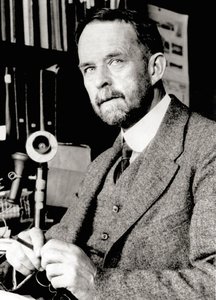
The chromosomal theory of inheritance states that genes are located on chromosomes and that the behavior of chromosomes during meiosis explains Mendel’s patterns of inheritance. This theory was first supported by the work of Thomas Hunt Morgan, who provided experimental evidence linking specific genes to specific chromosomes.
Model Organisms in Genetics
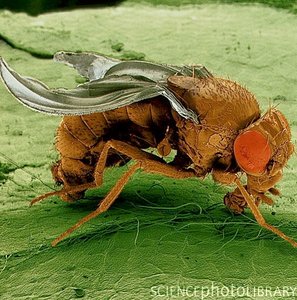
Drosophila melanogaster, the fruit fly, became a key model organism for genetic studies due to its rapid breeding cycle, simple care requirements, and possession of only four pairs of chromosomes. These features make it ideal for observing inheritance patterns across generations.
High reproductive rate
Short generation time (about two weeks)
Simple chromosome number (four pairs)
Sex-Linked Inheritance in Drosophila
Wild-Type and Mutant Phenotypes
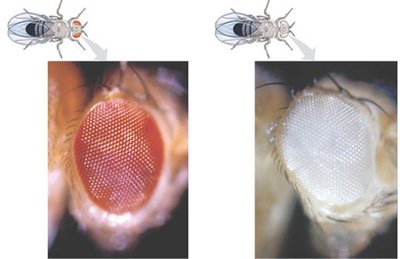
In Drosophila, red eyes (w+) are dominant to white eyes (w). The red-eyed phenotype is considered the wild-type, while the white-eyed phenotype is a mutant form. Morgan’s experiments revealed that the inheritance of eye color did not always follow Mendel’s expected ratios, especially with respect to sex.
Sex-Linked Genes and the X Chromosome
Some traits, such as eye color in Drosophila, are linked to the X chromosome. In Morgan’s experiments, only male flies exhibited the white-eyed phenotype, indicating that the gene for eye color is located on the X chromosome. This was one of the first demonstrations of sex-linked inheritance.
Sex-linked gene: A gene located on a sex chromosome (usually the X chromosome in animals).
Hemizygous: Males have only one X chromosome, so a single recessive allele on the X will be expressed.
Human Sex Chromosomes and Sex-Linked Traits
Human Karyotypes
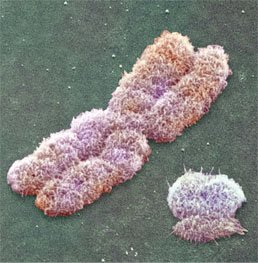
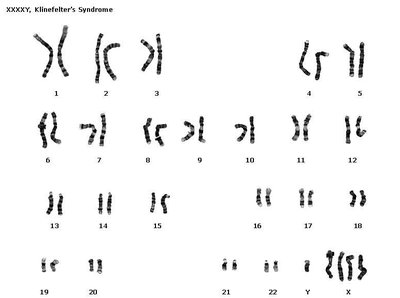
Humans have 22 pairs of autosomes and one pair of sex chromosomes (XX in females, XY in males). Males are hemizygous for X-linked genes, which means recessive alleles on the X chromosome are more likely to be expressed in males.
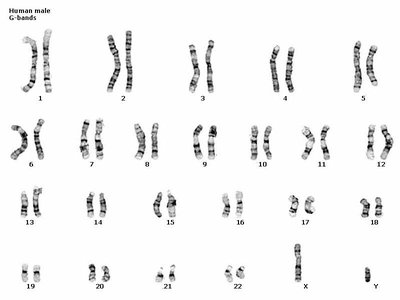
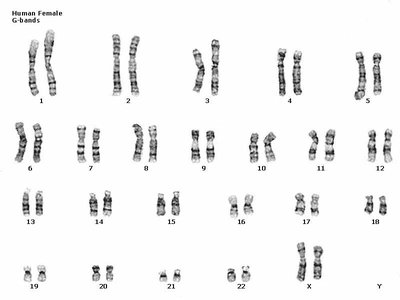
Examples of X-Linked Recessive Disorders
Color blindness
Muscular dystrophy
Hemophilia
Inheritance patterns for X-linked recessive traits can be predicted using Punnett squares. For example, a woman heterozygous for color blindness (XCXc) and a colorblind man (XcY) have a 25% chance of having a colorblind son and a 25% chance of having a colorblind daughter.
X Chromosome Inactivation and Barr Bodies
Dosage Compensation in Females
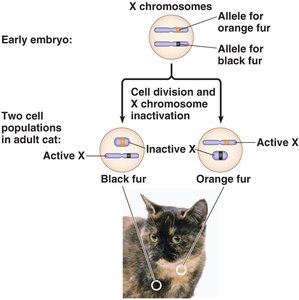
To balance gene expression between males (one X) and females (two Xs), one X chromosome in each female cell is randomly inactivated during early development. The inactivated X forms a dense structure called a Barr body. This process is permanent for each cell lineage and leads to mosaic expression of X-linked genes in females.
Barr body: The condensed, inactivated X chromosome in female cells.
Mosaicism: Females heterozygous for X-linked genes can express different alleles in different cells (e.g., calico cats).
Chromosomal Abnormalities: Nondisjunction and Aneuploidy
Nondisjunction
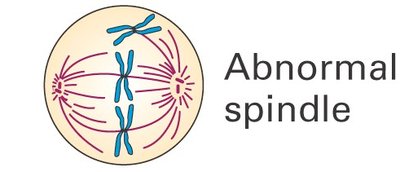
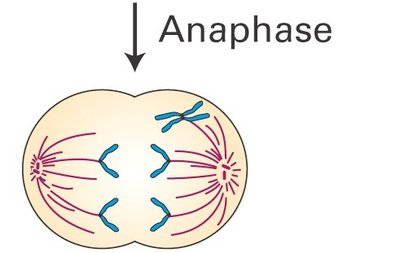
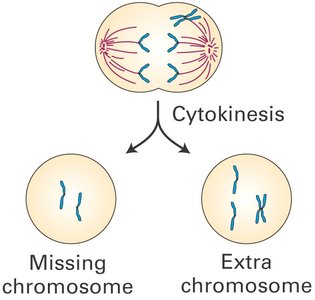
Nondisjunction is the failure of homologous chromosomes or sister chromatids to separate properly during meiosis or mitosis. This results in gametes with abnormal numbers of chromosomes.
Can occur during meiosis I or II
Leads to aneuploidy (abnormal chromosome number)
Aneuploidy in Humans
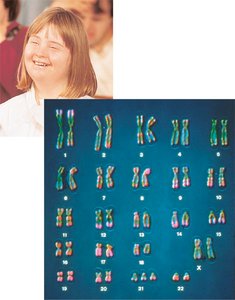
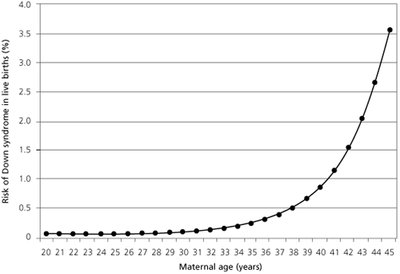
Aneuploidy refers to the presence of an abnormal number of chromosomes in a cell. Most aneuploidies are lethal, but some are compatible with life, especially those involving the sex chromosomes or chromosome 21.
Trisomy: Three copies of a chromosome (e.g., Down syndrome, trisomy 21)
Monosomy: One copy of a chromosome (e.g., Turner syndrome, XO)
Non-lethal Aneuploidy and Sex Chromosome Disorders
Due to X inactivation, several combinations of sex chromosome aneuploidy are compatible with life. Examples include Turner syndrome (XO), Klinefelter syndrome (XXY), and Poly-X females (XXX or XXXX). The frequency and viability of these syndromes are summarized in the table below.
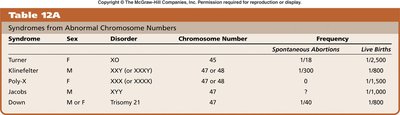
Syndrome | Sex | Disorder | Chromosome Number | Frequency (Live Births) |
|---|---|---|---|---|
Turner | F | XO | 45 | 1/2,500 |
Klinefelter | M | XXY (or XXXY) | 47 or 48 | 1/500 |
Poly-X | F | XXX or XXXX | 47 or 48 | 1/1,500 |
Jacobs | M | XYY | 47 | 1/1,000 |
Down | M or F | Trisomy 21 | 47 | 1/800 |
Summary
The chromosomal theory of inheritance connects Mendelian genetics to the physical behavior of chromosomes.
Sex-linked inheritance explains why some traits are more common in one sex than the other.
X chromosome inactivation ensures dosage compensation in females.
Nondisjunction leads to aneuploidy, which can cause genetic disorders such as Down syndrome and various sex chromosome syndromes.
