 Back
BackChromosomes, Cell Division, and Mendelian Genetics: Core Concepts and Applications
Study Guide - Smart Notes
 Tailored notes based on your materials, expanded with key definitions, examples, and context.
Chromosomes and Chromosomal Structure
Chromosome Number and Organization
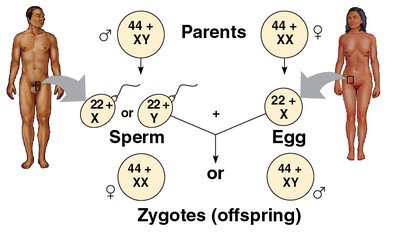
Chromosomes are thread-like structures composed of DNA and proteins that carry genetic information. In humans, somatic cells are diploid (2n), containing two sets of chromosomes—one from each parent. The diploid number for humans is 46 (2n = 46), consisting of 22 pairs of autosomes and one pair of sex chromosomes. Gametes (sperm and egg) are haploid (n), containing a single set of 23 chromosomes (n = 23).
Diploid (2n): Cells with two sets of chromosomes (e.g., human somatic cells).
Haploid (n): Cells with one set of chromosomes (e.g., gametes).
Autosomes: Non-sex chromosomes (22 pairs in humans).
Sex Chromosomes: X and Y chromosomes determining biological sex.
Chromosome Structure and DNA Packaging
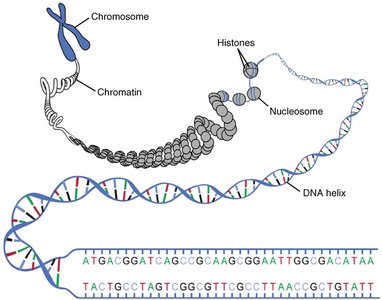
Each chromosome is made of chromatin, a complex of DNA and proteins. DNA wraps around histone proteins to form nucleosomes, which further coil and condense to form chromosomes visible during cell division.
Chromatin: DNA-protein complex that condenses to form chromosomes.
Nucleosome: Basic unit of DNA packaging, consisting of DNA wrapped around histones.
Gene: A segment of DNA that codes for a specific protein or function.
The Cell Cycle and Chromosome Duplication
Chromosome Replication and Sister Chromatids
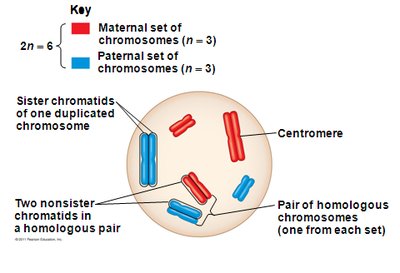
Before a cell divides, its chromosomes are duplicated during the S phase of the cell cycle. Each duplicated chromosome consists of two identical sister chromatids joined at the centromere. Homologous chromosomes are similar in length, shape, and gene content but may carry different alleles.
Sister Chromatids: Identical copies of a chromosome connected by a centromere.
Homologous Chromosomes: Chromosome pairs (one from each parent) with genes for the same traits at the same loci.
Genes, Alleles, and Genetic Vocabulary
Gene Loci and Alleles
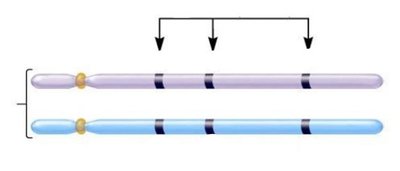
A locus is a fixed position on a chromosome where a gene is located. Genes can exist in different forms called alleles. An organism may be homozygous (two identical alleles) or heterozygous (two different alleles) for a given gene. The genotype is the genetic makeup, while the phenotype is the observable trait.
Locus: Specific location of a gene on a chromosome.
Allele: Variant form of a gene.
Homozygous: Two identical alleles at a locus (e.g., AA or aa).
Heterozygous: Two different alleles at a locus (e.g., Aa).
Genotype: Genetic constitution of an organism.
Phenotype: Observable characteristics of an organism.
Examples of Genotypes
Homozygous dominant: EE
Homozygous recessive: dd
Heterozygous: Ff
Chromosome Behavior in Cell Division
Meiosis and Genetic Variation
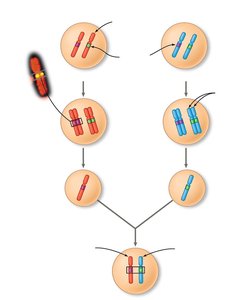
Meiosis is the process by which diploid cells produce haploid gametes. It involves two divisions: meiosis I (separation of homologous chromosomes) and meiosis II (separation of sister chromatids). This process ensures genetic diversity through independent assortment and crossing over.
Meiosis I: Homologous chromosomes separate, reducing chromosome number by half.
Meiosis II: Sister chromatids separate, similar to mitosis.
Genetic Variation: Produced by independent assortment and recombination.
Gene Linkage and Chromosome Mapping
Gene Linkage
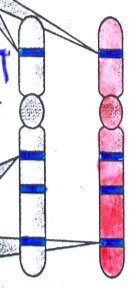
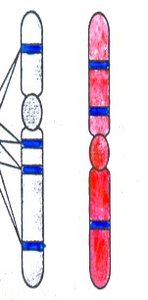
Genes located close together on the same chromosome tend to be inherited together, a phenomenon known as gene linkage. The arrangement of genes on chromosomes can affect inheritance patterns, especially when genes are in cis (same chromosome arm) or trans (opposite arms) configurations.
Polyploidy
Definition and Significance
Polyploidy is the condition of having more than two complete sets of chromosomes. It is common in plants and plays a significant role in plant evolution, with about 80% of flowering plants being polyploid. In animals, polyploidy is rare due to disruption of genetic balance.
Polyploidy: More than two sets of chromosomes (e.g., triploid 3n, tetraploid 4n).
Significance: Important for plant evolution and speciation.
Summary Table: Key Chromosomal Terms
Term | Definition | Example |
|---|---|---|
Diploid (2n) | Two sets of chromosomes | Human somatic cell (2n = 46) |
Haploid (n) | One set of chromosomes | Human gamete (n = 23) |
Homologous Chromosomes | Chromosome pairs with same genes | Maternal and paternal chromosome 1 |
Sister Chromatids | Identical copies of a chromosome | After DNA replication |
Allele | Variant form of a gene | A, a |
Genotype | Genetic makeup | AA, Aa, aa |
Phenotype | Observable trait | Tall, short |
Polyploidy | More than two sets of chromosomes | Wheat (hexaploid) |
