 Back
BackCirculation and Gas Exchange in Animals
Study Guide - Smart Notes
 Tailored notes based on your materials, expanded with key definitions, examples, and context.
Circulation and Gas Exchange
Introduction to Circulation and Gas Exchange
All organisms must exchange materials with their environment to survive. This exchange includes the uptake of oxygen and nutrients and the removal of carbon dioxide and metabolic wastes. The mechanisms for exchange vary depending on the organism's complexity and body structure.
Direct exchange occurs in simple organisms where cells are in direct contact with the environment.
More complex animals use specialized systems such as gastrovascular cavities or circulatory systems to facilitate exchange.
Exchange Mechanisms
Direct Exchange
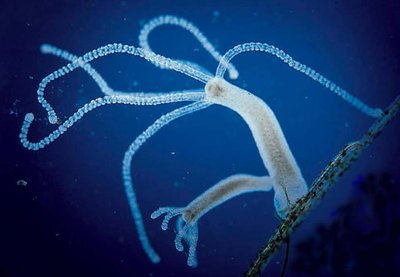
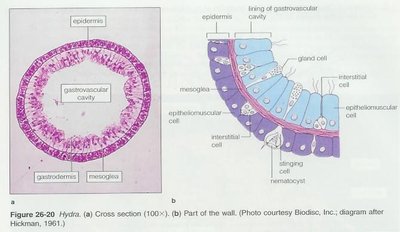
Direct exchange is possible in organisms that are only one or two cell layers thick, allowing substances to diffuse directly between cells and the environment. An example is the Hydra, a simple cnidarian.
Hydra uses its body wall for direct diffusion of gases and nutrients.
Gastrovascular Cavity
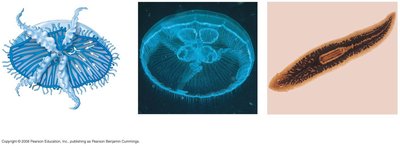
Some animals, such as cnidarians and flatworms, possess a gastrovascular cavity that functions in both digestion and distribution of substances throughout the body. This cavity allows for the movement of materials to all cells by diffusion.
Circulatory Systems
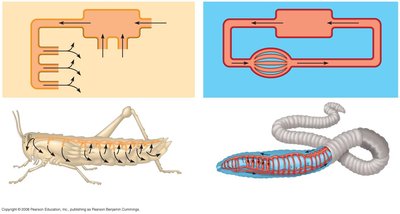
More complex animals have developed circulatory systems to transport materials efficiently. There are two main types:
Open circulatory system: Circulatory fluid (hemolymph) bathes organs directly.
Closed circulatory system: Blood is confined to vessels and is distinct from interstitial fluid.
Both systems have three basic components:
A circulatory fluid (blood or hemolymph)
A set of tubes (blood vessels)
A muscular pump (the heart)
Organization of Vertebrate Circulatory Systems
Vertebrates, including humans, have a closed circulatory system known as the cardiovascular system. The main types of blood vessels are arteries, veins, and capillaries. Vertebrate hearts contain two or more chambers.
Single Circulation
Single circulation is found in bony fishes, rays, and sharks. Blood passes through the heart once in each complete circuit, moving through two capillary beds before returning to the heart.
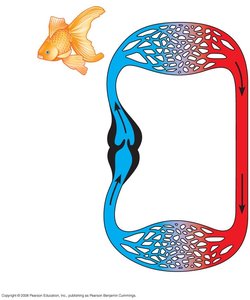
Double Circulation
Double circulation is found in amphibians, reptiles, and mammals. It consists of two circuits:
Pulmonary circuit: Pumps deoxygenated blood to the lungs (or skin in amphibians) for gas exchange.
Systemic circuit: Pumps oxygenated blood to the rest of the body.
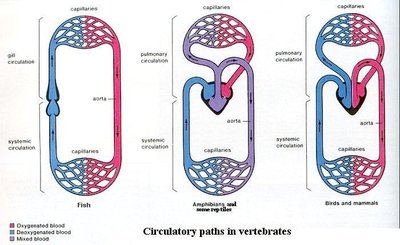
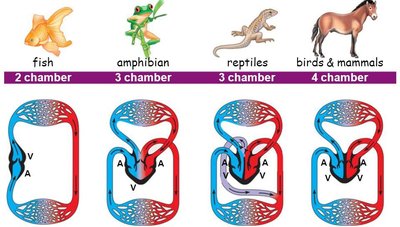
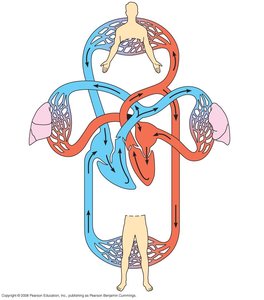
The Mammalian Heart
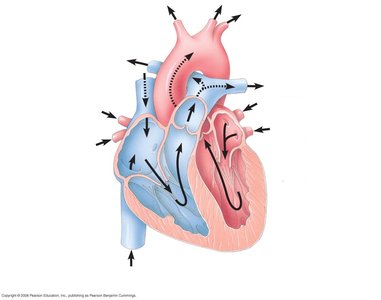
The mammalian heart is a four-chambered organ with two atria and two ventricles. It ensures the separation of oxygen-rich and oxygen-poor blood, supporting efficient gas exchange and nutrient delivery.
Cardiac Cycle
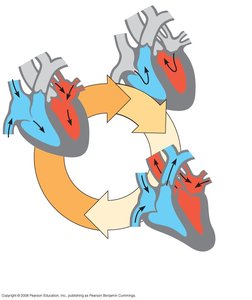
The cardiac cycle consists of alternating periods of contraction (systole) and relaxation (diastole) of the heart chambers. Valves prevent backflow and ensure unidirectional blood flow.
Electrical Control of the Heart
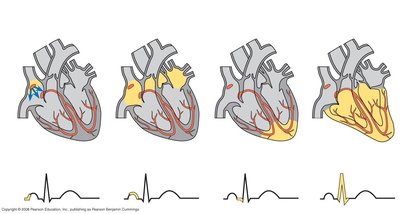
The heart's rhythmic contractions are coordinated by specialized cardiac muscle cells. The sinoatrial (SA) node acts as the pacemaker, generating electrical impulses that spread through the heart.
Blood Vessels and Circulation
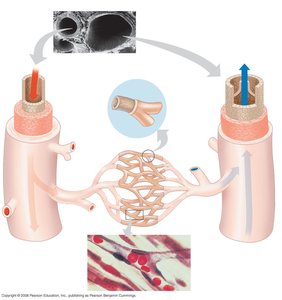
Blood vessels are classified as arteries, veins, or capillaries based on their structure and function:
Arteries carry blood away from the heart under high pressure.
Veins return blood to the heart and contain valves to prevent backflow.
Capillaries are thin-walled vessels where exchange of gases, nutrients, and wastes occurs.
Blood Pressure and Flow
Blood pressure is the force exerted by blood on vessel walls. It is highest in arteries and decreases through the capillaries and veins. Blood flow is regulated by vessel diameter and the action of skeletal muscles.
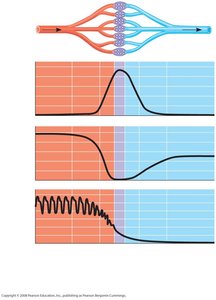
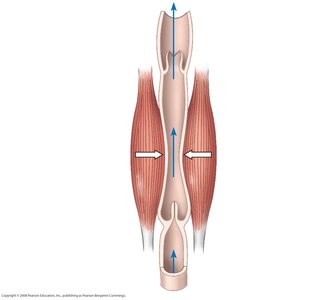
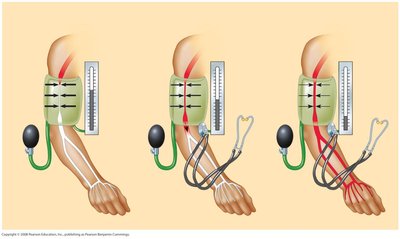
Capillary Exchange and the Lymphatic System
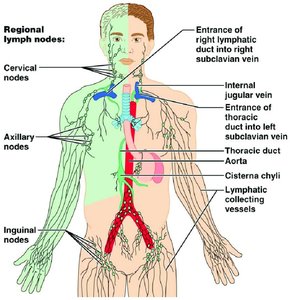
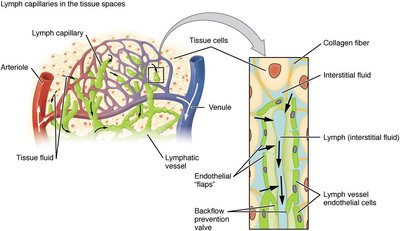
Capillary beds are sites of exchange between blood and interstitial fluid. Precapillary sphincters regulate blood flow through capillaries. The lymphatic system returns excess fluid to the circulatory system and plays a role in immune defense.
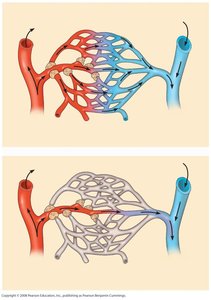
Blood Composition and Function
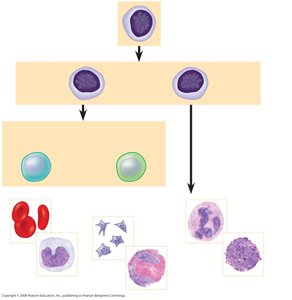
Blood is a connective tissue composed of plasma and cellular elements. Plasma is about 90% water and contains dissolved ions, proteins, nutrients, and wastes. Cellular elements include erythrocytes (red blood cells), leukocytes (white blood cells), and platelets.
Component | Main Function |
|---|---|
Plasma | Transport of nutrients, wastes, hormones; osmotic balance |
Erythrocytes | Oxygen and carbon dioxide transport |
Leukocytes | Defense and immunity |
Platelets | Blood clotting |
Blood Clotting
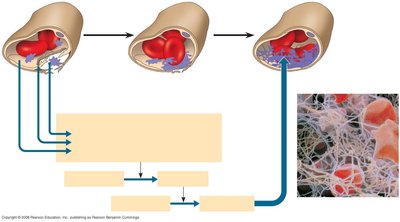
Blood clotting is a complex process involving platelets and plasma proteins. When a vessel is damaged, platelets form a plug and release chemicals that activate clotting factors, leading to the formation of a fibrin clot.
Replacement of Cellular Elements
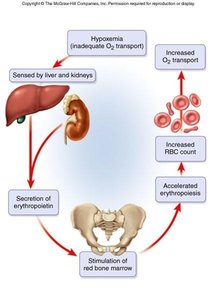
Blood cells are produced in the bone marrow from stem cells. The hormone erythropoietin (EPO) stimulates red blood cell production in response to low oxygen levels.
Cardiovascular Disease
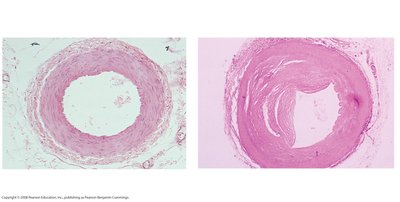
Cardiovascular diseases are disorders of the heart and blood vessels, including atherosclerosis, where plaque builds up in arteries, restricting blood flow and increasing the risk of heart attack and stroke.
Gas Exchange and Respiratory Surfaces
Gas exchange supplies oxygen for cellular respiration and removes carbon dioxide. The efficiency of gas exchange depends on the partial pressure gradients of gases and the properties of the respiratory medium (air or water).
Partial pressure is the pressure exerted by a particular gas in a mixture. For example, the partial pressure of oxygen at sea level is mm Hg.
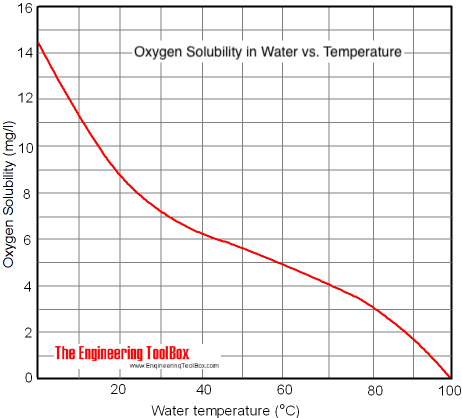
Air contains more oxygen per unit volume than water, making gas exchange more challenging for aquatic animals.
Respiratory Surfaces
Respiratory surfaces are thin and have a large surface area to optimize diffusion. Examples include gills in aquatic animals, tracheal systems in insects, and lungs in terrestrial vertebrates.
Gills in Aquatic Animals
Gills are outfoldings of the body that provide a large surface area for gas exchange. Countercurrent exchange in gills maximizes oxygen uptake from water.
Tracheal Systems in Insects
The tracheal system consists of branching tubes that deliver oxygen directly to body cells, bypassing the need for a circulatory system for gas transport.
Lungs in Vertebrates
Lungs are internal respiratory surfaces that facilitate gas exchange in terrestrial vertebrates. Amphibians use positive pressure breathing, while mammals use negative pressure breathing to ventilate their lungs.
Bird Respiration
Birds have a unique respiratory system where air passes through the lungs in one direction, allowing for efficient gas exchange even during flight.
Control of Breathing in Humans
Breathing is regulated by centers in the medulla oblongata and pons, which respond to changes in blood pH and carbon dioxide levels.
Gas Transport in Blood
Oxygen is transported in blood bound to hemoglobin in red blood cells. The hemoglobin dissociation curve shows how oxygen binding and release are affected by partial pressure and pH (Bohr shift).
Carbon Dioxide Transport
Carbon dioxide is transported in blood as dissolved CO2, bound to hemoglobin, or as bicarbonate ions. Hemoglobin also helps buffer blood pH.
Adaptations in Diving Mammals
Diving mammals, such as Weddell seals, have adaptations for storing large amounts of oxygen in their blood and muscles, allowing them to remain underwater for extended periods.
Additional info: Some images referenced in the original text (e.g., image_1, image_21, image_22, image_23, image_26, image_32, image_36, image_38, image_42, image_43) were not included as they were not directly relevant or did not clearly reinforce the adjacent educational content.
